28455374735_17cf79553a_b Courtesy: Flickr
31 January 2017

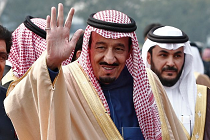
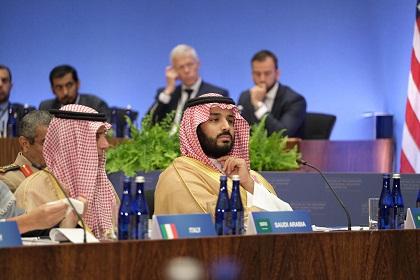
Saudi prince: not quite a game changer?

Prince Salman’s accession to the throne after the death of Saudi King Abdullah on 23 January 2015 has been a game changer, both domestically and in West Asian politics. Within days, he sidelined rivals within the House of Saud, and took on Iran with a confrontational policy. But two years later, the results of his new strategy disappoint
uae prince india Courtesy: MEA/Flickr
25 January 2017

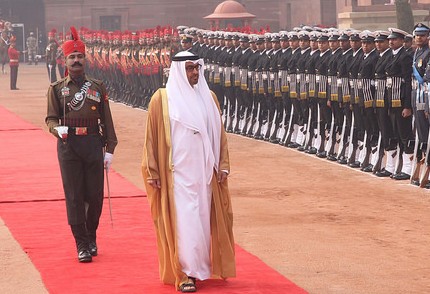
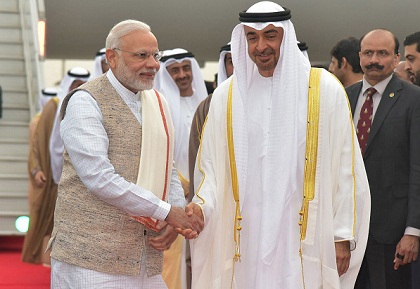
India-UAE: time to foster mutual interests

The West Asian monarchies are being forced to ‘look East’ due to a range of factors: the rise of the Islamic State, their need to boost falling oil revenues and doubts about the United States continuing to remain a guarantor of regional stability. Quite coterminously, India is looking towards the Gulf for energy security besides fulfilling other geostrategic goals: this is an ‘East’ and ‘West’ where the ‘twain will meet

31668713074_d6ee271be8_k Courtesy: MEA flickr
25 January 2017

Revisiting India’s ‘Link West’ policy

The choice of the Crown Prince of the United Arab Emirates (UAE) to be the chief guest at India’s 2017 Republic Day celebrations is an indication of the enhanced attention that the Indian government is according the Gulf countries. Many trade interests ally India to the UAE, but a deeper engagement is called for even as instability grows in the region

Azaz,_Syria Courtesy: Wikipedia
9 March 2016

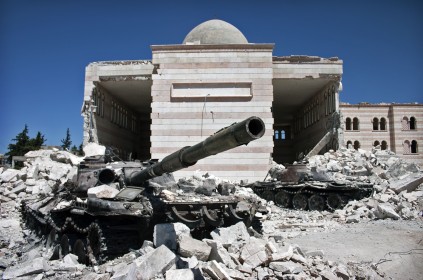
India and the Syrian quagmire

With a cessation of hostilities been brokered by Russia and the United States, the conflict in Syria has entered a tense pause. India has had a bystander attitude to the conflict in Syria. However, with the truce expected to be short, does India have the incentive or the option to depart from its current position, and deepen its engagement in Syria?

Air_strike_in_Sana'a_11-5-2015 Courtesy: Wikipedia
24 December 2015

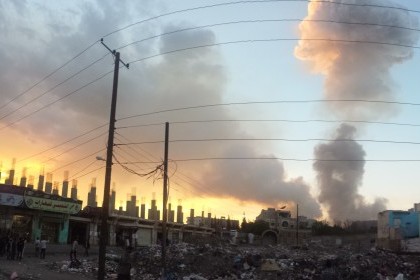
Coalition of the unwilling

On 14 December, Saudi Arabia announced the formation of an anti-terrorism coalition of 34 Islamic countries. But with key potential partners such as Algeria, Lebanon, and Pakistan refusing to join, the hastily-assembled group has put Saudi credibility in the spotlight instead of deflecting western criticism of the kingdom’s inaction against Sunni jihadism

Victor_Dubreuil_-_'Money_to_Burn',_oil_on_canvas,_1893 Courtesy: Victor Dubreuil / Wikipedia
15 December 2015

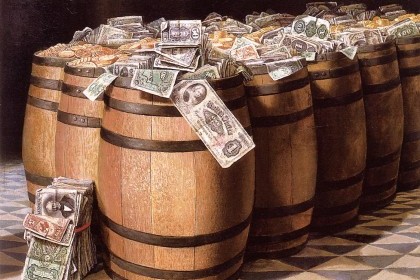
The Gulf storm ahead

The GCC finds itself engulfed by a perfect storm – due to the oil price fall and the re-emergence of Iran on the world scene. While the GCC is forced to undertake politically challenging reforms and confront the regional challenge of Iran, there lies a great opportunity for India to strengthen their economic as well as security ties.

Israel-Saudi Courtesy: Wikipedia
13 July 2015

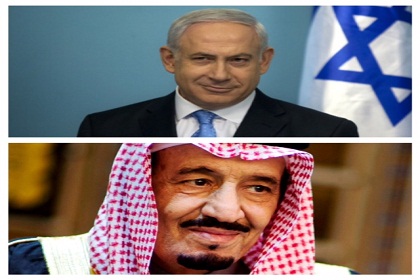
Reassessing our Israel, Arab engagement

The announcement in June of a Saudi-Israeli alliance against Iran has to be seen in the context of the strategic dimensions of India’s relations with Saudi Arabia, Israel, Iran, and the U.S. And it has far-reaching implications for India’s policy towards West Asia

Al thani Courtesy: Chuck Hagel/Wikimedia Commons
31 March 2015

An upsurge of Wahabbis confront the “Sabahis”

Currently, it appears that the Wahabbis have the upper hand over the "Sabahis" in the middle east. But the war for the hearts and minds of a people as gifted as the Arabs, is far from over.

Saudi Arabia_King Salman Courtesy: sodere.com
5 February 2015

Prioritising Saudi Arabia

The last ten years had signalled the Saudi intention of building closer relations with India based on their immense crude oil resources and India’s growing market and skill sets. With a new king on the throne and the on-going turmoil in West Asia it is in New Delhi’s interest to initiate high-level visits with Riyadh as soon as possible

Petrol Pump_delhi Courtesy: http://photodivision.gov.in/
4 December 2014

Why oil won’t worry India in 2015

Last week, petroleum prices reached a five-year low, and the fall is likely to last as new production and alternative sources enter the market. India, which has a huge petroleum products bill, now has a chance to shock-proof its economy, diversify dependence away from West Asia, and become energy-efficient