Website articles  (22) Courtesy: Getty Images
3 July 2025

Diversifying supply chains for critical minerals

The Quad Foreign Ministers’ Meeting in Washington on 1 July, 2025, underscored the importance of diversified and reliable global supply chains, especially for critical minerals. A Gateway House report shows how to strengthen supply chains for rare earths by creating deep financial markets similar to those that exist for bullion and oil.

Gateway House Courtesy: Gateway House
3 July 2025

China Plus One and global supply chains

A slowdown of the Chinese economy, and the shift, particularly by MNCs, from China to other more competitive locations has opened up business opportunities for latecomers to supply chains in the developing world. Evidence suggests that Southeast Asia and some South Asian countries like India, Sri Lanka, Bangladesh, could be beneficiaries of the supply chain shift, particularly in labour-intensive segments.

Myanmar article Courtesy: X /@antonioguterres
28 May 2025

Quid pro quo for Myanmar’s humanitarian corridor

A proposed humanitarian corridor from Bangladesh to Myanmar’s suffering Rakhine state is the need of the hour. But Chief Advisor Yunus has linked it with repatriation of the Rohingya refugees in Bangladesh, mixing up unrelated issues. This is a classic ploy to distract the public from his own shortcomings, and his single-minded focus to extend and legitimise his regime.

Bandung conference  (3) Courtesy: PTI
24 April 2025

Bandung Principles and the path ahead

Amid polycrises, from pandemics to wars and trade wars, the global order is in flux, with the contours of the new order still unclear. As the world marks the 70th anniversary of the historic Bandung Conference, this article analyses how its Ten Principles still resonate in today's fractured geopolitical landscape and offer a roadmap for equity, inclusivity, and balance.

World Leaders Courtesy: East Asia Forum
17 April 2025

Multipolarity is gaining ground

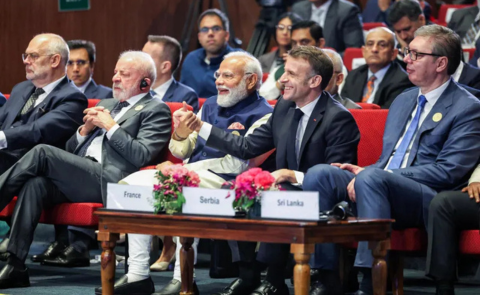
The traditional power structures of ‘unipolarity’ or ‘bipolarity’ prevalent over the past 80 years are no longer appropriate to describe the current global order, with more countries increasingly supporting the evolving multipolar world. With the old ‘rules-based’ order becoming less relevant, emerging powers like India have an opportunity to draft more equitable rules to match their multipolar intentions.

Myanmar Earthquake Courtesy: Associated Press (AP)
3 April 2025

Myanmar’s multiple stakeholders for aid

The March 28 earthquake in Myanmar has devastated a country already in civil war. Multiple groupings and militias now occupy different parts of Myanmar, leaving its neighbours and the international community concerned about which stakeholder to engage with for provision of humanitarian relief, particularly those areas beyond the writ of the ruling military. What can India do to help?

BERNAMA Courtesy: BERNAMA
13 February 2025

High expectations of Malaysia as ASEAN chair

Malaysia’s chairmanship of ASEAN in 2025 is pivotal. It will have to steer ASEAN toward regional peace, stability, and prosperity while reinforcing its centrality. All this during a time of heightened geostrategic rivalry, economic deglobalisation, rising protectionism, and nationalist trends.

2018_05_31_46837_1527730351._large Courtesy: The Jakarta Post
20 September 2024

Bombay to Jakarta via spices, films, people

Mumbai and Jakarta share a 200-year history of trade in spices and a once-shared love for Bombay’s silent films. Transnational networks of Indian spice and cloth merchants have marked both cities with their business, culture, and faith. A testimony to this history today is the city’s Indonesian consulate, established in 1951 – just four years after India’s independence.

Brandt-line Courtesy: FinShots
8 August 2024

What exactly is the Global South?

The term Global South is no less ambiguous today than when it first originated in the 1960s. This time though, it is a big tent that accommodates all non-West aspirations, from the G77 to the Non-Aligned Movement to the Third World. It is a geopolitical fact rather than a geographical demarcation whose appeal lies in its ability to get to the heart of shared priorities and goals.

Asean and neighbours can break Myanmar impasse Courtesy: Hindustan Times
25 April 2024

ASEAN, neighbours can break Myanmar impasse

Since the military coup in 2021, fighting continues unabated in several parts of Myanmar, including the strategically important Rakhine state. The country’s internal problems can't be solved by the Myanmarese people alone. Experts in ASEAN and Myanmar's neighbours should be given the chance to offer solutions driven by their understanding of the history, national identity, diversity, challenges and potential of this country.