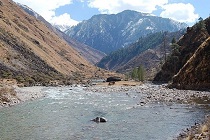
Karnali_River,_Nepal_6 Courtesy: Wikipedia\commons
28 July 2014

India-Nepal: a Himalayan opportunity

Indian Prime Minister Narendra Modi hit all the right notes in his landmark visit to Nepal this week. Modi’s announcement of hydropower being a key area of synergy in the bilateral will help India solve its electricity shortage and also provide the country a renewable energy import from a friendly neighbour
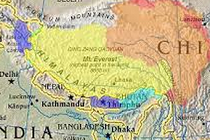
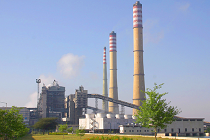
nepal Courtesy: Wikipedia
22 July 2014

India-Nepal: dignifying interdependence

India’s external affairs minister Sushma Swaraj is in Nepal this week in line with the government’s commitment to prioritise ties with neighbours. Ties between India and Nepal have not been smooth with Nepal seeking a review of the 1950 Treaty of Peace and Friendship signed between the two countries

power Courtesy: Wikimedia Commons
9 July 2014

Power sector needs sweeping reforms

The World Bank report highlighting the need for far-reaching reforms in the power sector underlines the necessity for the centre and state governments to arrive at a political consensus. The model of cooperative federalism advocated by Prime Minister Modi has the potential to transform the electricity scenario

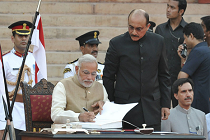
Modi signing register Courtesy: PMO/Government of India
28 May 2014

Narendra Modi: global perspectives

By inviting SAARC leaders to his swearing-in ceremony India’s new prime minister Narendra Modi has signaled a major shift in India’s foreign policy. Gateway House presents perspectives from experts from seven countries on the changes they expect to see in India’s foreign policy in the Modi era

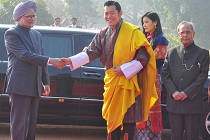
bhutan Courtesy: MEAphotogallery/ Flickr
19 July 2013

India-Bhutan: Winning friendship

The opposition People’s Democratic Party in Bhutan won the National Assembly elections held on July 13 taking another large step towards democracy. However, India became the unwitting subject of campaign discourse after the government abruptly halted fuel subsidies to the country

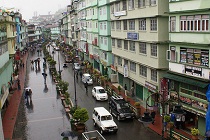
mg marg sikkim Courtesy: Kukster/Flickr
22 January 2013

Growth, Gangtok style

‘Sikkimisation’ is a term often used by the Chinese and Nepalese politicians to refer to India's purported Himalayan expansionism. However, Sikkim's economy has set an example that India's Himalayan neighbours would do well to follow, rather than deride

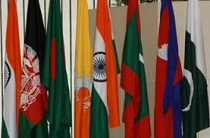
saarc-flags_5 Courtesy: doreview.blogspot.in
6 December 2012

The time for SAARC is now

Domestic politics are impacting overall SAARC relations. As the largest SAARC economy, we must strive to minimise differences with our neighbours by understanding how they perceive our policies, and uphold the promise of this regional bloc

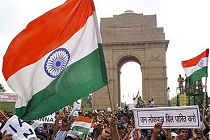
democracy in motion neelam Courtesy: Mission Against Corruption/Wikimedia Commons
10 August 2012

Regenerating our democracy

The promise of an egalitarian democratic system in India and abroad, has been tarnished by the entrenchment of dynastic leadership and by an inordinate concentration of power and wealth in the hands of a few. It is imperative to find ways to confront the shortcomings that have crept into our cherished democracies.

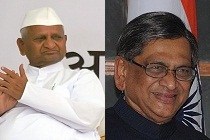
anna hazare 2 Courtesy: nazeah/Wikimediacommons - Ramesh Lalwani/Flickr
30 December 2011

2011’s Top Foreign Policy Cheers and Jeers

The year 2011 saw various events - the Arab Spring, anti- corruption protests, Europe's sovereign debt crisis - transform countries and reshape the world order. Gateway House takes a look at what these events mean for India, and presents India's top foreign policy cheers and jeers for the year.

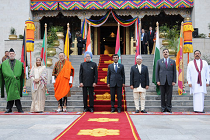
SAARC pic Courtesy: PMO
8 November 2011

Reviving SAARC

Creating a neighbourhood of compatible interests in South Asia isn’t easy, especially when intra-regional trade accounts for only 5% of total trade in the region. However, the region has seen considerable progress in the past year. India is well poised to lead the change, starting with the upcoming SAARC summit.