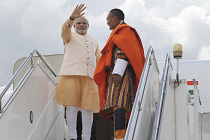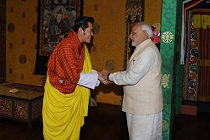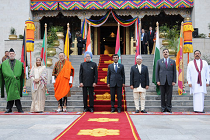
Modi with Jigme Wangchuk Courtesy: MEA/Government of India
13 June 2014

India-Bhutan: a unique bond

Narendra Modi has picked Bhutan for his first foreign visit after taking charge, a sign that the neighbourhood is a foreign policy priority for the new government. Bhutan’s economy is closely linked to that of India’s, and despite pressures from powerful countries, Bhutan has always kept Indian interests paramount.

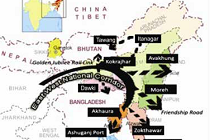
MapsofIndia Courtesy: Chaipau/WikimediaCommons
30 May 2014

Policy Catalyst: Seven Sisters’ Corridor

The Narendra Modi government has made the North East a developmental and foreign policy priority. Gateway House has conceived a robust regional economic plan called the “Seven Sisters’ Corridor” that can be the template for a new North East.

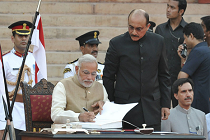
Modi signing register Courtesy: PMO/Government of India
28 May 2014

Narendra Modi: global perspectives

By inviting SAARC leaders to his swearing-in ceremony India’s new prime minister Narendra Modi has signaled a major shift in India’s foreign policy. Gateway House presents perspectives from experts from seven countries on the changes they expect to see in India’s foreign policy in the Modi era

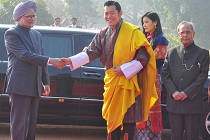
bhutan Courtesy: MEAphotogallery/ Flickr
19 July 2013

India-Bhutan: Winning friendship

The opposition People’s Democratic Party in Bhutan won the National Assembly elections held on July 13 taking another large step towards democracy. However, India became the unwitting subject of campaign discourse after the government abruptly halted fuel subsidies to the country

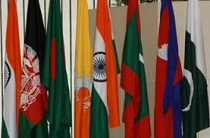
saarc-flags_5 Courtesy: doreview.blogspot.in
6 December 2012

The time for SAARC is now

Domestic politics are impacting overall SAARC relations. As the largest SAARC economy, we must strive to minimise differences with our neighbours by understanding how they perceive our policies, and uphold the promise of this regional bloc

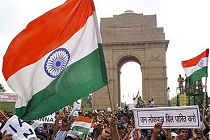
democracy in motion neelam Courtesy: Mission Against Corruption/Wikimedia Commons
10 August 2012

Regenerating our democracy

The promise of an egalitarian democratic system in India and abroad, has been tarnished by the entrenchment of dynastic leadership and by an inordinate concentration of power and wealth in the hands of a few. It is imperative to find ways to confront the shortcomings that have crept into our cherished democracies.

SAARC pic Courtesy: PMO
8 November 2011

Reviving SAARC

Creating a neighbourhood of compatible interests in South Asia isn’t easy, especially when intra-regional trade accounts for only 5% of total trade in the region. However, the region has seen considerable progress in the past year. India is well poised to lead the change, starting with the upcoming SAARC summit.