2694105174_ee8a4a462b_b Courtesy: Flickr
22 February 2018

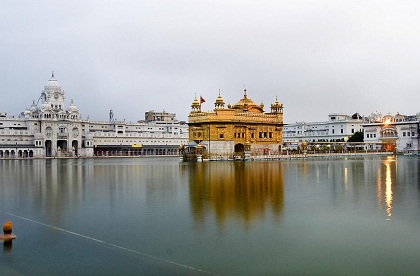
Khalistan 2.0: revival of Sikh separatism

Radical Sikh elements within the Indian diaspora have found the permissive political climate in Canada, North America and Europe conducive to building a support base in their respective countries, while donations from gurdwaras abroad and social media propaganda have fuelled separatist efforts in Punjab. India may have to step with care, containing the hostile propaganda, yet not appearing too stern in its response
34983276863_ea5a044022_o Courtesy: MEA / Flickr
15 February 2018

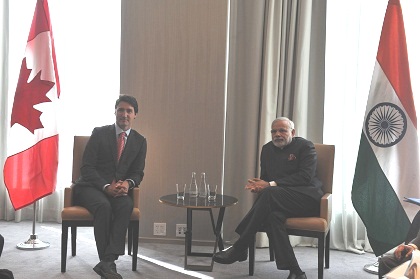
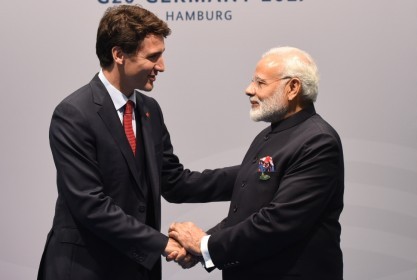
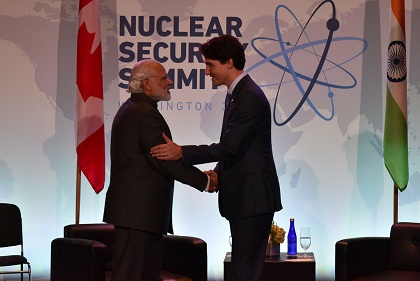
How India-Canada business ties can bloom

Canada’s commercial relationship with India needs to go beyond lentils, uranium and other resources to explore the scope of greater cooperation on renewable energy and cutting-edge technology. There are strong reasons for the two countries to draw closer—even if other countries always loom larger. Prime Minister Trudeau visits India this week

25898612650_ca634e3dbc_o Courtesy: MEA/ Flickr
31 August 2017

India in Canada’s worldview

India hardly figures in current discourse on Canadian foreign policy. Yet, the two countries are important to each other: one, a source of investment, technology and energy, the other an attractive market. The current challenge is to conclude negotiations on long-pending trade and investment agreements

GST pic1 Courtesy: Reuters
11 August 2016

Key GST lessons from the world

The long march to implement the long-awaited Good and Services Tax in India has just begun. It is instructive to understand how other countries introduced this tax and cherry-pick lessons from their experiences

West_Texas_Pumpjack Courtesy: Wikipedia
13 April 2016

North America: petro state

The U.S. and Canada offer an opportunity for India to acquire large scale oil and gas fields in politically stable countries at a low price. A financial investment in energy companies will protect India against a rise in energy prices without raising concerns in host countries.

TPP Courtesy: ustr.gov
3 March 2016

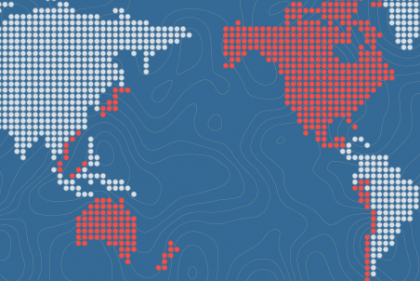
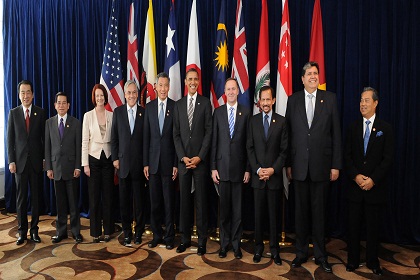
A fine line: TPP and India

The Trans-Pacific Partnership has dropped strong Intellectual Property Rights regulations on India’s doorstep. The implications of these regulations could affect India’s own policies, as well as her global aspirations towards the potential Regional Comprehensive Economic Partnership.

TPP Courtesy: ustr.gov
26 November 2015

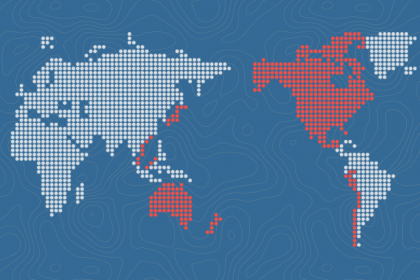
TPP & ISDS: new tests for India

The U.S.-driven Trans Pacific Partnership agreement between 12 countries, which is aiming to become the new standard of world trade, impacts domestic systems globally. For India, it will skew investment and intellectual property rights, and especially the debate over the Investor State Dispute System which allows companies to challenge sovereign rights and public policy.

Leaders_of_TPP_member_states- wikipedia Courtesy: Wikipedia
20 May 2015

TPP and RCEP: the hare and the tortoise?

The Trans-Pacific Partnership might soon be concluded if the U.S. Congress fast-tracks it, as recently announced, while the Regional Comprehensive Economic Partnership Agreement remains on slow-track. But the TPP, although ambitious, follows an outdated template, and it is the dynamic RCEP that can be a model for a new global rules-based framework