Website articles  (48) Courtesy: Bayerischer Rundfunk
25 February 2026

Munich diary: Europe at the crossroads

During the week of the Munich Security Conference, Munich transformed into a temporary capital of global diplomacy. Gateway House participated and hosted a Side Event, “Multipolarity without Multilateralism: India, Europe and the Future of Global Order” on February 14. This diary captures observations from the conference and the city, reflecting on Europe’s evolving priorities and how the continent assesses its role in an increasingly fragmented world.

Website articles  (41) Courtesy: ANI
19 February 2026

India and Myanmar after the military Coup

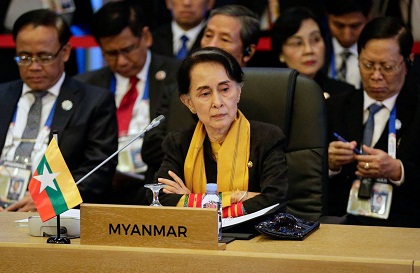
The Myanmar military coup of 1 February 2021 derailed a decade-long experiment in limited democracy, triggering violent resistance, armed conflict, fragmentation, and humanitarian crises. As instability deepens and global attention wanes, Myanmar’s turmoil carries significant implications for India, particularly along the border regions. With China’s growing footprint and ASEAN’s limited mediation, India must carefully navigate its Act East and Indo-Pacific strategies while sustaining people-to-people ties.

2 (8) Courtesy: ANI
11 February 2026

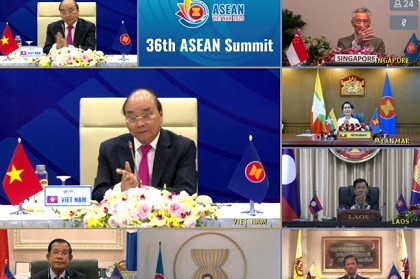
Modi brings momentum with Malaysia

From 7-8 February, Prime Minister Narendra Modi visited Malaysia to review the current state of bilateral ties and explore new avenues of cooperation. The focus was to deepen and diversify the economic dimension of the engagement. Two factors will help achieve this: Malaysia’s role in the ASEAN–India Trade in Goods Agreement review, and India’s enhanced negotiating weight following the signing of recent Free Trade Agreements. Both sides must now translate intent into action.

2 (6) Courtesy: Gateway House
5 February 2026

Influence of philanthropies in the UN

On January 7, 2026, the U.S. government announced its withdrawal from 31 UN organisations. This is a shock to the UN system. Several other countries have halted or only partially paid their dues over the years, creating a major funding gap. To cover for it, the UN has turned to “voluntary contributions” which come from philanthropic and private actors. Their misaligned mandates are distorting UN priorities.

2 (2) Courtesy: Niamul Rifat
5 February 2026

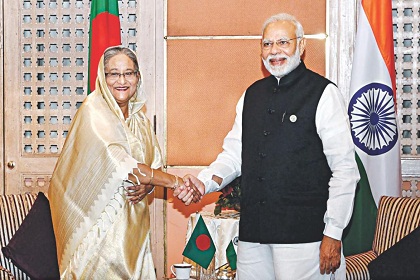
Will Bangladesh polls achieve stability?

In less than a week, on 12 February, Bangladesh will witness one of its most consequential parliamentary elections. The same day, the people of Bangladesh will also vote on a referendum that seeks to overhaul the country’s governance structure. The outcome of both, whichever way they turn out, is likely to pull Bangladesh into a vortex of political turmoil.

News on Air (5) Courtesy: Gateway House
29 January 2026

Bombay Gymkhana @150

Mumbai’s oldest sports club, the Bombay Gymkhana, is celebrating 150 years of its existence. Its legacy as a central gymkhana for all sports in the city is reflected in the year-round sports events in which the Club has a continuous presence, such as cricket, rugby, football, squash, tennis, badminton, swimming, and billiards. Its biggest achievement is putting India on the international calendar for cricket and rugby.

News on Air (4) Courtesy: DD News
29 January 2026

The European pivot to India

By signing the EU-India Free Trade Agreement on January 27, the ties that bind India and the European collective have been re-energised. They are now set to reach new heights, while overcoming past hesitations and divergences.

Website articles  (37) Courtesy: GK newspaper
22 January 2026

Delhi and Dhaka can walk together

On 12 February, Bangladesh will go to the polls to choose a new leader. India should work to maintain a robust and cordial working relationship with the new regime as it did during Sheikh Hasina’s tenure. The new government in Bangladesh should prioritise eliminating anti-India sentiments before they become entrenched, to prevent security challenges for itself and the region.

Website articles  (34) Courtesy: Gateway House
22 January 2026

Case for post-study ‘S’ visas

In recent months, visa restrictions have been imposed on foreign students particularly Indians, seeking higher education, especially in the U.S. and the UK. Post-study work opportunities, a key factor in international education choices, have also been affected. This creates an opportunity for India to step in and attract foreign students by introducing an ‘S’ visa that permits post-study work opportunity in India.

2026-03-02T150438Z-175880517-RC27VJAKA3OX-RTRMADP-3-AFGHANISTAN-PAKISTAN Courtesy: Reuters
8 January 2026

Afghanistan vs. Pakistan = advantage India

The ongoing tensions between Kabul and Islamabad regarding the closure of trade routes could significantly alter the trade landscape in South Asia. This strain can benefit India. The export and import of merchandise goods between India and Afghanistan are expected to experience significant growth, provided New Delhi moves swiftly.