Courtesy: FREEDOM HOUSE2/FLICKR
24 August 2012

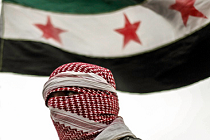
Syria: What next?

With the Free Syrian Army being supplied aid by the West and the Gulf Cooperation Council countries, the endgame for the Syrian regime has begun. Does Assad's exit guarantee the replacement of autocracy with democracy? What implications will it have on regional politics?
morsi_0 Courtesy: gr33ndata/Flickr
9 August 2012

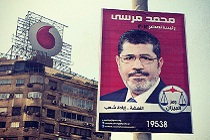
Islamism and democracy

The involvement of Islamists in democratic movements is usually dismissed as a mere ruse to attain political power. However, evidence suggests that people in Muslim-majority democracies support Islamist groups which challenge a dishonest government, rather than those who seek to establish Islamic autocracy.

Neelam on Syria Courtesy: FreedomHouse2/Flickr
6 July 2012

The unique tragedy of Syria

Simultaneous efforts to resolve the problem in Syria remain stymied even as more and more high level meetings and consultations take place. The more countries treat the situation as a proxy for political differences, the more it creates the conditions for a wider conflagration with an unpredictable outcome.

U.S.-Afghanistan agreement: A welcome start Courtesy: U.S. Department of Defense
27 April 2012

U.S.-Afghanistan agreement: A welcome start

An important take-away from the preliminary pact reached by Kabul and Washington is that unlike the 1990s, the Americans are not just packing their bags and leaving. This is good news in terms of regional stability, and the upcoming NATO summit may answer some questions this draft agreement raises.

bahrain piece neelam Courtesy: LGEPR
24 April 2012

The Bahrain formula

With turmoil in the Middle East, a drawdown in Iraq and Afghanistan, the Iran-Israel-U.S. conflict, the international community has paid little attention to the democracy of a small group of people - the Bahrainis. More worrisome, however, is that politics now responds to the elite.

5825395379_5d725a53f4_z Courtesy: Flickr/freeedomania
21 April 2012

UN: a return to ‘mandated colonialism’

By forcing regime change in Libya, and attempting the same in Syria, and by promiscuously arming disparate groups of Wahabbis and Salafists to achieve this aim, NATO is creating more room for instability in the region. What Syria needs is engagement, not isolation; it needs dialogue and not the arming of rebels.

5564587370_fb077e785f Courtesy: freeedomania/Flickr
29 February 2012

Where is Syria headed?

As the al-Assad regime faces increasing international pressure to step down from power, Syrian President Bashar al-Assad attempted to make political reforms recently. However, Syria has strong relations within West Asia and the denouement will profoundly impact developments in this region.

5455843055_b765d48e40 Courtesy: Al Jazeera English/Flickr
24 February 2012

West and Wahabi vs. Shia

The author outlines the partnership between NATO and Wahhabi extremists, and how the West assisted in an armed Sunni movement, which has spread to many countries in West Asia. Consequently, the Shia population suffers from serious discrimination at the hands of Wahabbi.

Maldives: Nasheed outpaced his people Courtesy: notsogoodphotography/Flickr
16 February 2012

Maldives: Nasheed outpaced his people

Despite recent regime changes and agitation in the Middle East, the international community's attention has been diverted from the Indian Ocean - via Maldives. After President Nasheed's forced resignation, the country is now in political turmoil.

anna hazare 2 Courtesy: nazeah/Wikimediacommons - Ramesh Lalwani/Flickr
30 December 2011

2011’s Top Foreign Policy Cheers and Jeers

The year 2011 saw various events - the Arab Spring, anti- corruption protests, Europe's sovereign debt crisis - transform countries and reshape the world order. Gateway House takes a look at what these events mean for India, and presents India's top foreign policy cheers and jeers for the year.