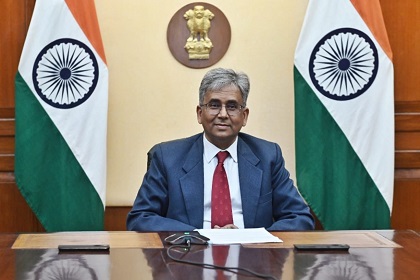
amb saurabh kumar Courtesy: Ministry of External Affairs, Government of India
3 February 2022

India’s Indo-Pacific vision

Saurabh Kumar, Secretary (East), Ministry of External Affairs, Government of India, delivered the keynote address at the panel discussion on India in the Indo-Pacific: Pursuing Prosperity and Security, organised by Gateway House and the U.S. Embassy, New Delhi, on 1 February 2022. He outlined India's vision for a free and inclusive Indo-Pacific, and the initiatives undertaken to further cooperation among nations in the region.
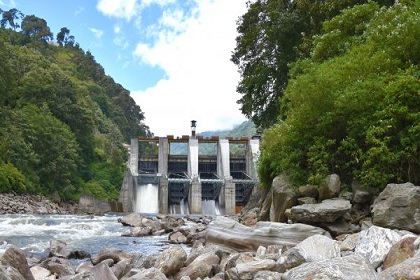
DRUK HYDRO DAM Courtesy: Druk Green Power Ltd
18 November 2021

Bay of Bengal connectivity

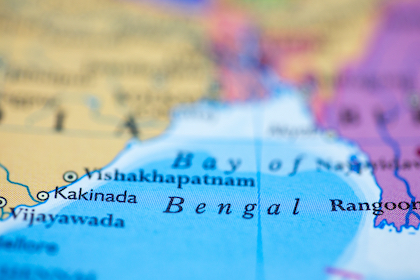
The Bay of Bengal is gaining relevance as a significant sub-region within the Indo-Pacific. Despite its importance to regional security, there is inadequate financial, physical, and energy connectivity. India must use its strategic and political pre-eminence and influence in the sub-region to pursue deeper connectivity with Bangladesh, Myanmar, Thailand, Nepal, and Sri Lanka and to block China's growing influence.

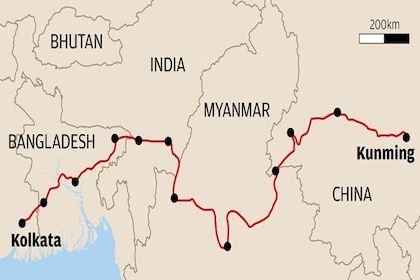
bcim corridor Courtesy: Institute of Peace and Conflict Studies
9 November 2021

Physical connectivity in the Bay of Bengal

China is a clear winner in the physical connectivity stakes in the Bay of Bengal, and there's a reason a why: Its projects are connected to one another, from rail to road to port. While India also has some successful cross-border road and rail infrastructure projects, they are often an extension of an existing railway line or highway, not specific to the connectivity needs of the region. India can win by focussing instead on building infrastructure to maximise the vast maritime potential of the Bay of Bengal, especially the Andaman and Nicobar Islands that give India access to critical sea channels and trade routes.

The Bay of Bengal: The next battle Courtesy: Shutterstock
28 October 2021

Bay of Bengal: Building tech connectivity

The Bay of Bengal is a natural bridge between South and South-East Asia, which New Delhi seeks to optimise. But progress on India's Act East policy has been slow, creating a space for China's Belt and Road Initiative to step into. While India cannot match China’s cheque-book diplomacy, it can use its start-up industry to pursue a combination of physical, technological and financial projects to improve regional connectivity.

learning from bangladesh Courtesy: Shutterstock
25 March 2021

Learning from Bangladesh

This month marks the beginning of triple celebrations in Bangladesh, including the 50th anniversary of its independence, for which Prime Minister Modi will be traveling to Dhaka as the guest of honour. There is much to celebrate: A country that began as a case study for development is now on top of the global GDP charts. The springboard was achieved through a thriving textiles industry, women's workforce participation, micro finance, liberal investment policies. There is much to learn from this neighbour.

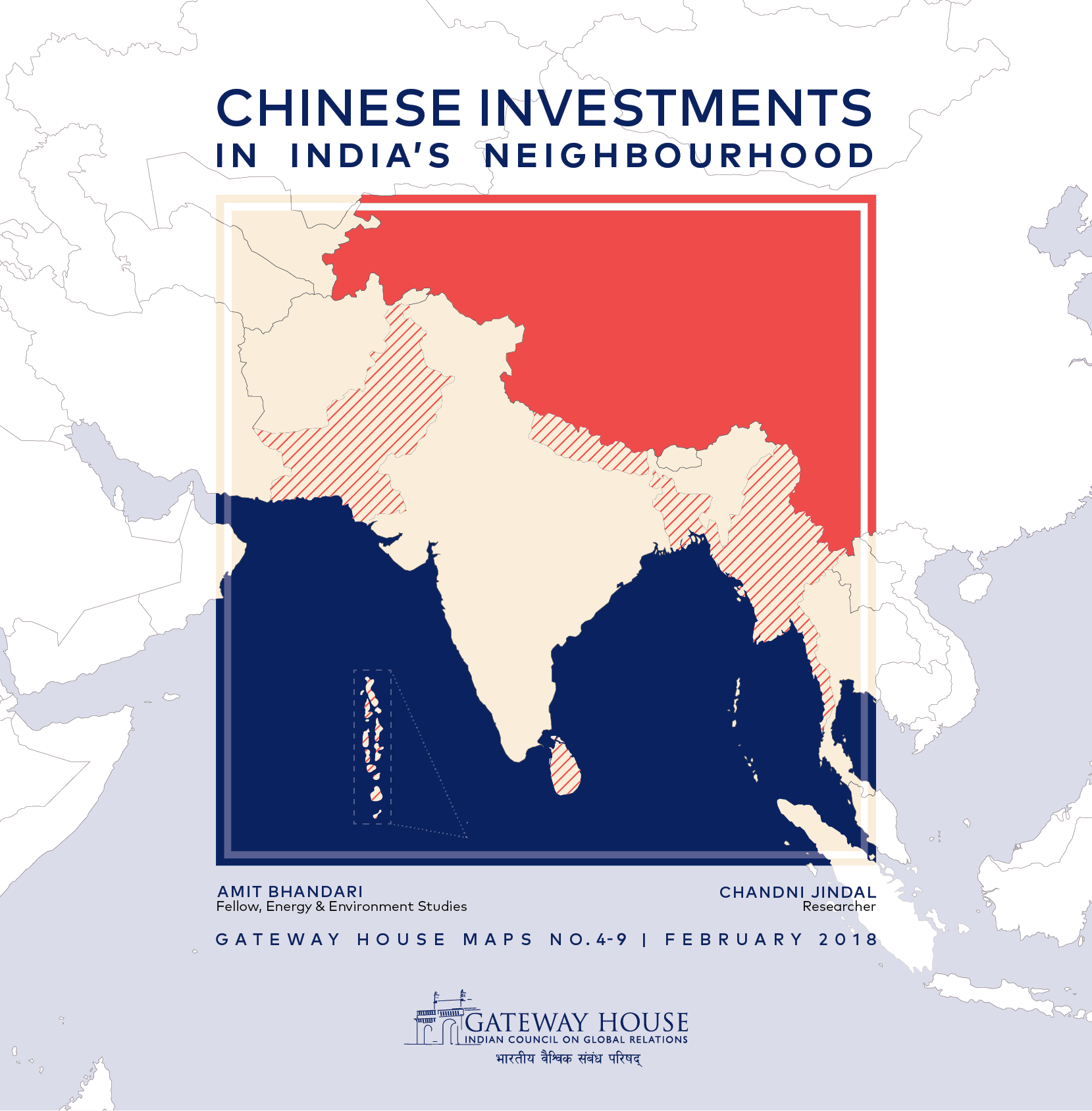
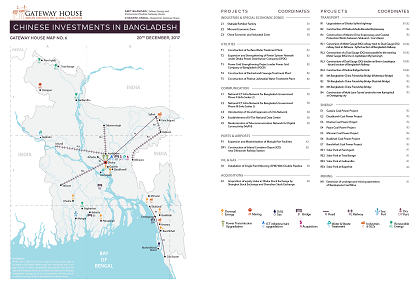
Gateway House's research on Chinese investments in India's Neighbourhood. Researched by Amit Bhandari and Chandni Jindal. Courtesy: Gateway House
12 March 2018

Chinese Investments in India’s Neighbourhood

India and the world have watched China’s growing investment in Asia and beyond with a mix of awe and apprehension. The unprecedented scale of these investments are reshaping political arrangements around South Asia.

IMG_3050 Courtesy:
24 November 2017

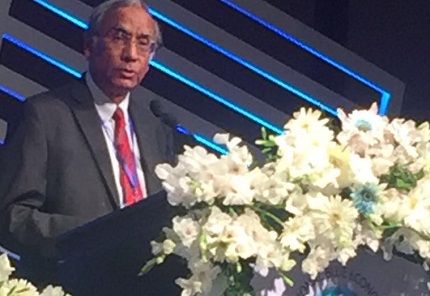
Opening Remarks at the Second International Blue Economy Dialogue, Dhaka

These are the opening remarks given by Ambassador Rajiv Bhatia at the Second International Blue Economy Dialogue, ‘Promoting Blue Economy: Making the best use of Opportunities from the Coasts, Seas and Oceans’ in Dhaka, Bangladesh. He discusses the economic endowment of the blue economy and the necessity to utilise its resources in a sustainable manner