U.S. Tariffs on Brics+ countries Courtesy: Gateway House
25 September 2025

U.S. Reciprocal Tariffs on BRICS+ countries

Under U.S. President Donald Trump’s reciprocal trade policy, the original five BRICS member countries account for the highest U.S. tariffs globally. India and Brazil are facing the highest tariffs of 50%, while China follows with a tariff of 34%, down from 145% earlier in the year. This infographic details the U.S. reciprocal tariff rates for each BRICS+ member and the sectors that are impacted.

indo pacific  (2) Courtesy: Getty Images
24 July 2025

India’s footprint in the Indo-Pacific region

India is strategically expanding its influence across the Indo-Pacific region, positioning itself as a key player in regional affairs. Three elements anchor the effort: development aid, trade and the diaspora. The country now has 20 Free Trade Agreement partners in the Indo-Pacific. The 21.8 million-strong Indian diaspora across the region is a significant source of soft power for India.

Gateway House Courtesy: Gateway House
3 July 2025

China Plus One and global supply chains

A slowdown of the Chinese economy, and the shift, particularly by MNCs, from China to other more competitive locations has opened up business opportunities for latecomers to supply chains in the developing world. Evidence suggests that Southeast Asia and some South Asian countries like India, Sri Lanka, Bangladesh, could be beneficiaries of the supply chain shift, particularly in labour-intensive segments.

Getty (1) Courtesy: Gateway House
15 May 2025

The New Geopolitics and South Asia’s Trade Architecture – What Next?

Geopolitics is increasingly intertwined with the economic destiny of South Asia. Even before the U.S. tariffs were rolled out, growing polycrises had hit the global economy, which has been struggling since the pandemic. South Asia seems a relatively bright spark of regional trade and growth. This paper analyses South Asia’s trade architecture in the backdrop of a sluggish world economy in the 2020s, and makes recommendations for closer regional economic integration.

Website articles  (12) Courtesy: Gateway House
15 May 2025

U.S., global emperor of sanctions

Over two centuries, the U.S. has amassed vast economic powers across the globe during and after the two World Wars , and sanctions slowly became an effective tool it used to achieve its foreign policy goals, becoming the global emperor of sanctions.

BERNAMA Courtesy: BERNAMA
13 February 2025

High expectations of Malaysia as ASEAN chair

Malaysia’s chairmanship of ASEAN in 2025 is pivotal. It will have to steer ASEAN toward regional peace, stability, and prosperity while reinforcing its centrality. All this during a time of heightened geostrategic rivalry, economic deglobalisation, rising protectionism, and nationalist trends.

Amb Gurjit Singh Courtesy: ANI
17 August 2022

75 years of development cooperation

Since 1947, India has had a proud record of development cooperation. It began even though it was newly independent and itself developing, but created a camaraderie with movements in other emerging countries. Now after 75 years, its time to move toward an FDI-led model, which will particularly help reduce the rising indebtedness in the developing world.

7396fefe-aba2-49fe-a3e5-33b8cea9ebf1 Courtesy: WWF
30 June 2022

Can the WTO Agreement Stop Unsustainable Fishing?

Hailed as historic, the new global rules to curb harmful fishing subsidies is a step towards sustainable fishery practices. The negotiated deal, however, is fraught with concerns over overcapacity in fisheries, deep-sea fishing legislations, and blue finance. It may be better for developing countries to formulate their own regulations and set up mechanisms to prevent illegal fishing within their territorial waters – and hold the WTO agreement to its word.

ASEAN FINAL Courtesy: asean.org
17 May 2022

Is the U.S. central or peripheral to ASEAN?

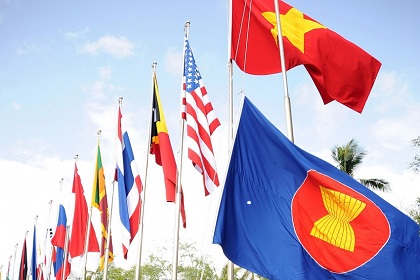
The recently concluded ASEAN-U.S. Summit has raised the bilateral cooperation to a strategic comprehensive partnership. Key areas of cooperation were identified and global health, SDGs, maritime security and connectivity, and the Ukrainian war dominated the dialogue. The meeting is significant in light of the May 24 Quad Summit, where it is important for the US to have its engagement with ASEAN visible.