Gateway House Courtesy: Gateway House
3 July 2025

China Plus One and global supply chains

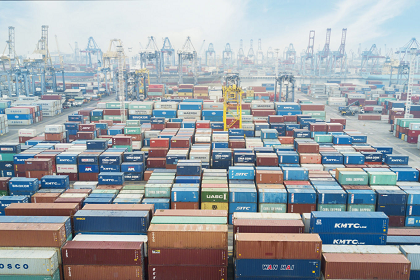
A slowdown of the Chinese economy, and the shift, particularly by MNCs, from China to other more competitive locations has opened up business opportunities for latecomers to supply chains in the developing world. Evidence suggests that Southeast Asia and some South Asian countries like India, Sri Lanka, Bangladesh, could be beneficiaries of the supply chain shift, particularly in labour-intensive segments.

Getty (1) Courtesy: Gateway House
15 May 2025

The New Geopolitics and South Asia’s Trade Architecture – What Next?

Geopolitics is increasingly intertwined with the economic destiny of South Asia. Even before the U.S. tariffs were rolled out, growing polycrises had hit the global economy, which has been struggling since the pandemic. South Asia seems a relatively bright spark of regional trade and growth. This paper analyses South Asia’s trade architecture in the backdrop of a sluggish world economy in the 2020s, and makes recommendations for closer regional economic integration.

Bandung conference  (3) Courtesy: PTI
24 April 2025

Bandung Principles and the path ahead

Amid polycrises, from pandemics to wars and trade wars, the global order is in flux, with the contours of the new order still unclear. As the world marks the 70th anniversary of the historic Bandung Conference, this article analyses how its Ten Principles still resonate in today's fractured geopolitical landscape and offer a roadmap for equity, inclusivity, and balance.

BERNAMA Courtesy: BERNAMA
13 February 2025

High expectations of Malaysia as ASEAN chair

Malaysia’s chairmanship of ASEAN in 2025 is pivotal. It will have to steer ASEAN toward regional peace, stability, and prosperity while reinforcing its centrality. All this during a time of heightened geostrategic rivalry, economic deglobalisation, rising protectionism, and nationalist trends.

X PRABOWO Courtesy: X (@rashtrapatibhvn)
30 January 2025

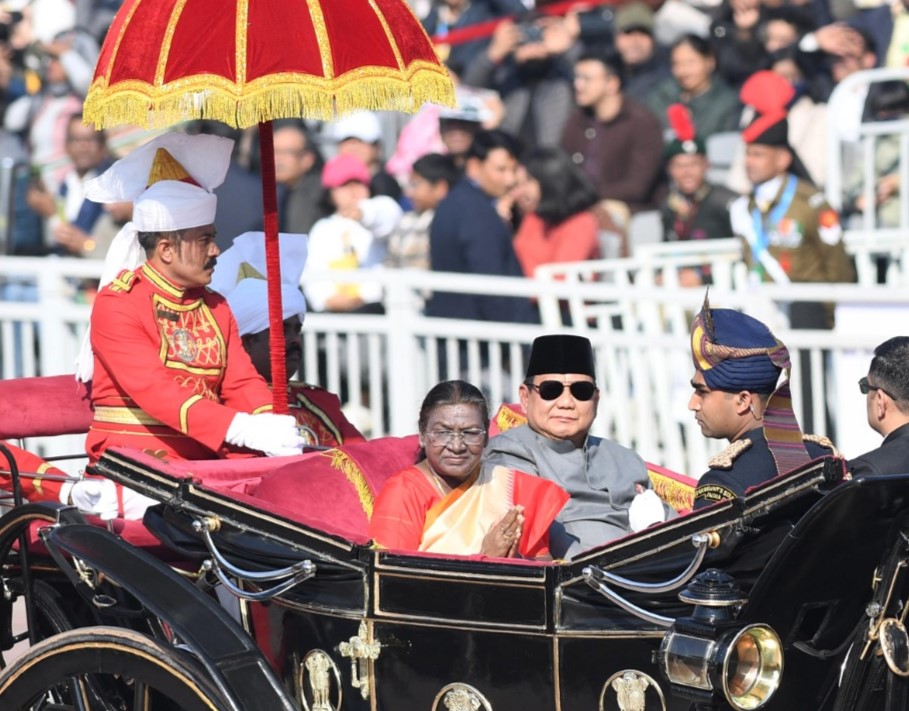
Decisive moment in India-Indonesia ties

India hosted Indonesian President Prabowo Subianto on a four-day state visit and as chief guest for its 76th Republic Day. The bilateral is now going beyond civilisational commonalities. Tourism, trade and connectivity are central themes, as is defence and maritime security cooperation with India. A robust India-Indonesia partnership can help both nations achieve shared goals in the Indo-Pacific.

Screenshot 2024-11-06 at 3.04.26 PM Courtesy: Gateway House
7 November 2024

India-Indonesia: Companion Souls in a New Era

India and Indonesia have a comprehensive strategic relationship built on their ancient and modern histories, and a flourishing relationship sustained by trade, economic exchange and people-to-people contact. The India-Indonesia Track 1.5 Dialogue, hosted by Gateway House and the Centre for Strategic and International Studies, Indonesia, aims to provide policy recommendations to promote innovation and navigate evolving governance issues through bilateral and multilateral cooperation.

Indonesia Trade Courtesy: Shutterstock//Creativa Images
26 September 2022

Trade ties support Indonesia’s G20 year

Indonesia has managed its G20 Presidency year by understanding the importance of not going it alone. This trading nation has used its deep regional and multilateral cooperative processes which provided trusted back-up and support at every step, and was book-ended by strong linkages and investment partnerships with Japan and Australia. In this, it has laid the groundwork for India’s 2023 presidency.

T20 Brochure 11 Img Courtesy: T20 Indonesia
22 September 2022

T20 Task Force Notes on Open Trade, Sustainable Investment and Industry

G20 President Indonesia, hosted the Think-20 (T20) Summit in Bali 4-6 September. The recommendations of the working groups resonate in the Leaders’ Statement released at the G20 Leaders’ Summit. The T20 Task Force on Open Trade, Sustainable Investment and Industry published its notes on multilateral trade reform, digital trade, health. Yose Rizal Damuri of CSIS, is the Lead Co-Chair of this Task Force.

Amb Gurjit Singh Courtesy: ANI
17 August 2022

75 years of development cooperation

Since 1947, India has had a proud record of development cooperation. It began even though it was newly independent and itself developing, but created a camaraderie with movements in other emerging countries. Now after 75 years, its time to move toward an FDI-led model, which will particularly help reduce the rising indebtedness in the developing world.

GIGA_map_of_Indo-Pacific_Kontur_resize Courtesy: Science Po
28 July 2022

India’s blue economy and the Indo-Pacific’s future

The Indo-Pacific region envisages the Indian and Pacific Oceans as a continuum and stands on two central pillars – maritime security and economic development. The public discussions, however, are focused on maritime security, strategy and geopolitics, while economic development has received less attention. This imbalance can be corrected by creating an awareness on how to harness the potential of the region's Blue Economy and its vast resources and opportunities.