Website articles  (79) Courtesy: @DrJaishankar/X
23 April 2026

Korea re-engages India

South Korea and India have much in common – both are Indo-Pacific players, oil importers and business-oriented economies. Yet, despite the ubiquitious and successful presence of Korean companies in India’s markets, the political relationship has been weak, and underperformed. The recent state visit by South Korean President Lee Jae-myung to India along with a slew of economic and strategic agreements signed, is an effort to recalibrate the relationship.
Website articles  (74) Courtesy: Presidential Communications Office
9 April 2026

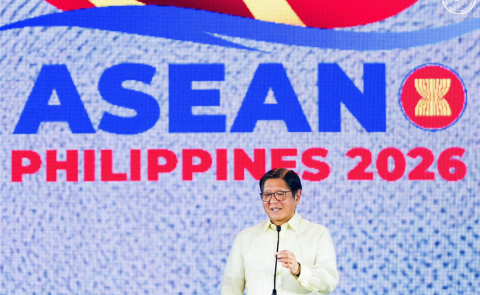
ASEAN challenged by the Iran crisis

The West Asia conflict has disrupted global stability, impacting ASEAN economies and diplomacy. As chair, the Philippines balances its alliance with the U.S. and regional neutrality, while Indonesia and Malaysia reflect domestic support for Arab states. With energy shocks, remittance risks, and inflation rising, ASEAN’s limited influence is evident. Has ASEAN once again been drawn into a vortex of crises beyond its control?

Website articles  (55) Courtesy: Andreea Campeanu/Getty Images
12 March 2026

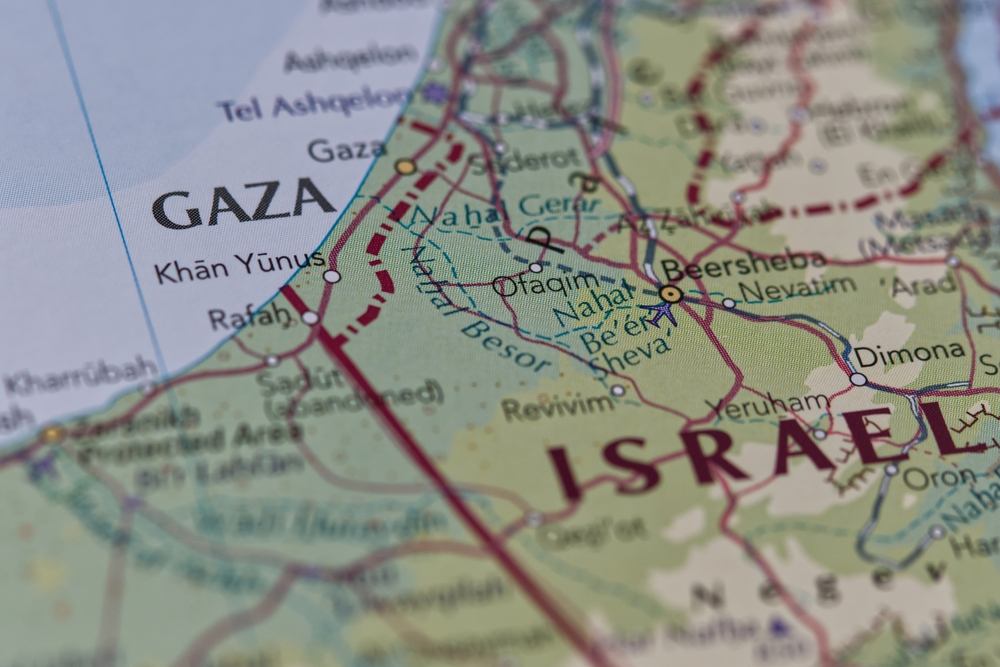
Europe’s strategic absence in West Asian conflict

The war in West Asia is crowded with armaments and players, but there is one presence that is LOB, or Left Out of the Battle: that of Europe. The Continent is peripheral in the current crisis. Structural constraints, strategic dependence on the U.S., internal political divisions, and a shift in Europe’s geopolitical priorities since the war in Ukraine, has reduced its strategic weight.

2 (3) Courtesy: Getty Images
5 February 2026

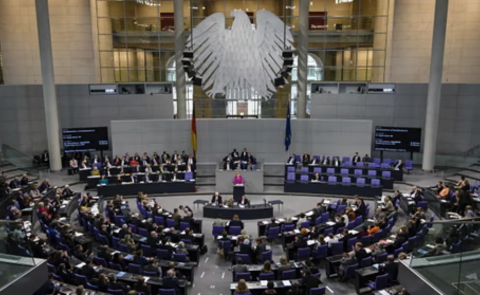
Germany’s reform under strain

Germany’s prospects in 2026 are defined by tension rather than momentum. The country is neither in crisis nor comfortably on a path to renewal. Instead, it is engaged in a difficult process of adjustment, seeking to reconcile fiscal restraint with strategic ambition, social protection with demographic reality, and climate leadership with industrial competitiveness.

Website articles  (29) Courtesy: Somaliland Presidential Office
15 January 2026

Somaliland recognition strengthens alternative diplomacy ecosystem

Israel’s recognition of Somaliland as an independent state in December 2025 is not merely a diplomatic gesture toward a long-marginalised polity; it is a strategic act with implications for Somalia’s territorial integrity, regional security dynamics, great-power competition, and the evolving politics of recognition in a fractured international order.

indo pacific  (7) Courtesy: Daily News Egypt
31 July 2025

Egypt positions its foreign policy

Egypt sits at the intersection of three continents and two seas, and its foreign policy is a geographic, historic and strategic consequence. From Tripoli to Kortum, Addis Ababa to Brussels, New Delhi to Moscow, Beijing to Washington, Cairo employs diplomacy as a key national security tool, positioning itself as a cornerstone of geopolitical stability within an increasingly multipolar world.

ADEM ALTANAFP via Getty Images Courtesy: Adem Altan/AFP via Getty Images
3 July 2025

Iran’s second chance to transition

Iranian foreign policy must move toward strategic autonomy and internal concord. As witnessed after the 1988 ceasefire with Iraq, such moments can mark an inflexion point - one that prioritises national reconstruction, resilience, and welfare; strategic recalibration, strengthening of confidence, and finding a geopolitical identity. Iran has been there before, and can apply those experiences again.

IMEC map with source Courtesy: Gateway House
11 June 2025

IMEC: more than just a corridor

The proposed IMEC corridor connecting India to Europe through the Gulf can be transformative, helping to reduce risks to the global movement of goods and data. It’s early days yet, and there are gaps to be filled in terms of missing infrastructure and overcoming a diplomatic rift.

Website articles  (18) Courtesy: Reuters photo
28 May 2025

Strategy meets statecraft: Trump in Riyadh

Presidential visits abroad are high-level instruments of statecraft and, more often than not, signals of geopolitical priorities. The recent visit of U.S. President Donald Trump to the United Arab Emirates, Saudi Arabia, and Qatar, exemplified this, indicating the administration's policy orientation.