Koerber Stiftung (5) Courtesy: AFP
23 October 2025

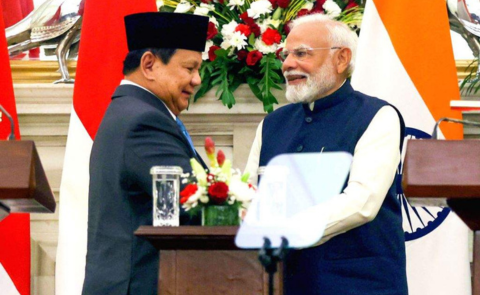
India and Indonesia guide southern consensus

India and Indonesia sit at the heart of the Indo-Pacific, and participate  in multiple global and regional frameworks that ensure developing countries remain part of governance debates. The two countries can use these platforms to craft a southern consensus, a framework for cooperation that prioritises resilience, equality and cooperation over competition and coercion. This can reduce vulnerabilities among developing countries and strengthen them against future disruptions.

Koerber Stiftung (2) Courtesy: IndoIndians
6 October 2025

The unbreakable Indonesia-India bond

India and Indonesia are bound by history, culture, trade, and shared values. Their relationship must now add a new dimension — higher education and research. Both nations have long relied on outdated Western models. With a tech-savvy generation and receding colonial memory, the two largest democracies must build research bridges and empower students to become the leaders, innovators and humanitarians of tomorrow.

DD news Courtesy: DD News
18 August 2025

Alaska, the Summit of Summits

There was much at stake for the U.S.-Russia summit at Alaska – more than just the future of Ukraine. It will put the world back on economic track, and ease East-West relations, under stress for an on-going tariff war. For now, diplomacy has played a successful hand.

East Asia Forum Courtesy: East Asia Forum
26 June 2025

Canada, India and the G7 Summit

Most multilateral and plurilateral institutions have lost their significance and ability to shape the trajectory of international relations today. The G7 is no exception. It is impacted by the shift of power from the Atlantic to the Pacific, and an intra-Atlantic rift. The G7 discussions reflected this. More positive were the sideline discussions on repairing the India-Canada bilateral.

Website articles  (21) Courtesy: News Arena India
12 June 2025

G7 Summit: Plethora of opportunities

Canadian Prime Minister Carney can use the upcoming G7 summit he is hosting to advance the North-South dialogue and cooperation and also to discuss the strained bilateral with India. India can articulate the viewpoint of the Global South, stressing its conviction that the G7 is better served by constructively working with developing and emerging economies.

IMEC map with source Courtesy: Gateway House
11 June 2025

IMEC: more than just a corridor

The proposed IMEC corridor connecting India to Europe through the Gulf can be transformative, helping to reduce risks to the global movement of goods and data. It’s early days yet, and there are gaps to be filled in terms of missing infrastructure and overcoming a diplomatic rift.

China Germany Courtesy: Deutsche Welle (DW)
20 July 2023

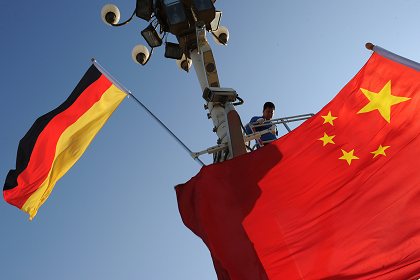
Germany’s new China strategy

On July 13, the German cabinet approved its Strategy on China after nearly two years of internal discussions. The new strategy simultaneously views China as a “partner, competitor, and systemic rival”, calling for de-risking German economic dependence on China, while also expanding cooperation with other countries in the Indo-Pacific region.

G7s1 Courtesy: The Print
4 July 2022

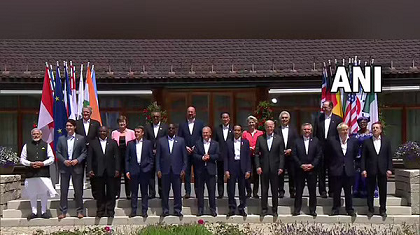
What did the G7 achieve?

The shadow of the Ukrainian war was visible at the G7 summit. Anti-Russian formations were expected, but the extensive reference to China drew attention. The leaders did their part by extensively discussing challenges relating to climate, energy, environment, health, and food security. It is now for the G7 governments to deliver, to be taken seriously.

jai shankar n ursula Courtesy: Twitter - Dr. S. Jaishankar
27 April 2022

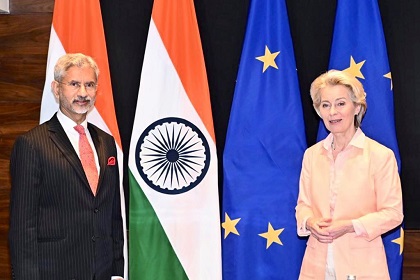
The EU pivots to India

The EU has been working on an India engagement for two decades now – a strategic partnership and a free trade engagement. It is finally being realised – the outcome of the visit of European Commission President Ursula von der Leyen to Delhi this month. The upgraded, ambitious partnership Europe’s long overdue pivot to India.

Sanctions,-,Just,Ahead Courtesy: Shutterstock
5 August 2021

Are counter-sanctions effective against sanctions?

Sanctions are an important foreign policy tool, used especially by the West against its adversaries. Now, these rivals are retaliating with counter-sanctions. Are these effective? How does this impact global politics? Where does India stand in this free-for-all sanctions era?