Reuters Courtesy: Reuters
13 October 2026

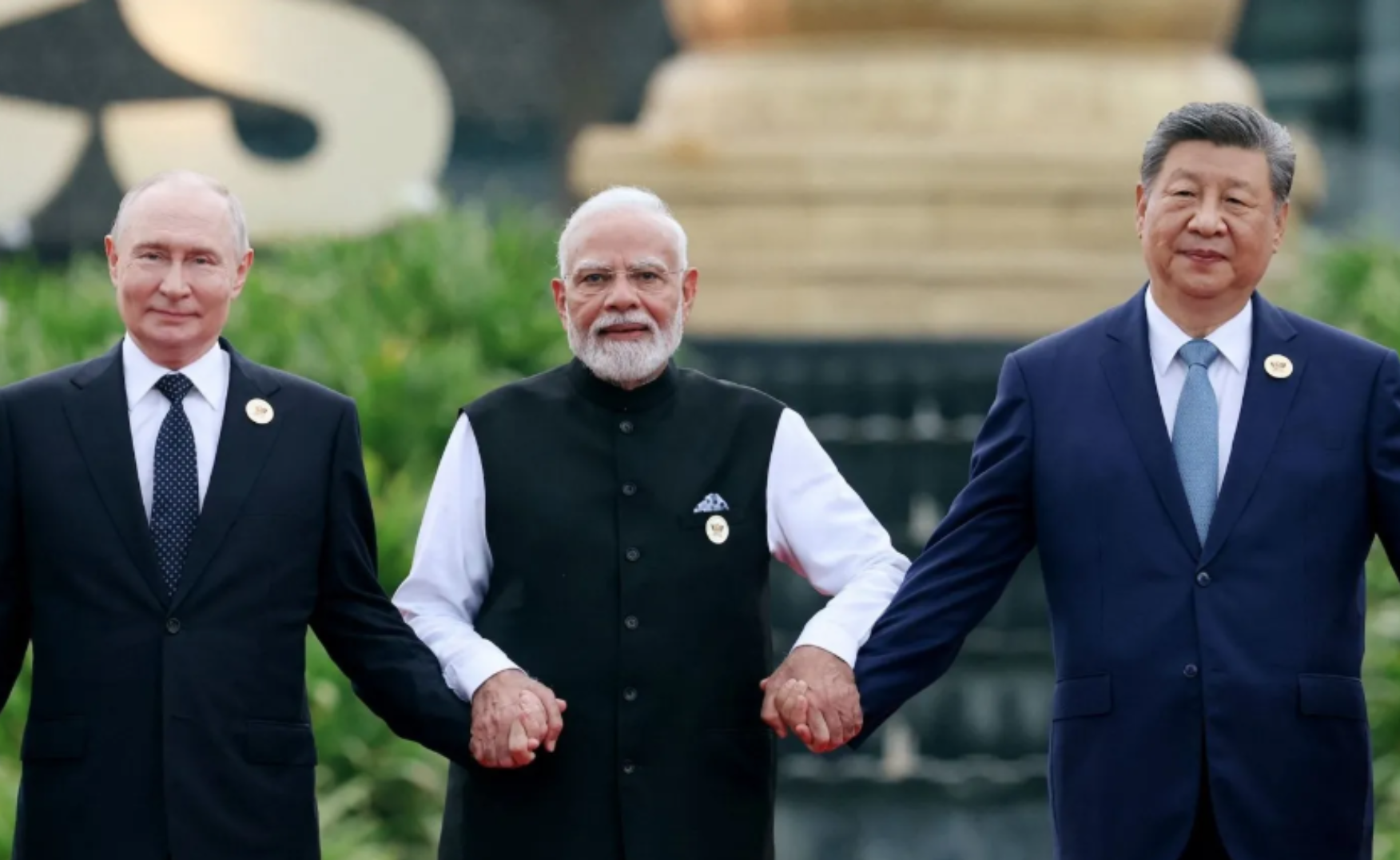
Multiple dimensions of BRICS’ Delhi Summit

 The BRICS Summit in Delhi carried over the issues from the previous years. But it was particularly important because it also hosted the India-China leaders’ bilateral, and it was preceded by the visit of Chinese President Xi to the U.S. The optics of the 2026 Summit will have been keenly watched in Washington for its effect on U.S.-China relations.

Xi-Trump Courtesy:
8 October 2026

A tired U.S.-China tango

Chinese President Xi Jinping’s September state visit to the U.S. produced no joint statement, indicating major differences, although both countries agreed Iran should not develop nuclear weapons and no country should collect tolls in the Strait of Hormuz. Tariffs on China remained unresolved. There was a staleness to the visit, with both countries’ leaders focused on the past. The visit appears to favour China, denoting its growing stature.

AI generated Economic Times Courtesy: The Economic Times
2 September 2026

China and Economic D-Day vs. Iran

“Economic D-Day”, recently announced by the U.S. Trump administration, will put additional sanctions on any party which facilitates any activity with Iran. India, Iraq, Turkey, and the UAE could be affected. But ironically China, the biggest supporter of Iran’s regime, may be off the hook given the deep mutual over-reliance with the U.S. and the risk that further sanctions on China could put the global financial system in jeopardy.

Website articles  (11) Courtesy: ASEAN
30 July 2026

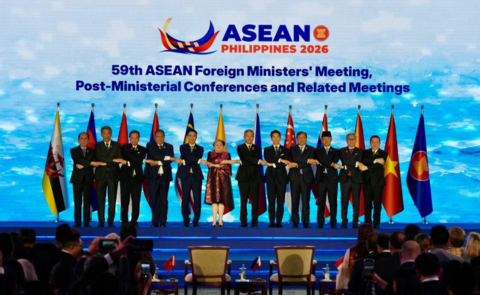
ASEAN centrality on display in Manila

The Manila meetings of ASEAN, held amid continuing crises in Ukraine and West Asia, have demonstrated that ASEAN centrality has not gone out of fashion. Neither the U.S. nor China, despite scepticism about ASEAN's effectiveness, wishes ASEAN institutions to disappear. India, Russia, Japan, Australia, the EU and the UK likewise continue to use these meetings as valuable platforms for Indo-Pacific engagement.

sabrang india (1) Courtesy: Council on Foreign Relations
23 July 2026

India should re-examine its energy investment

The absence of panic in the energy markets despite the renewed U.S.-Iran fighting indicates a well-supplied oil market in the longer term. That means stability for energy short countries like India in the long term. In the short term, however, India will be impacted by other disruptions, such as the increased use of sanctions.

outlook business Courtesy: Outlook Business
9 July 2026

India-Japan Economic Security Pillar

The legacy of the Modi-Takaichi Summit will extend well beyond the bilateral. It demonstrates that middle powers, through responsible and sustained action, are capable of shaping the future of the Indo-Pacific through strategic intent and the resilient economic networks that back it up to promote regional stability. For India and Japan, economic security is the foundation upon which the next generation of the bilateral will be built.

Kenny Holston  AP (3) Courtesy: Business Post
11 June 2026

AI and its spin-off gains

The AI industry in the U.S. is on a high, with three major upcoming public offerings on the table from Anthropic, Open AI and Space X hogging the attention and news. But users are increasingly concerned about costs, and developers are rushing to raise capital. When the effervescence abates, a reduced appetite for AI stocks may eventually see investors return to emerging markets. Can India benefit?

AFP Courtesy: AFP
4 June 2026

Two significant critical minerals deals

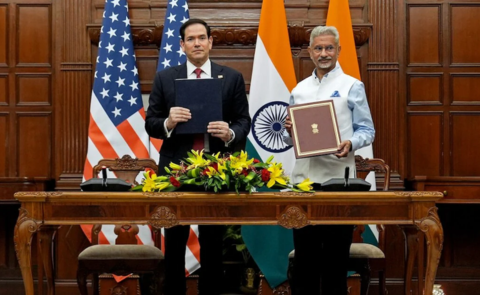
India signed on to two deals on critical minerals in May: one was the launch of the Quad Critical Minerals Initiative and the other a new bilateral India–U.S. framework on critical minerals. Both highlight the deep concerns over China’s dominance of global supply chains. For India, specifically, these initiatives will advance its ambitions in green energy. Collectively, the QUAD members have differing priorities. Can those be sustained long-term, for success?

Website articles  - 2026-05-21T164114.205 Courtesy: X/@IndiainZimbabwe
21 May 2026

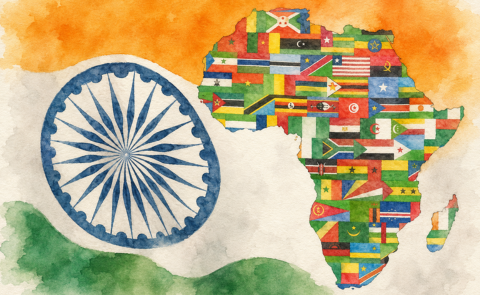
India-Africa: taking stock before the summit

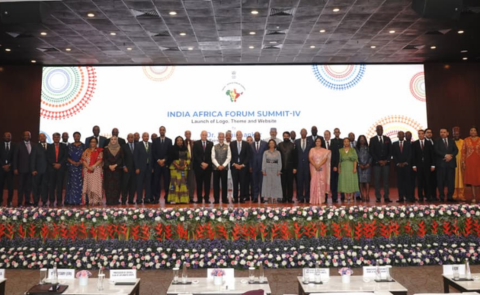
Africa is central to India’s foreign policy, a priority expected to be reaffirmed at the upcoming India–Africa Forum Summit. The much-anticipated event will focus on deepening economic partnerships and expanding strategic cooperation. Ahead of the summit, it is necessary to take stock of the current state of the continental engagement, particularly in trade, investment, technology, and capacity-building.

Website articles  (95) Courtesy: Gateway House
14 May 2026

Stacking up the India-Africa summits

The Fourth India-Africa Forum Summit (IAFS-IV) will take place in New Delhi from May 28-31, 2026. It is being held at a time when Africa has actively engaged with several other major partners, placing high expectations on India. Over the last 18 years, the India-Africa partnership has had ambitious goals and some outcomes across diplomacy, trade, education, capacity building, health, and infrastructure development. This will deepen.