

The current crisis in West Asia has once again exposed a striking feature of contemporary geopolitics: Europe’s relative absence from the diplomatic and strategic centre of events. While the U.S., regional powers such as Iran, Israel, Saudi Arabia and Türkiye, and somewhat China and Russia shape the narrative and the responses, Europe appears peripheral. Statements are issued, humanitarian concerns are expressed, and limited diplomatic engagements occur, yet the European Union (EU) and its major member states are not defining the trajectory of the crisis.[1] The reasons for this absence lie in structural constraints, strategic dependence on the U.S., internal political divisions, and a shift in Europe’s geopolitical priorities since the war in Ukraine.
One of the principal explanations is that Europe no longer possesses the unified strategic weight necessary to act decisively in West Asia.[2] The EU often aspires to operate as a geopolitical actor, but its foreign policy remains fragmented. Decisions require consensus among 27 member states whose interests and historical relationships with the region differ widely. Countries such as France have traditionally maintained a more active diplomatic and security presence in the West Asia, while others prefer cautious engagement focused on humanitarian assistance or energy security. These differing approaches make it difficult for Europe to present a single, coherent diplomatic initiative at moments of crisis.
This fragmentation contrasts sharply with the more centralized foreign policy machinery of other major powers. The U.S. can deploy diplomatic leverage, intelligence capabilities, and military assets with speed and clarity. China and Russia, though operating differently, also act with centralised authority. Europe’s consensus-based model slows response times and often results in lowest-common-denominator statements rather than strategic initiatives.
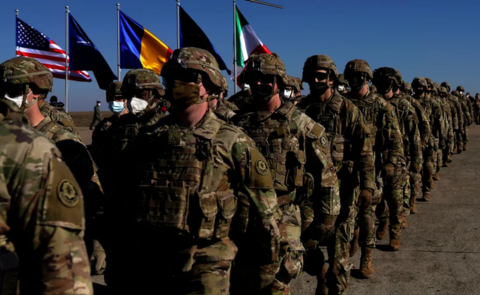
A second factor is Europe’s continued reliance on the U.S. for security and strategic direction. Since the end of the Second World War, European security has been anchored in the transatlantic alliance. NATO remains the central framework within which most European countries approach security crises. In West Asia, this dependence often translates into deference to American leadership. When Washington takes the lead, whether through diplomatic initiatives, military deployments, or sanctions, European governments typically align themselves with the broader U.S. position rather than attempt to construct a parallel European strategy.
This dynamic has become even more pronounced since the Russian invasion of Ukraine in 2022. The war fundamentally reshaped Europe’s strategic priorities. European governments now view the security of their eastern flank and the confrontation with Russia as their foremost geopolitical challenge. Military resources, political attention, and diplomatic capital have been redirected toward Ukraine and NATO deterrence. In practical terms, this leaves limited bandwidth for sustained engagement in West Asian theatres, even though developments there directly affect European interests through migration flows, energy markets, and terrorism risks.[3]
A third dimension of Europe’s absence is its declining military footprint in the region. During earlier decades, several European powers maintained significant operational roles in West Asia. France and the UK participated in security operations, maritime patrols, and counterterrorism missions. Over time, however, domestic political pressures and financial constraints reduced Europe’s willingness to sustain such deployments. Strategic fatigue following interventions in Iraq, Afghanistan, and Libya contributed to a more cautious posture toward military engagement.
Without credible military leverage, Europe’s diplomatic influence naturally diminishes. In West Asia, diplomacy is often intertwined with hard power. The ability to deploy naval forces, conduct intelligence operations, or provide security guarantees can strengthen diplomatic bargaining power. In contrast, Europe’s limited willingness to project force means that regional actors often look instead to Washington, Moscow, or even Beijing for strategic engagement.
Internal political dynamics within Europe further complicate the situation. The current West Asian crisis touches upon deeply sensitive issues that resonate within European societies, including immigration, religious tensions, and relations with Israel and the Arab world. Governments must balance foreign policy considerations with domestic political pressures. Public opinion across Europe is often sharply divided on West Asian conflicts, making decisive policy positions politically risky. As a result, leaders frequently adopt cautious language designed to maintain internal stability rather than pursuing bold diplomatic initiatives.
Energy politics play a subtle role in shaping Europe’s posture. Following the disruption of Russian energy supplies after the Ukraine war, Europe intensified its efforts to diversify energy sources. Several West Asian countries, like Qatar, the United Arab Emirates, and Saudi Arabia became important partners in this strategy. European governments are therefore reluctant to alienate key energy suppliers by adopting confrontational diplomatic positions. This economic consideration encourages restraint rather than activism.
Meanwhile, the geopolitical landscape of West Asia itself has evolved in ways that reduce Europe’s influence. Regional actors have become more assertive and capable of shaping their own strategic environment. Countries such as Saudi Arabia, Iran, Türkiye, and Israel pursue independent regional strategies and maintain multiple external partnerships. At the same time, China has emerged as a significant diplomatic and economic presence in the region. Beijing’s mediation of the Saudi-Iran rapprochement in 2023 demonstrated that new actors can play roles once associated with Western diplomacy. Europe, lacking comparable leverage or initiative, finds itself overshadowed in this evolving landscape. The U.S.’ junking the Iran nuclear deal in which Europe was a partner, is a case in point.
Institutional limitations within the EU contribute to the perception of absence. The EU possesses mechanisms for foreign policy coordination, including the High Representative for Foreign Affairs and the European External Action Service. However, these institutions operate with limited authority compared with national governments. Without a unified strategic doctrine and without independent military capabilities, the EU struggles to convert diplomatic aspirations into tangible influence.[4]
Europe’s focus on humanitarian diplomacy further shapes its role. European governments and the EU collectively remain among the largest providers of humanitarian aid and development assistance to West Asia. They fund refugee support programs, reconstruction initiatives, and humanitarian relief efforts. While these contributions are significant, they are not leveraged and do not translate into the kind of strategic leadership that shapes the direction of conflicts. Europe is therefore visible in humanitarian arenas but less so in the geopolitical negotiations that determine outcomes.
Finally, there is a broader issue of strategic identity. Europe has spent decades constructing itself as a “normative power,” emphasising international law, multilateralism, and conflict resolution through diplomacy. While these principles remain important, the increasingly hard-edged geopolitical environment of West Asia often rewards actors willing to combine diplomacy with coercive leverage. In such an environment, Europe’s normative approach sometimes appears detached from the realities of power politics.[5]
In sum, Europe’s absence from the centre of the current West Asian conflict is not the result of a single decision but rather the product of several overlapping factors. Whether this absence persists will depend on Europe’s willingness to redefine its strategic role. If the EU develops stronger mechanisms for a unified foreign policy, if it invests in credible security capabilities, and articulates a coherent approach to West Asia, it could once again become a meaningful diplomatic actor. For now, however, Europe remains largely on the sidelines of a conflict that profoundly affects its own strategic environment.
Gurjit Singh is a former Indian Ambassador to Germany. He is currently promoting the impact investment movement for implementing SDGs in Africa.
This article was exclusively written for Gateway House: Indian Council on Global Relations. You can read more exclusive content here.
Support our work here.
For permission to republish, please contact outreach@gatewayhouse.in
©Copyright 2026 Gateway House: Indian Council on Global Relations. All rights reserved. Any unauthorised copying or reproduction is strictly prohibited.
References:
[1] Joint statement by President von der Leyen and President Costa after the video conference with Leaders from Middle East countries on the war in Iran , Delegation of the European Union to Türkiye, 10 March 2026, https://www.eeas.europa.eu/delegations/t%C3%BCrkiye/joint-statement-president-von-der-leyen-and-president-costa-after-video-conference-leaders-middle_en
[2] Pierre Vimont, Europe on Iran: Gone with the Wind, Carnegie Europe, 3 March 2026, https://carnegieendowment.org/europe/strategic-europe/2026/03/europe-on-iran-gone-with-the-wind
[3] Joint statement by GCC-EU Ministers’ meeting on recent developments in the Middle East: Iran’s attacks against GCC states, Council of the EU, 5 March 2026,https://www.consilium.europa.eu/en/press/press-releases/2026/03/05/joint-statement-by-gcc-eu-ministers-meeting-on-recent-developments-in-the-middle-east-iran-s-attacks-against-gcc-states/
[4] Rikard Jozwiak, EU Statement On Iran Shows Its Diminished Role As Foreign Policy Player, Radio Free Europe, 2 March 2026, https://www.rferl.org/a/eu-iran-statement-foreign-policy-waning-influence/33692139.html
[5] Statement by the High Representative on behalf of the European Union on developments in the Middle East, Council of the EU, 1 March 2026, https://www.consilium.europa.eu/en/press/press-releases/2026/03/01/statement-by-the-high-representative-on-behalf-of-the-european-union-on-developments-in-the-middle-east/