Latin America Update, March 2014
In 'Latin America Update' Gateway House lists some of the important events in Latin America over the past month
Courtesy: Google Maps
In 'Latin America Update' Gateway House lists some of the important events in Latin America over the past month
Courtesy: Foreign Affairs
When the average growth rate in emerging markets hit over seven percent a year in the last decade, forecasters hyped its implications. Today, more than five years after the financial crisis of 2008, the euphoria seems to have waned
Courtesy: Prime Minister's Office
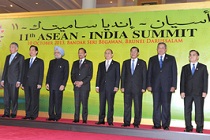
The India-ASEAN Free Trade Agreement in services and trade will allow India to leverage its competitive offerings in IT, finance, among other fields. But the pact has proved elusive so far due to the open squabbling between ministries. The deal now looks set to come through only after the new government takes over
Courtesy: Gobierno de Chile/Wikimedia Commons
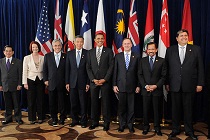
Can India integrate more fully into the global economy and energise its trade by joining the Trans-Pacific Partnership? Or will negotiating an entry require significant concessions, not necessarily in India’s interests? These outcomes will depend on how TPP framework itself develops – inclusively or exclusively
Courtesy: European External Action Service
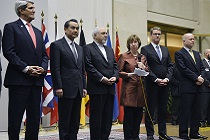
On November 24, the P5+1 and Iran reached a consensus on the interim agreement regarding Tehran’s long-disputed nuclear program. How comprehensive is this agreement, and what are its potential upshots for U.S., and West Asia – especially Israel and Saudi Arabia? More importantly, can India play a positive role?
Courtesy: Rigues/Flickr
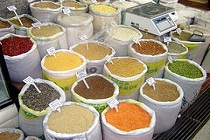
A recent UN report praises governments for promoting the right to food. At the same time, India’s Food Security Act will encounter resistance at the WTO meeting in Bali in December. Can India play an exemplary role in the global power struggle over food security?
Courtesy: generalising/Flickr
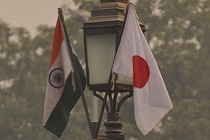
The India-Japan alliance needs to be viewed through a prism broader than that of "containing" China, and by treating the Indian and Pacific oceans as a single entity. Such an alliance has the potential to strengthen the geopolitical security of India and Japan, along with that of all their allies and associates
Courtesy: Systemman, Erin A. Kirk-Cuomo/Wikimedia Commons
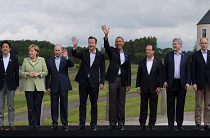
The U.S. government shutdown and President Obama’s absence gave China immense diplomatic and political space at the APEC and East Asia Summit meetings. China’s declaration of a “de-Americanised” world may be premature but the crumbling old order is doing little to dispel this notion
Courtesy: Jerchel/WikimediaCommons
India often finds itself in the right place at the wrong time or vice versa, as our dogma of non-alignment trumps honest calculations of self-interest in policy-making – rendering it unfavourable. The national interest, hence, calls for selective alignment on some issues with Washington and on others with Beijing
Courtesy: WikimediaCommons
Can the world aspire to a future where the use of force is not seen as leadership? Can the U.S. and former colonial powers like France and UK, think differently and reject the use of force as first resort? Can China and India craft alternatives?