China’s global proxy game
Afghanistan has become the first significant theatre of effective confrontation between the West and China. But with its deep-rooted economic ties, could the U.S. and NATO actually confront China?
Courtesy: Afghanistan Goverment/WikimediaCommons
Afghanistan has become the first significant theatre of effective confrontation between the West and China. But with its deep-rooted economic ties, could the U.S. and NATO actually confront China?
Courtesy: Newsdesk
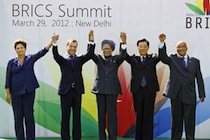
Alongside the 2012 BRICS Summit in Delhi, this special publication is a collection of articles that addresses important issues of the global agenda, the priorities of BRICS, the policies and competitive advantages of the participants, as well as BRICS institutionalization.
Courtesy: nazeah/Wikimediacommons - Ramesh Lalwani/Flickr
The year 2011 saw various events - the Arab Spring, anti- corruption protests, Europe's sovereign debt crisis - transform countries and reshape the world order. Gateway House takes a look at what these events mean for India, and presents India's top foreign policy cheers and jeers for the year.
Amidst myriad country groupings that already exist – BRICS, IBSA, APEC, SCO and many others – a new initiative in the Pacific is looking to integrate more powerful countries to form a multilateral free trade agreement – the Trans Pacific Partnership. How important is this towards the reshaping of trade and power?
Courtesy: UN Photo/Paul Banks
After the crass misuse of Responsibility to Protect (R2P) in Libya, the broader question is: where is R2P headed? Do the events in Libya herald a more explicit assertion of this doctrine in other parts of the world? And should India rethink its viewpoint towards this ambiguous doctrine?
Courtesy: Pragati
IBSA’s abstention over Syria is an argument against Security Council reform. Critics of reform have long argued that increasing the number of permanent members to include Brazil and India would lead to paralysis.
Courtesy: Foreign Affairs
As Indonesia hosts a number of high-level summits this year, it looks set to take its place among the world’s economic superstars. But celebrations are premature: although Indonesia has made great strides, its gains are reversible. To continue to prosper, Jakarta must address rampant corruption and poor governance
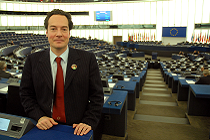
Gateway House’s Hari Seshasayee interviewed Nicolas Krul. A stout defender of European unity, Krul discussed the origins of the crisis, the lessons learned, possible solutions and the opportunities for the emerging world.
Courtesy: PMO
India and Brazil’s increasing engagement in Africa is a clear sign that both countries are embracing their new roles as global diplomats. By joining forces to bolster Africa’s food security, they have the chance to break ground on a tangible agenda that could have a far-reaching impact on matters of global concern
Courtesy: www.kremlin.ru/Flickr
In a reversal of historical roles, the BRICS nations may be coming to Europe’s rescue. During the Asian Financial Crisis, the International Monetary Fund (IMF) introduced structural adjustments in return for IMF loans, and many institutions and individuals went bankrupt. Will it be any different now?