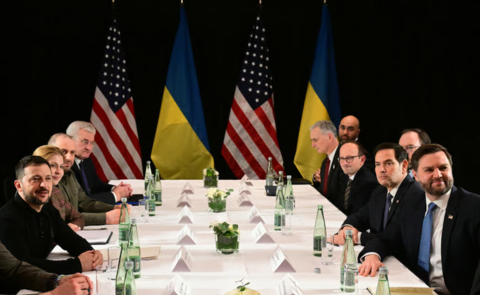
The U.S. demand for Greenland for security purposes, has alarmed Europe enough for talk of Article 5 of NATO’s collective defence agreement to be put on the discussion table. But can NATO survive without Article 5? And can Article 5 survive without the U.S. defence cover for Europe?
The new U.S. Ambassador to India, Sergio Gor, has much to do – and reviving high school exchange programmes stalled due to funding shortages is one important task. Students are a significant element of the bilateral: 300,000 Indian students study in the U.S., but barely 1% of that comprises U.S. students in India. The exchange programmes can bridge the gap - and India can pick up some of the tab.
U.S. action in Venezuela has resurrected the 200-year-old Monroe Doctrine which sought to prevent foreign interference in the Western Hemisphere. Originally intended to keep European colonial powers away, it has been reinterpreted over the years beyond that. Donald Trump has reasserted and updated it to the “Donroe Doctrine,” to revitalise U.S. regional hegemony – and through it, some reduction of Chinese and Russian influence.
Israel’s recognition of Somaliland as an independent state in December 2025 is not merely a diplomatic gesture toward a long-marginalised polity; it is a strategic act with implications for Somalia’s territorial integrity, regional security dynamics, great-power competition, and the evolving politics of recognition in a fractured international order.
Cyclone Ditawah has put a serious dampener on Sri Lanka’s rosy post-budget economic outlook. Sri Lanka can help itself by using available national resources, but India can help too, by partnering with multilateral development banks to manage the post-Cyclone Ditwah reconstruction implementation strategy. It can also share its experience of implementing gradual economic reforms and policy planning under Niti Ayog to support Sri Lanka’s efforts.
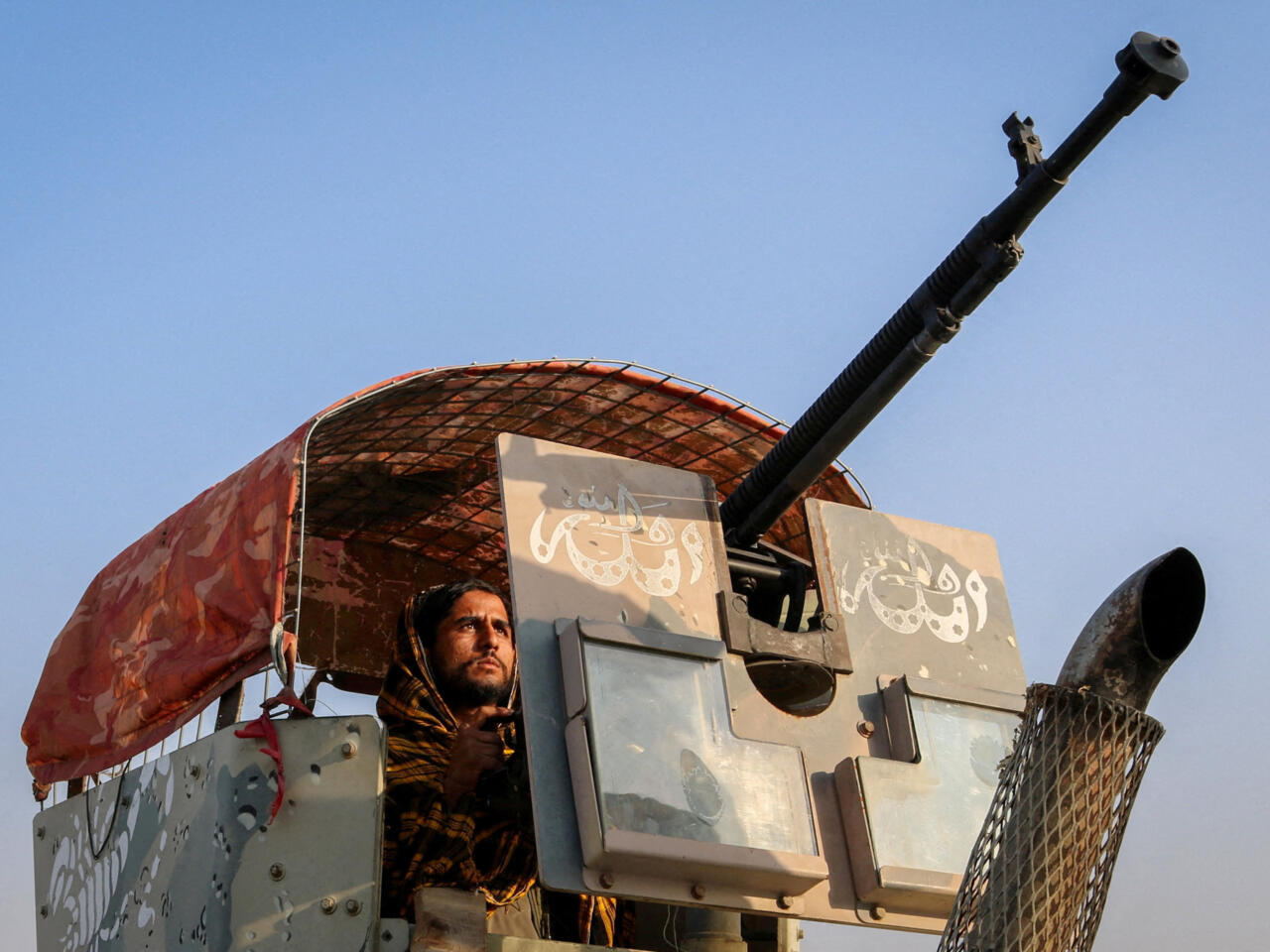
The ongoing tensions between Kabul and Islamabad regarding the closure of trade routes could significantly alter the trade landscape in South Asia. This strain can benefit India. The export and import of merchandise goods between India and Afghanistan are expected to experience significant growth, provided New Delhi moves swiftly.
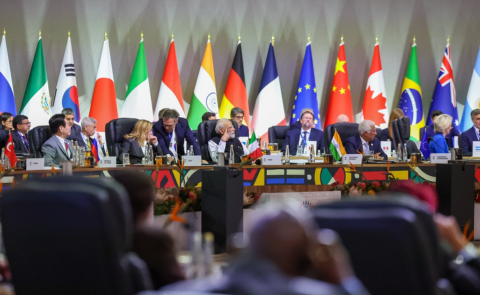
In the shifting sands of contemporary geopolitics, terms such as ‘fluid multipolarity’, ‘multiplexity’, ‘tripolarity’, and ‘bipolarity with multipolar characteristics’ are replacing the old dogmas and orders. But what is driving the world today? How does India plan to protect its vital interests in the current age of ongoing polycrisis? The road ahead is challenging, marked by risks and uncertainty.
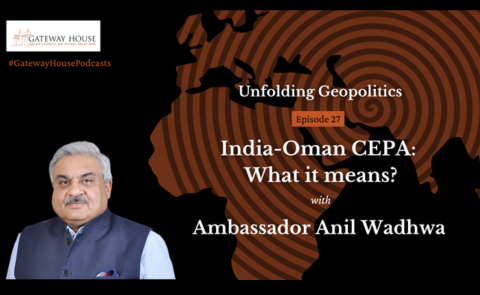
India and Oman signed the Comprehensive Economic Partnership Agreement (CEPA) on December 18, 2025. The agreement reflects India’s approach to engaging with trusted partners while rediscovering its historic trading ties. Ambassador Anil Wadhwa explains what CEPA means for India: it is less about becoming a global gateway and more about anchoring a strategic economic partnership in a geopolitically sensitive region.
In December, India and Oman signed a Free Trade Agreement – a formalisation of exchanges which are, in fact, two hundred years old. These were led by the Indian merchant diasporas, especially the Bhatia, Bohra, Khoja, Khimji and Jain communities, which used Omani-controlled maritime networks to link Bombay with East Africa. These networks still endure, and among the oldest, strongest, and culturally richest are the Bombay-Oman-East Africa connections.
Bangladesh’s economy, already weak at the time of the August 2024 coup, has been on a downward spiral since. Banks are insolvent and cannot lend, business confidence is low, and investors are staying out. These issues will worsen the ongoing radicalisation, extremism and violence in the country.



.png)

