podcast MK Courtesy: Abhijit Chavda Podcast
27 May 2025

Emerging Middle Powers beyond U.S. and China

The rules-based world, perceived to be functional till last year, seems broken, giving way to an increasingly multipolar order. Manjeet Kripalani, Executive Director, Gateway House discusses in the Abhijit Chavda podcast, how emerging middle powers like India, Brazil, and Indonesia to name a few, have the heft to rewrite the rules of global trade and reform, away from U.S. and China.

India Today (1) Courtesy: India Today
26 May 2025

India’s evolving defence doctrine

The Pahalgam attack has changed India’s strategic calculus. With Operation Sindoor, the country is moving towards a more assertive posture, consolidating its strategy around an evolving doctrine of Proactive Deterrence underpinned by Calibrated Coercive Capability. A strategic practitioner’s viewpoint is below.

Website articles  (19) Courtesy: Reuters
22 May 2025

India-UK FTA: Four benefits for India

The India-UK Free Trade Agreement comes amidst increasing economic uncertainty caused by the Trump administration’s reciprocal tariff policies. The FTA has revitalised previously lethargic discussions for India to conclude FTAs between like-minded countries. An India-EU FTA, along with the India-UK FTA, may reform global rule-making on international trade and perhaps even revive the WTO.

Getty (1) Courtesy: Gateway House
15 May 2025

The New Geopolitics and South Asia’s Trade Architecture – What Next?

Geopolitics is increasingly intertwined with the economic destiny of South Asia. Even before the U.S. tariffs were rolled out, growing polycrises had hit the global economy, which has been struggling since the pandemic. South Asia seems a relatively bright spark of regional trade and growth. This paper analyses South Asia’s trade architecture in the backdrop of a sluggish world economy in the 2020s, and makes recommendations for closer regional economic integration.

Website articles  (12) Courtesy: Gateway House
15 May 2025

U.S., global emperor of sanctions

Over two centuries, the U.S. has amassed vast economic powers across the globe during and after the two World Wars , and sanctions slowly became an effective tool it used to achieve its foreign policy goals, becoming the global emperor of sanctions.

Website articles  (4) Courtesy: Agence France-Presse
8 May 2025

Pakistan’s clash of ideology and identity

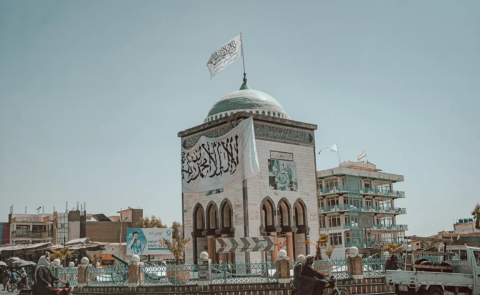
The on-going India-Pakistan tensions have obscured the grave issues Pakistan is facing on its western frontier with Afghanistan. The resurgence of Pashtun nationalism, the long-running Baloch insurgency and the growing resentment over Punjabi dominance is challenging Pakistan’s identity and ideology as protector of Islam. The Taliban under the Emir in Kandahar holds far greater moral authority than any general in Rawalpindi.

Bandung conference  (3) Courtesy: PTI
24 April 2025

Bandung Principles and the path ahead

Amid polycrises, from pandemics to wars and trade wars, the global order is in flux, with the contours of the new order still unclear. As the world marks the 70th anniversary of the historic Bandung Conference, this article analyses how its Ten Principles still resonate in today's fractured geopolitical landscape and offer a roadmap for equity, inclusivity, and balance.

Kurdistan Courtesy: Reuters
22 April 2025

The new Kurdish reality in West Asia

Kurdish independence has been an unresolved problem in West Asia for over a century, but a solution may be in sight. Two recent developments highlight this: the unilateral ceasefire declaration by the Kurdistan Workers Party and the signing of a Memorandum of Understanding between Syria’s transitional government and the Syrian Democratic Forces. These may be key to resolving the Kurdish issue.

World Leaders Courtesy: East Asia Forum
17 April 2025

Multipolarity is gaining ground

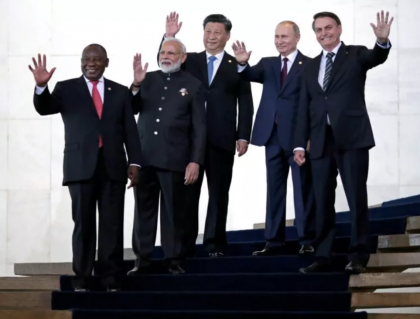
The traditional power structures of ‘unipolarity’ or ‘bipolarity’ prevalent over the past 80 years are no longer appropriate to describe the current global order, with more countries increasingly supporting the evolving multipolar world. With the old ‘rules-based’ order becoming less relevant, emerging powers like India have an opportunity to draft more equitable rules to match their multipolar intentions.