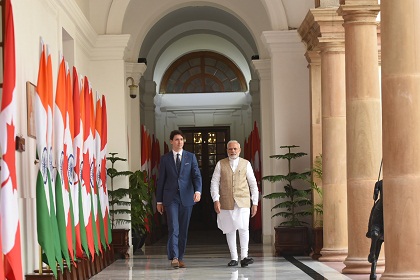
India-Canada Relations – Post-Trudeau Visit: the Road Ahead
Rajiv Bhatia, Distinguished Fellow, Foreign Policy Studies, Gateway House wrote an article for the Indian Foreign Affairs Journal on India-Canada relations

 Courtesy: MEA/ Flickr
Rajiv Bhatia, Distinguished Fellow, Foreign Policy Studies, Gateway House wrote an article for the Indian Foreign Affairs Journal on India-Canada relations
 Courtesy: MEA/Flickr
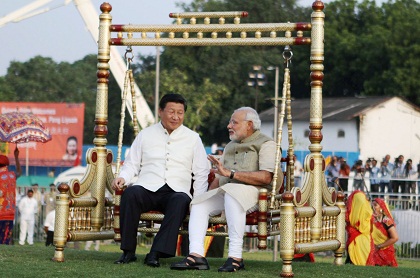
The leaders of India and China have decided not to leave the bilateral relationship to bureaucrats or ministers, but instead handle it themselves at the very top. The April 27-28 meeting promises to be a game-changer as Xi Jinping has accepted the need to improve ties with India as a priority
 Courtesy: GovernmentZA/ Flickr
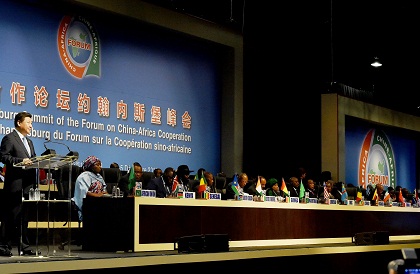
China’s judicious deployment of economic diplomacy—in sectors ranging from infrastructure and agriculture to skill development--has enabled it to develop relations with several African countries. India, Africa’s oldest partner, which is diversifying its own relationship, can replicate parts of China’s approach
 Courtesy: Gateway House
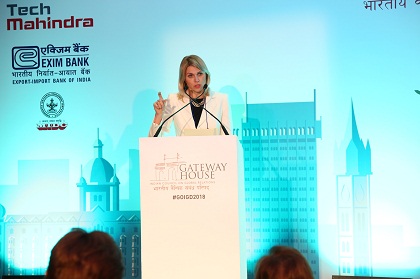
Digital development can bring significant economic gains – from a better business environment to job growth and improved public finances, said Urve Palo, Minister of Entrepreneurship and Information Technology, Republic of Estonia
 Courtesy: The Tribune
Since 2017, the Punjab government has been cracking down on drug networks. The campaign has so far targeted small-time drug peddlers, but deep smuggling networks that cross international as well as state borders remain intact, posing a major national security threat
 Courtesy: Exim Bank of India
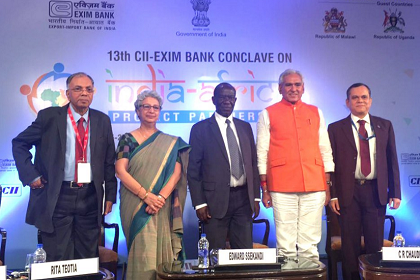
The India-Africa economic partnership lags some way behind the diplomatic reciprocity the two countries share. Africa has had a trade surplus with India in the past decade, but increasing two-way trade of goods and services across sectors calls for serious promotional measures and removal of non-tariff barriers. The government, Indian business and their African partners need to devise an action plan that can take trade to $100 billion and investment to $75 billion by 2022
 Courtesy: View.mn
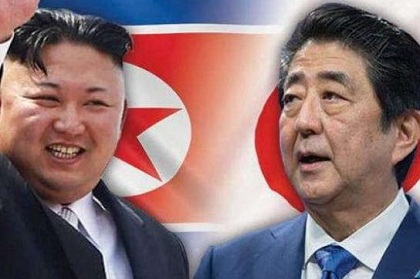
North Korea's overtures to its immediate strategic neighbours through a series of summits have excluded Japan, which has long regarded Pyongyang's nuclear weapons and missile development programmes a direct threat. It is reacting by reaching out to the U.S., North Korea and China
 Courtesy: The Third Pole
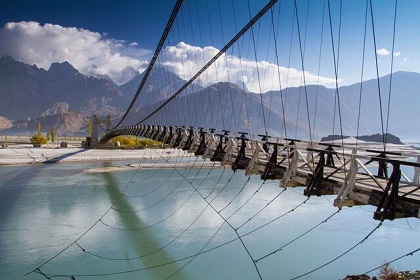
Pakistan’s economic mismanagement and support for terrorism will leave its economy in a hole – and imperil the multibillion dollar China-Pakistan Economic Corridor
The 44th G7 summit, held in Canada in the first week of June, ended on a tense, disunited note—not unlike the premise of Richard Haass’ 2017 book, The World in Disarray: American Foreign Policy and the Crisis of the Old Order. In this interview, the President of the Council on Foreign Relations discusses the role of international institutions, World Order 2.0 and how India can participate in it
Gateway House spoke to Toshinori Doi, President, Policy Research Institute, Japan, on the sidelines of the Gateway of India Geoeconomic Dialogue, on the risks associated with digitising finance, the Belt and Road Initiative and dealing with Chinese market dominance