The Emerging Exception
The traditional label of ‘middle power’ fails to capture India’s growing status. The country’s ability to shape the international discourse is no longer in question. India sees itself as a key player the global order.

 Courtesy: The Diplomatist
The traditional label of ‘middle power’ fails to capture India’s growing status. The country’s ability to shape the international discourse is no longer in question. India sees itself as a key player the global order.
 Courtesy:
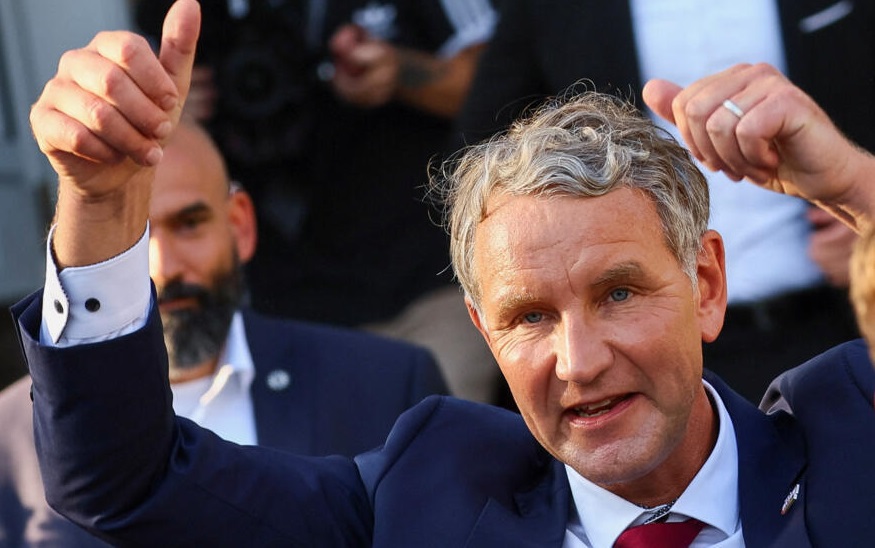
Recent state elections in Brandenburg, Saxony and Thuringia in east Germany saw the far-right Alternative for Democracy (AfD) and the left-wing Bündnis Sahra Wagenknecht (BSW) make significant gains in vote share. With German federal elections just a year away, major parties like the ruling CDU and SPD which have seen voter support erode considerably, will now have to re-strategise to stay relevant in Germany’s transforming political landscape.
 Courtesy: Deutsche Welle (DW)
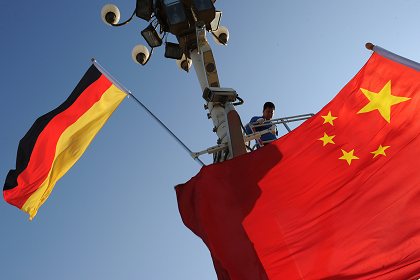
On July 13, the German cabinet approved its Strategy on China after nearly two years of internal discussions. The new strategy simultaneously views China as a “partner, competitor, and systemic rival”, calling for de-risking German economic dependence on China, while also expanding cooperation with other countries in the Indo-Pacific region.
![EuropeProtests-01[85] copy](https://www.gatewayhouse.in/wp-content/uploads/2022/11/EuropeProtests-0185-copy.png) Courtesy: Gateway House
Courtesy: Gateway House
Discontent over high energy prices, spiralling living costs, and anti war sentiments have gripped Europe, resulting in protests and civil unrest across the continent. With no immediate solution in sight, public resentment is likely to intensify through the coming winter months
 Courtesy: Narendra Modi/Facebook
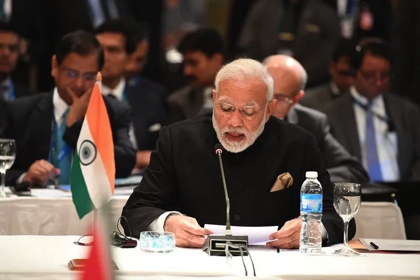
India will be president of the G20 in 2023. The world’s most influential economic governance body is facing an existential crisis, where the major powers have fallen out. With geopolitical currents redefining geo-economics, India needs to be ready to emerge as the chief global diplomat.
 Courtesy: Shutterstock
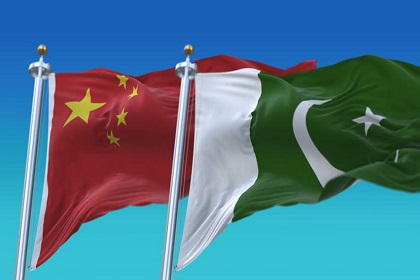
Pakistan’s latest economic survey reveals the extent of the country’s indebtedness to China. High-interest Chinese loans, reckless multilateral borrowing, and ever-increasing defence budgets have deleteriously impacted Pakistan’s finances. Any lasting solution to these problems will have to involve China.
 Courtesy: The Guardian
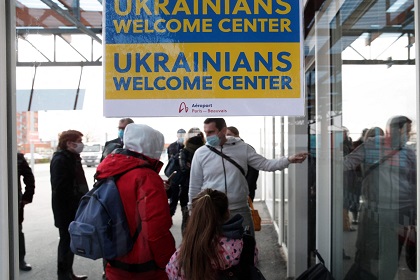
The unprecedented consensus within the EU in accepting Ukrainian refugees presents it as a global humanitarian power. But is this truly a ‘paradigm shift’ or is it a continuation of the West European Cold War strategy, based on a moral high ground narrative, of accepting people who had fled the ‘evil and undemocratic’ Soviet-bloc countries during and after World War II?
 Courtesy: Reuters
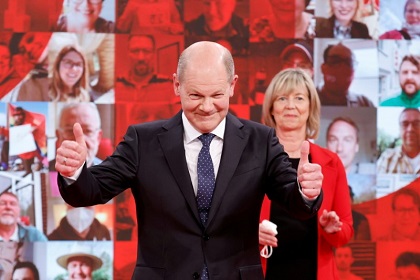
The recent German elections revealed the most interesting and confusing results among all German elections. The advanced polls, the exit polls, and the results were quite in tandem. The final results did not alleviate the inconclusiveness which the polls predicted.
 Courtesy: Shutterstock
Sanctions are an important foreign policy tool, used especially by the West against its adversaries. Now, these rivals are retaliating with counter-sanctions. Are these effective? How does this impact global politics? Where does India stand in this free-for-all sanctions era?
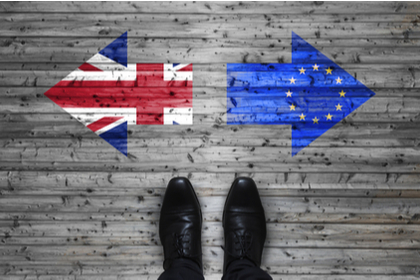
Britain left the European Union on 31 January 2020. There will be no immediate outcome, but the intention of all the European leaders is to make it an amicable departure over the course of the year. Ambassador Neelam Deo, Director and Co-founder of Gateway House, discusses Brexit’s geopolitical implications and its impact on India’s relations with the EU and UK