91RL+JMb+lS._UF1000,1000_QL80_ (1) Courtesy: Amazon India
17 July 2025

The case that shook the empire

This book follows the O’Dwyer vs. Nair libel case which brought the Jallianwala Bagh massacre of 1919 to public life, and spurred India’s nationalist movement. Through the case, it recounts the life of Sir Chettur Sankaran Nair who was a critic of Gandhi but also of the British government and publicly held Michael O’Dwyer, lieutenant governor of Punjab, responsible for the massacre.

Gateway House Courtesy: Gateway House
3 July 2025

China Plus One and global supply chains

A slowdown of the Chinese economy, and the shift, particularly by MNCs, from China to other more competitive locations has opened up business opportunities for latecomers to supply chains in the developing world. Evidence suggests that Southeast Asia and some South Asian countries like India, Sri Lanka, Bangladesh, could be beneficiaries of the supply chain shift, particularly in labour-intensive segments.

Ludovic MARIN  AFP Courtesy: Ludovic MARIN / AFP
12 June 2025

Macron’s strategic Indo-Pacific sail

Macron’s 2025 tour of Southeast Asia was intended to reinforce France’s strategic commitment to the Indo-Pacific. By engaging with three key ASEAN members - Vietnam, Indonesia, and Singapore - France wants to forge partnerships beyond its traditional transatlantic ties. Its Indo-Pacific vision is based on its territorial presence, economic interests, and diplomacy values, which it hopes will be an alternative to the binary logic of U.S.-China rivalry.

IMEC map with source Courtesy: Gateway House
11 June 2025

IMEC: more than just a corridor

The proposed IMEC corridor connecting India to Europe through the Gulf can be transformative, helping to reduce risks to the global movement of goods and data. It’s early days yet, and there are gaps to be filled in terms of missing infrastructure and overcoming a diplomatic rift.

Getty (1) Courtesy: Gateway House
15 May 2025

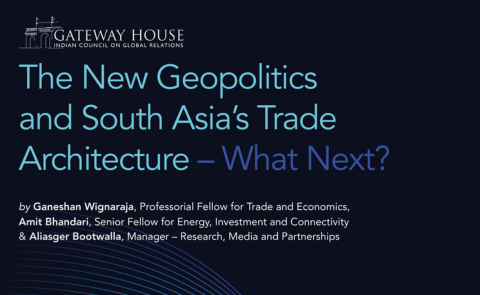
The New Geopolitics and South Asia’s Trade Architecture – What Next?

Geopolitics is increasingly intertwined with the economic destiny of South Asia. Even before the U.S. tariffs were rolled out, growing polycrises had hit the global economy, which has been struggling since the pandemic. South Asia seems a relatively bright spark of regional trade and growth. This paper analyses South Asia’s trade architecture in the backdrop of a sluggish world economy in the 2020s, and makes recommendations for closer regional economic integration.

Website articles  (12) Courtesy: Gateway House
15 May 2025

U.S., global emperor of sanctions

Over two centuries, the U.S. has amassed vast economic powers across the globe during and after the two World Wars , and sanctions slowly became an effective tool it used to achieve its foreign policy goals, becoming the global emperor of sanctions.

Report Courtesy: Körber-Stiftung
17 April 2025

Momentum for Middle Powers: Emerging Middle Powers Report

The world is undergoing profound transformations that are not being driven only by the United States, China or Russia. Small and medium-sized States are carving out a legitimate place for themselves in the emerging new order. This second edition of our annual Emerging Middle Powers Report is a reminder that the signs of the times are showing a new momentum for middle powers.

Reuters Courtesy: Reuters
20 February 2025

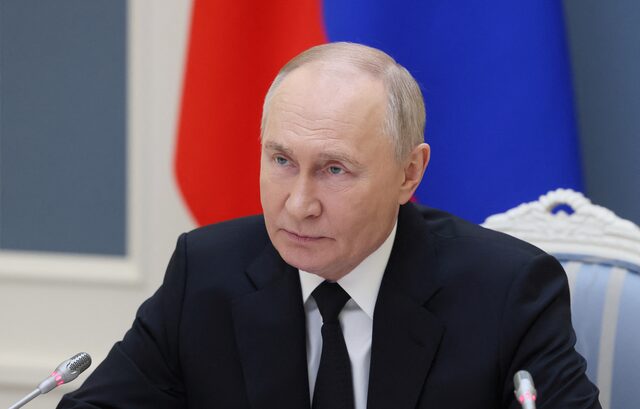
Twenty Five years of Vladimir Putin

The 18 February bilateral negotiations between Russia and the U.S. to end the war in Ukraine, will take Russia out of western isolation and put it  back into the global mainstream. This is a success for President Vladimir Putin, who has now been ruling Russia for 25 years, by focusing on domestic stability and development and a revival of relations with the West, China and India.

rfi bjorn Courtesy:
26 September 2024

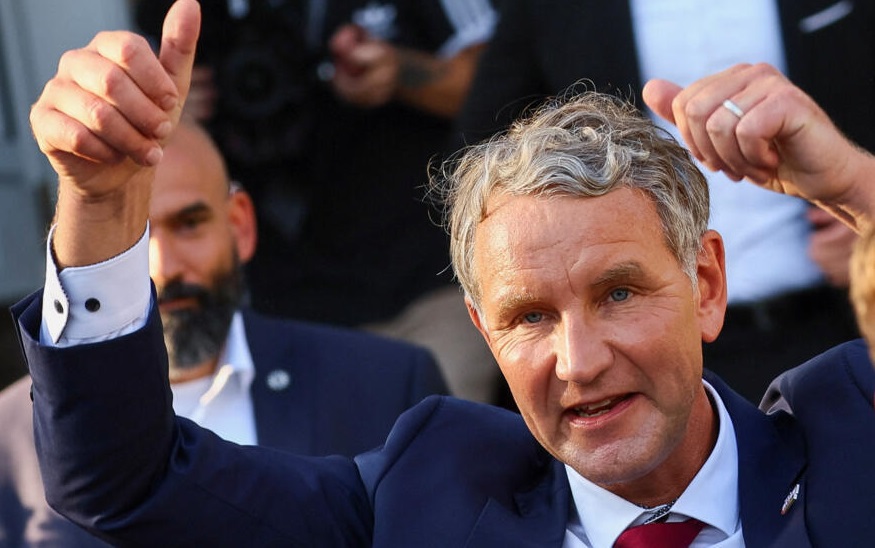
Germany sees anxious change

Recent state elections in Brandenburg, Saxony and Thuringia in east Germany saw the far-right Alternative for Democracy (AfD) and the left-wing Bündnis Sahra Wagenknecht (BSW) make significant gains in vote share. With German federal elections just a year away, major parties like the ruling CDU and SPD which have seen voter support erode considerably, will now have to re-strategise to stay relevant in Germany’s transforming political landscape.