East Asia Forum Courtesy: East Asia Forum
26 June 2025

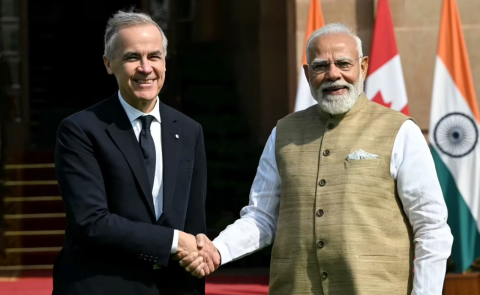
Canada, India and the G7 Summit

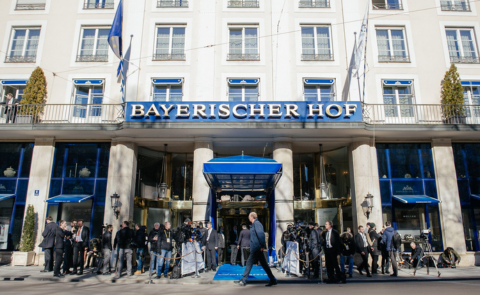
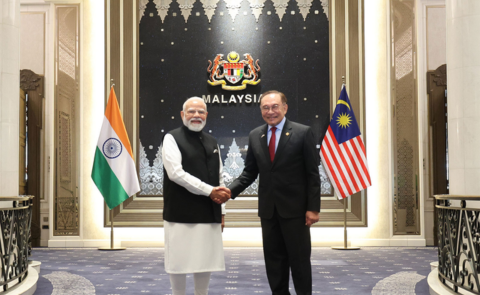
Most multilateral and plurilateral institutions have lost their significance and ability to shape the trajectory of international relations today. The G7 is no exception. It is impacted by the shift of power from the Atlantic to the Pacific, and an intra-Atlantic rift. The G7 discussions reflected this. More positive were the sideline discussions on repairing the India-Canada bilateral.

Website articles  (21) Courtesy: News Arena India
12 June 2025

G7 Summit: Plethora of opportunities

Canadian Prime Minister Carney can use the upcoming G7 summit he is hosting to advance the North-South dialogue and cooperation and also to discuss the strained bilateral with India. India can articulate the viewpoint of the Global South, stressing its conviction that the G7 is better served by constructively working with developing and emerging economies.

Getty (1) Courtesy: Gateway House
15 May 2025

The New Geopolitics and South Asia’s Trade Architecture – What Next?

Geopolitics is increasingly intertwined with the economic destiny of South Asia. Even before the U.S. tariffs were rolled out, growing polycrises had hit the global economy, which has been struggling since the pandemic. South Asia seems a relatively bright spark of regional trade and growth. This paper analyses South Asia’s trade architecture in the backdrop of a sluggish world economy in the 2020s, and makes recommendations for closer regional economic integration.

Website articles  (12) Courtesy: Gateway House
15 May 2025

U.S., global emperor of sanctions

Over two centuries, the U.S. has amassed vast economic powers across the globe during and after the two World Wars , and sanctions slowly became an effective tool it used to achieve its foreign policy goals, becoming the global emperor of sanctions.

Report Courtesy: Körber-Stiftung
17 April 2025

Momentum for Middle Powers: Emerging Middle Powers Report

The world is undergoing profound transformations that are not being driven only by the United States, China or Russia. Small and medium-sized States are carving out a legitimate place for themselves in the emerging new order. This second edition of our annual Emerging Middle Powers Report is a reminder that the signs of the times are showing a new momentum for middle powers.

AFP_36WT3X2 Courtesy: AFP
6 February 2025

Myanmar, four years on

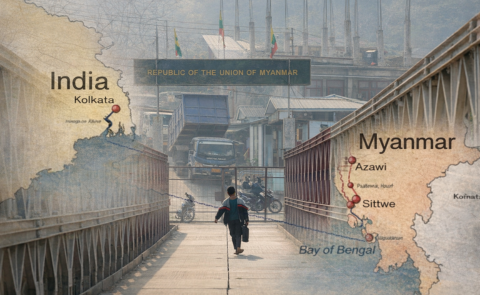
February 1 marks four years of the military coup in Myanmar, which plunged the country into a bloody civil war, still on-going. The crisis is deepening, as the struggle between the Junta forces and a fragmented resistance wages on with no resolution in sight. A stalled mediation by ASEAN, and lack of consensus amongst neighbouring countries on how to help, leaves Myanmar’s future uncertain.

FILE PHOTO: Chinese President Xi Jinping (C), Vice President Wang Qishan, Politburo Standing Committee member Zhao Leji, National People's Congress (NPC) Standing Committee Chairman Li Zhanshu, Premier Li Keqiang, Politburo Standing Committee member Wang Huning and Vice Premier Han Zheng arrive for the closing session of the Chinese People's Political Consultative Conference (CPPCC) at the Great Hall of the People in Beijing, China March 10, 2021. REUTERS/Carlos Garcia Rawlins/File photo Courtesy: Reuters
16 January 2025

Preparing China’s economy for 2025

Two important conclaves held in December 2024 - a Politbureau meeting and the Central Economic Work Conference – set the tone for China’s economic focus in 2025. The economy needs a resurgence, given the domestic environment of low spending and the external threat of high tariffs – the outcome of swapping development for security. In 2025, China’s mandarins will try and find a balance between the two.

longmen Courtesy: UNESCO
9 January 2025

India-China: learning from each other

India and China are the world’s most populous countries, with much in common and much divergence. Reform, discipline, long-term thinking and scale brought China to its present near first-world conditions; India is accommodative with its democracy, cultural diversity and all-round religiosity to achieve development, wealth creation, cultural preservation and self-respect. There’s a great deal that the two Asian giants can learn from each other.

Screenshot 2024-10-22 at 10.39.46 PM Courtesy:
23 October 2024

China’s emergence in the global order

There is much discussion these days on the world order and the continuation or demise of the current format. To understand why this powerful agglomeration of states and rules is now being questioned, it is necessary to understand the role of China, its co-option of the institutions and rules of the world order, and the parallel order it is creating centred around itself.