

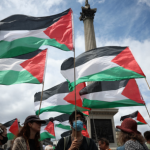
Great Britain, Canada, France and now Australia have stated that they will recognise a Palestinian state in September unless Israel agrees to a ceasefire and explores a two-state solution. Other conditions include demilitarisation of Hamas, release of the hostages, and elections that exclude Hamas.
This is easier demanded than done, clearly, in a conflict grinding into its third year. A two-state solution would likely be read by the so-called Arab Street, the BRICS nations, and more broadly the Global South as capitulation by the U.S. and Israel to Hamas – a bounty for its October 7th massacre in Israel, which would inspire and reward Hamas. The Trump administration has made it clear that it does not favour such solutions, calling the recent announcements an “ill-advised stunt.”[1] Indeed, they are naive and assume away the many problems attendant to such moves. Palestinians themselves will be unable to meet the conditions imposed for recognition. Such announcements will not cause Israel to alter its position, as only President Trump can do that.
There are also other disturbing implications.
First, recognition of a state is a legal action that affirms the existence of a political entity that is a sovereign state, meaning that it has its own preserve, controls its borders, conducts foreign affairs, and has a governance structure with recognised officials. The current administrative structure is not only confusing but perceived as ineffective. Mahmoud Abbas is the chairman of the Palestine Liberation Organisation that affirms the interests of the Palestinian people, particularly in international affairs. Abbas is also the chief of the Palestinian Authority, which in theory administers Gaza and specific parts of the West Bank (under Israeli control) where Palestinians reside. Abbas is not popular and a recent poll taken in early 2025 by the Ramallah, West Bank-based Palestinian Center for Policy and Survey Research (PSR) shows him in third place with only 11% support, behind Marwan Barghouti of Fatah (50%) and Khalid Mishal of Hamas (35%).[2]
Second, establishing borders means that cartographers would draw boundaries that define where a political entity begins and ends, placing certain villages within or outside a newly created Palestinian state. This would be no mean feat, since Israel’s population is about 20% Arab and it would never agree to ceding certain territory to a new Palestinian entity. It was Israel’s withdrawal from the Gaza Strip in 2005 that gave rise to the chaos of today.
Third, demilitarisation of a new Palestinian state is impractical. Support for Hamas is believed to have declined to 50% since the massacre of October 7, 2023. However a large majority opposes disarmament of Hamas: 85% percent in the West Bank and 64% in Gaza, according to the same PSR poll. Disarmament would likely mean surrendering weapons to the Palestinian Authority. Besides public opinion, what complicates disarming Hamas is that it is more than a Sunni militant group of well-armed fighters with Russian and Chinese weapons: Hamas is an ideology that will not die even when its fighters do.
Fourth, the two-state solution does not recognise the intense factionalism and longstanding enmity between the two Sunni elements – the Palestinian Authority and Hamas. To think that Gaza would accept the writ of the Palestinian Authority is misguided.
The current U.S position is at odds with that of the Biden administration, which consistently supported a two-state solution. Hamas also has long opposed a two-state approach, instead calling for the destruction of Israel.
Conflict in the Levant is deeply rooted in historical and religious factors, and Israel is viewed by the Muslim world, BRICS and some Global South nations as an occupational power. A two-state solution uniting Gaza with the West Bank would surround Israel with hostile parties – further threatening its national security.
Instead of retreating into words, European countries would be better off actioning a deed: providing food and medical supplies to Gaza, the main issue right now, and asking moderate Arab governments to do the same, while maintaining pressure on Israel to keep humanitarian corridors open. The U.S. has paid more dues in the modern Middle East than any other country and does not need posturing by allies, which makes an end to the Israeli-Hamas conflict more difficult.
Frank Schell is a business strategy consultant and former senior vice president of the First National Bank of Chicago. He was a Lecturer on South Asia affairs at the Harris School of Public Policy, University of Chicago, and served in the U.S. Peace Corps in India. He has been involved with India in development, banking, academia and consulting.
This article was exclusively written for Gateway House: Indian Council on Global Relations. You can read more exclusive content here.
Support our work here.
For permission to republish, please contact outreach@gatewayhouse.in.
©Copyright 2025 Gateway House: Indian Council on Global Relations. All rights reserved. Any unauthorised copying or reproduction is strictly prohibited.
References:
[1] U.S. Department of State Office of the Spokesperson [@StateDeptSpox], “The United States will not participate in the July UN two-state solution conference. This is an ill-advised stunt that will …,” X (formerly Twitter), 28 July, 2025. https://x.com/statedeptspox/status/1949900153042956796
[2] Palestinian Center for Policy and Survey Research (PSR), “Public Opinion Poll No (95),” PCPSR, May 1–4, 2025. https://pcpsr.org/en/node/997