Website articles  (29) Courtesy: Somaliland Presidential Office
15 January 2026

Somaliland recognition strengthens alternative diplomacy ecosystem

Israel’s recognition of Somaliland as an independent state in December 2025 is not merely a diplomatic gesture toward a long-marginalised polity; it is a strategic act with implications for Somalia’s territorial integrity, regional security dynamics, great-power competition, and the evolving politics of recognition in a fractured international order.
News on Air Courtesy: News on Air
8 January 2026

2026: India’s foreign policy challenges

In the shifting sands of contemporary geopolitics, terms such as ‘fluid multipolarity’, ‘multiplexity’, ‘tripolarity’, and ‘bipolarity with multipolar characteristics’ are replacing the old dogmas and orders. But what is driving the world today? How does India plan to protect its vital interests in the current age of ongoing polycrisis? The road ahead is challenging, marked by risks and uncertainty.

Website articles  (22) Courtesy: Getty Images
3 July 2025

Diversifying supply chains for critical minerals

The Quad Foreign Ministers’ Meeting in Washington on 1 July, 2025, underscored the importance of diversified and reliable global supply chains, especially for critical minerals. A Gateway House report shows how to strengthen supply chains for rare earths by creating deep financial markets similar to those that exist for bullion and oil.

Gateway House Courtesy: Gateway House
3 July 2025

China Plus One and global supply chains

A slowdown of the Chinese economy, and the shift, particularly by MNCs, from China to other more competitive locations has opened up business opportunities for latecomers to supply chains in the developing world. Evidence suggests that Southeast Asia and some South Asian countries like India, Sri Lanka, Bangladesh, could be beneficiaries of the supply chain shift, particularly in labour-intensive segments.

Getty (1) Courtesy: Gateway House
15 May 2025

The New Geopolitics and South Asia’s Trade Architecture – What Next?

Geopolitics is increasingly intertwined with the economic destiny of South Asia. Even before the U.S. tariffs were rolled out, growing polycrises had hit the global economy, which has been struggling since the pandemic. South Asia seems a relatively bright spark of regional trade and growth. This paper analyses South Asia’s trade architecture in the backdrop of a sluggish world economy in the 2020s, and makes recommendations for closer regional economic integration.

EuropeProtests-01[85] copy Courtesy: Gateway House
17 November 2022

Protests across Europe

Discontent over high energy prices, spiralling living costs, and anti war sentiments have gripped Europe, resulting in protests and civil unrest across the continent. With no immediate solution in sight, public resentment is likely to intensify through the coming winter months

Eu Gas Pipeline Courtesy: Reuters
11 August 2022

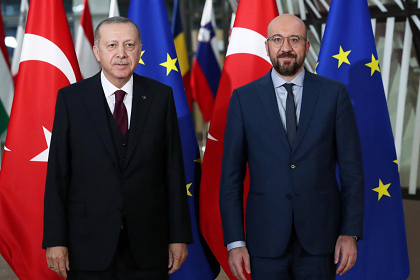
Turkey: Europe’s new gas hub?

The Ukraine crisis has sent the EU scrambling for new gas supplies, generating fresh interest in gas pipelines from Central Asia and West Asia via Turkey. Practical difficulties make most of these new projects unviable.

G7GS Courtesy: telegraphindia.com
13 July 2022

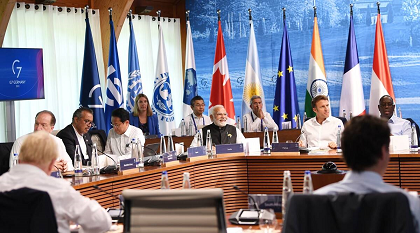
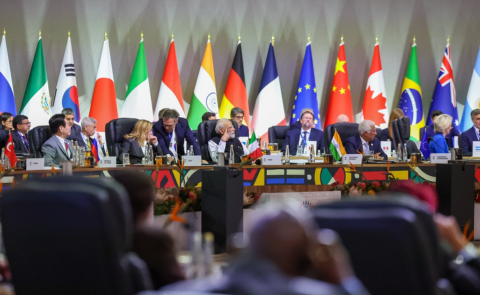
The G7 woos the global south

The G7 has reached out to emerging economies which have, of late, been facing challenges on the economic front, brought on by the lingering pandemic and the mismanagement of the Ukraine crisis. They are also seeking, from the global south, a broader acceptance of their world view. Will it be forthcoming?

G7s1 Courtesy: The Print
4 July 2022

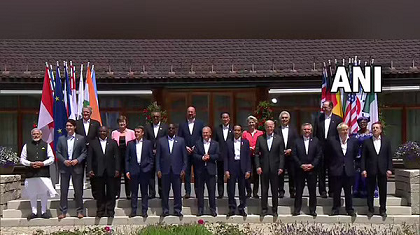
What did the G7 achieve?

The shadow of the Ukrainian war was visible at the G7 summit. Anti-Russian formations were expected, but the extensive reference to China drew attention. The leaders did their part by extensively discussing challenges relating to climate, energy, environment, health, and food security. It is now for the G7 governments to deliver, to be taken seriously.

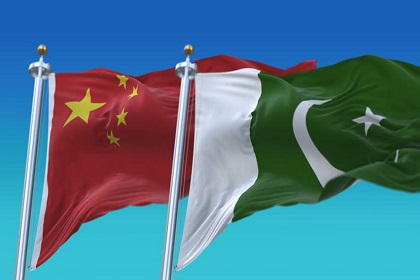
china pakistan flags Courtesy: Shutterstock
22 June 2022

Understanding Pakistan’s China Debt Problem

Pakistan’s latest economic survey reveals the extent of the country’s indebtedness to China. High-interest Chinese loans, reckless multilateral borrowing, and ever-increasing defence budgets have deleteriously impacted Pakistan’s finances. Any lasting solution to these problems will have to involve China.