Website articles  - 2026-05-21T164114.205 Courtesy: X/@IndiainZimbabwe
21 May 2026

India-Africa: taking stock before the summit

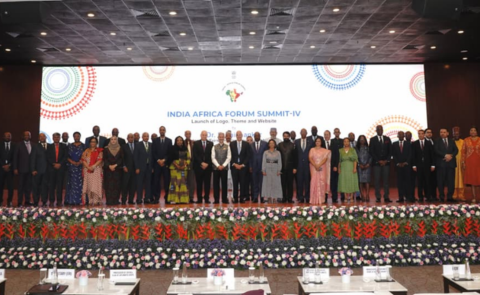
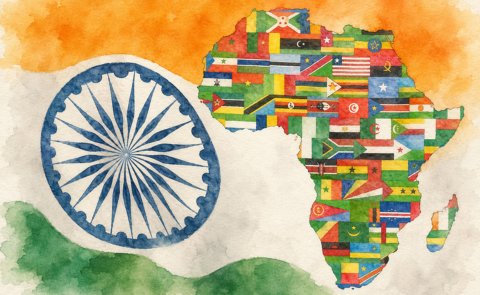
Africa is central to India’s foreign policy, a priority expected to be reaffirmed at the upcoming India–Africa Forum Summit. The much-anticipated event will focus on deepening economic partnerships and expanding strategic cooperation. Ahead of the summit, it is necessary to take stock of the current state of the continental engagement, particularly in trade, investment, technology, and capacity-building.

Website articles  (96) Courtesy: The Secretariat
20 May 2026

Interview with Sheikh Hasina

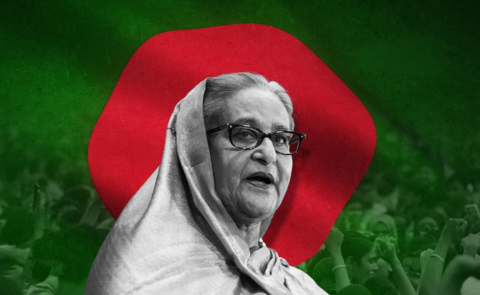
Bangladesh elected a new government in February this year after former long-time Prime Minister Sheikh Hasina was ousted from power in a violent mass protest on August 5, 2024. Her party, the Bangladesh Awami League, was banned from participating in this year’s election, which saw the return of the rival Bangladesh Nationalist Party (BNP) under Prime Minister Tarique Rahman. Hasina has been living in India since then and talks about her plans to return to Bangladesh and revive her party’s activities there. She spoke exclusively to Nayanima Basu.

Website articles  (95) Courtesy: Gateway House
14 May 2026

Stacking up the India-Africa summits

The Fourth India-Africa Forum Summit (IAFS-IV) will take place in New Delhi from May 28-31, 2026. It is being held at a time when Africa has actively engaged with several other major partners, placing high expectations on India. Over the last 18 years, the India-Africa partnership has had ambitious goals and some outcomes across diplomacy, trade, education, capacity building, health, and infrastructure development. This will deepen.

Rajiv Bhatia with Aung San Suu Kyi Naypyidaw in 2013 Courtesy: Rajiv Bhatia
14 May 2026

Leaves from my Myanmar diary

Myanmar’s latest political transition offers the illusion of closure, but little clarity. After years of conflict triggered by the 2021 coup, a new administration under Min Aung Hlaing takes charge amid continuing resistance and fragmentation. Is this consolidation or another phase of instability? Reflecting on this question, Ambassador Rajiv Bhatia draws upon his three-decade-long association with Myanmar, including serving as India’s Ambassador from 2002 to 2005.

amb HVS (2) Courtesy: Gateway House
7 May 2026

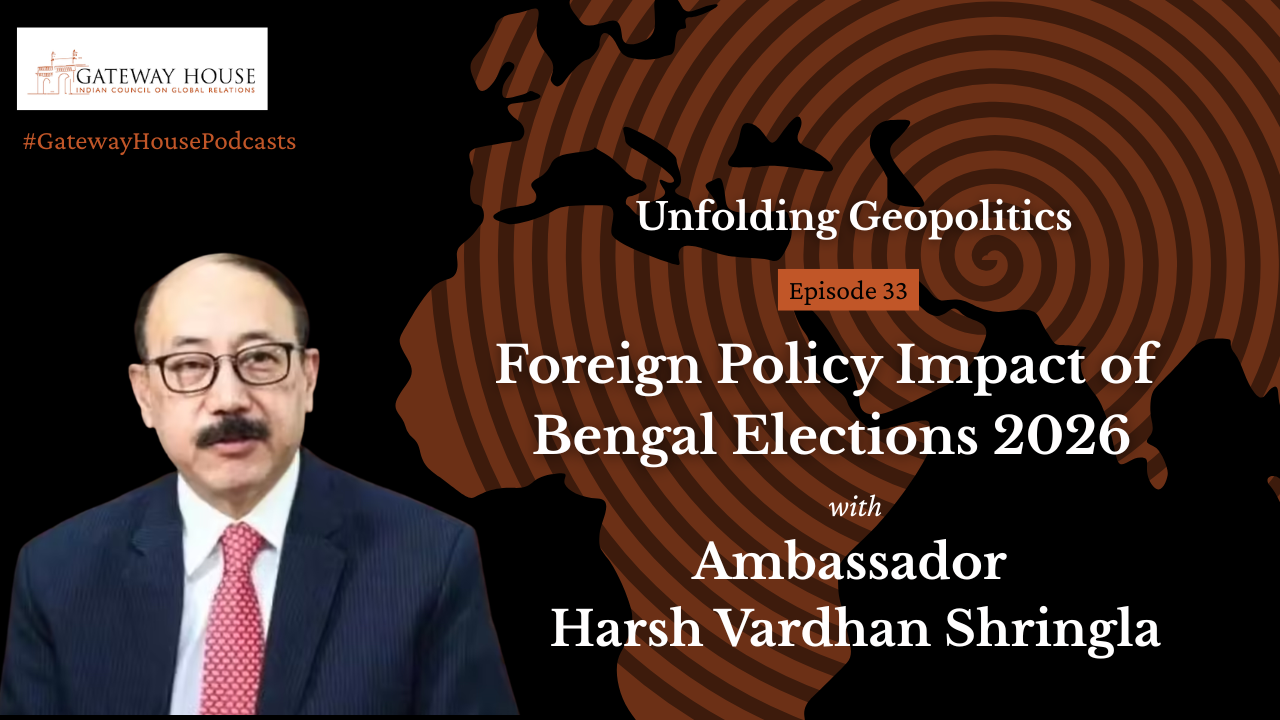
Unfolding Geopolitics Episode 33 |Foreign policy impact of Bengal elections

The state elections in the eastern states of Bengal and Assam have given a massive mandate to the ruling Bharatiya Janata Party. The opportunity for transformation and progress is enormous, especially as both these states are the crucial connectors to India’s Act East Policy. Harsh Shringla, Member of Parliament and former Foreign Secretary of India, says India’s foreign policy will see multiple benefits from these states.

AP517-519 00_Cover.indd Courtesy: Routledge
7 May 2026

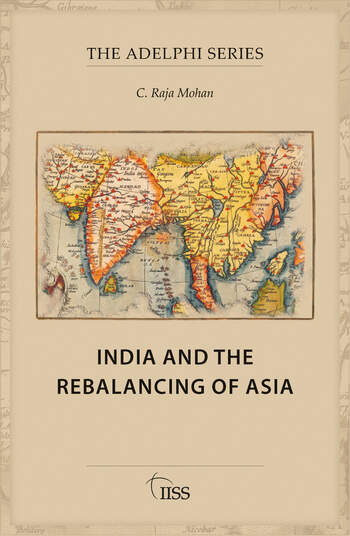
India and the Rebalancing of Asia

In this book, C. Raja Mohan analyses Asia’s shifting political, economic, military, and technological balance, with particular focus on U.S.-China and India-China relations. He argues that India’s rise from a middle power to an emerging great power will require stronger hard power, diplomatic creativity, economic vitality, and domestic consensus. Yet, amid tensions over tariffs, Russian oil, Gaza, and the U.S.-Iran conflict, India’s strategic path remains challenging.

Website articles  (91) Courtesy: PIB
7 May 2026

Strengthening Africa’s security architecture

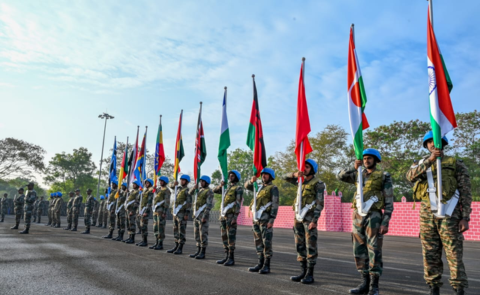
Africa has been increasingly drawn into conflicts and faces difficulty in preventing or managing them. At the Fourth India-Africa Forum Summit to be held on May 28-31, India can announce assistance to the continent in capacity-building in training, logistics, and technology. India-Africa defence industrial cooperation, particularly in affordable equipment and maintenance capabilities tailored to African conditions, will align with its evolving needs.

Website articles  (85) Courtesy: FB / @The Statesman
30 April 2026

Legacy and new issues with India-Sri Lanka

India’s Vice President C. Radhakrishnan visited Sri Lanka from April 19-20, reaffirming Colombo’s importance in India’s Neighbourhood First Policy and MAHASAGAR vision. While ties remain stable, legacy issues persist: Tamil demands for devolution, illegal fishing disputes, and the stalled Economic and Technology Cooperation Agreement. The hope is for these to be resolved within Sri Lanka; till then, the unresolved challenges will continue to test the depth and durability of the bilateral.

Website articles  (84) Courtesy: Reuters
23 April 2026

India’s Neighbourhood First policy needs a reboot

Outcomes of the Neighbourhood First policy (NFP) are often mixed, shaped by actions on both sides. Recent engagements with Bangladesh, Myanmar, Sri Lanka, and Nepal suggest an opportune moment to recalibrate NFP, enhance its effectiveness, and bridge perceptions of India as an “elder brother” rather than a “big brother.”

Website articles  (79) Courtesy: @DrJaishankar/X
23 April 2026

Korea re-engages India

South Korea and India have much in common – both are Indo-Pacific players, oil importers and business-oriented economies. Yet, despite the ubiquitious and successful presence of Korean companies in India’s markets, the political relationship has been weak, and underperformed. The recent state visit by South Korean President Lee Jae-myung to India along with a slew of economic and strategic agreements signed, is an effort to recalibrate the relationship.