Indian diaspora: soft power in the Indo-Pacific
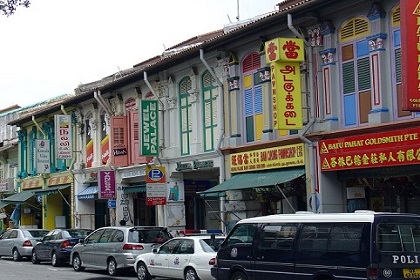
The Indian diaspora has played a significant role in deepening the country's engagement with the Indo-Pacific nations. India can leverage this soft diplomacy to play a constructive role in the region.

 Courtesy: The Independent News & Media
The Indian diaspora has played a significant role in deepening the country's engagement with the Indo-Pacific nations. India can leverage this soft diplomacy to play a constructive role in the region.
 Courtesy: BIMSTEC
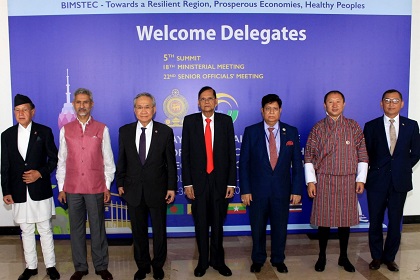
BIMSTEC is of special importance to India as it is a crucial link between the Neighbourhood First and Act East policies. This almost 25 year old multilateral can contribute to the Indo-Pacific region by addressing challenges in strategic areas of regional connectivity, security cooperation, free trade, and geoeconomic ties with external partners.
 Courtesy: Ministry Of External Affairs
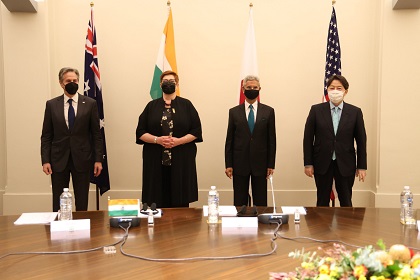
The Quad Foreign Ministers’ Meeting, held in Melbourne on February 11, revealed an ambitious plan for economic and developmental affairs, beyond the security concerns posed by China. Despite differing approaches towards Myanmar and Ukraine, the Quad countries are strengthening their cooperation while maintaining strategic autonomy.
 Courtesy: Financial Times
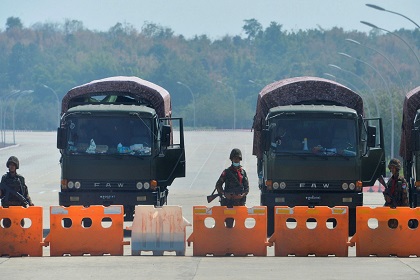
It has been a year since the democratically elected Myanmar government was overthrown in a military coup. Since then, economic instability and the pandemic have taken a toll on the nation. ASEAN's mediatory endeavours and Western sanctions have shown limited results. New Delhi's diplomacy must support ASEAN, while remaining pragmatic and protecting its interests in the country.
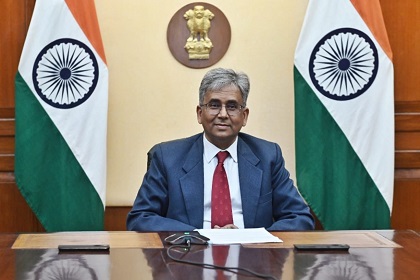 Courtesy: Ministry of External Affairs, Government of India
Saurabh Kumar, Secretary (East), Ministry of External Affairs, Government of India, delivered the keynote address at the panel discussion on India in the Indo-Pacific: Pursuing Prosperity and Security, organised by Gateway House and the U.S. Embassy, New Delhi, on 1 February 2022. He outlined India's vision for a free and inclusive Indo-Pacific, and the initiatives undertaken to further cooperation among nations in the region.
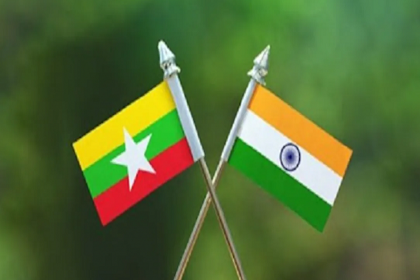 Courtesy: NewsClick
Foreign Secretary Harsh Vardhan Shringla's visit to Myanmar has implications for New Delhi's recognition of the new military government in Naypyidaw. India can support ASEAN to stabilise Myanmar, while also checking Chinese influence in that country. For stability in the neighbourhood is crucial to India's own security.
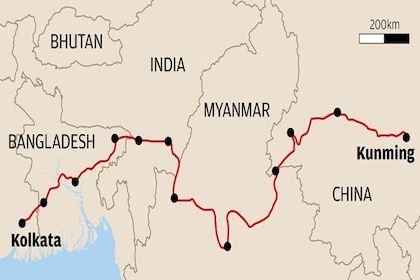 Courtesy: Institute of Peace and Conflict Studies
China is a clear winner in the physical connectivity stakes in the Bay of Bengal, and there's a reason a why: Its projects are connected to one another, from rail to road to port. While India also has some successful cross-border road and rail infrastructure projects, they are often an extension of an existing railway line or highway, not specific to the connectivity needs of the region. India can win by focussing instead on building infrastructure to maximise the vast maritime potential of the Bay of Bengal, especially the Andaman and Nicobar Islands that give India access to critical sea channels and trade routes.
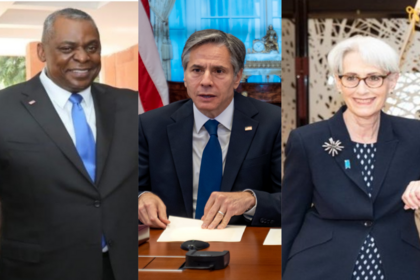 Courtesy: Flickr
Three senior U.S. officials visited Asia in July in a well-choreographed diplomatic outreach strategy by the Biden administration. The U.S is willing to prioritise the Indo-Pacific and counter China. Asia cannot afford to be a reticent bystander.
 Courtesy:
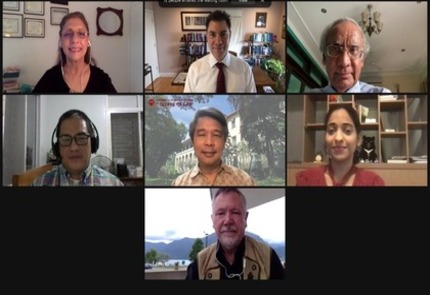
On 15 July, Gateway House co-hosted a webcast with Konrad-Adenauer-Stiftung (KAS) on 'Countering China’s Maritime Grey Zone Activities'. The panel discussed the potential strategies that smaller nations in the region can adopt to overcome the challenges of Chinese maritime grey zone activities, and the role of regional maritime powers in capability-building of maritime law enforcement agencies.
 Courtesy: Shutterstock
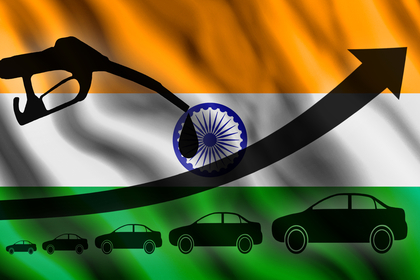
India’s oil consumption and imports are likely to resume their upward trajectory as the economy opens up, after a temporary drop due to the pandemic. To secure its energy needs, the country should shift course from investing in oil and gas assets of emerging economies to those of developed nations. The oil-rich Organisation for Economic Co-operation and Development (OECD) countries, such as Canada, Norway, and the U.S. can be given special consideration.