X / @MEAIndia Courtesy: X / @MEAIndia
31 August 2026

SCO summit in Bishkek

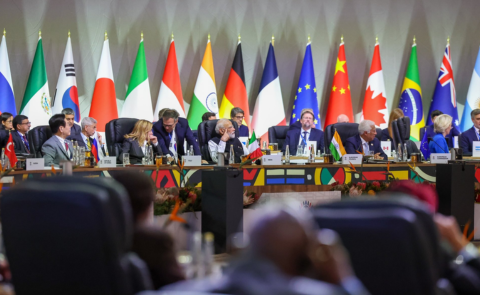
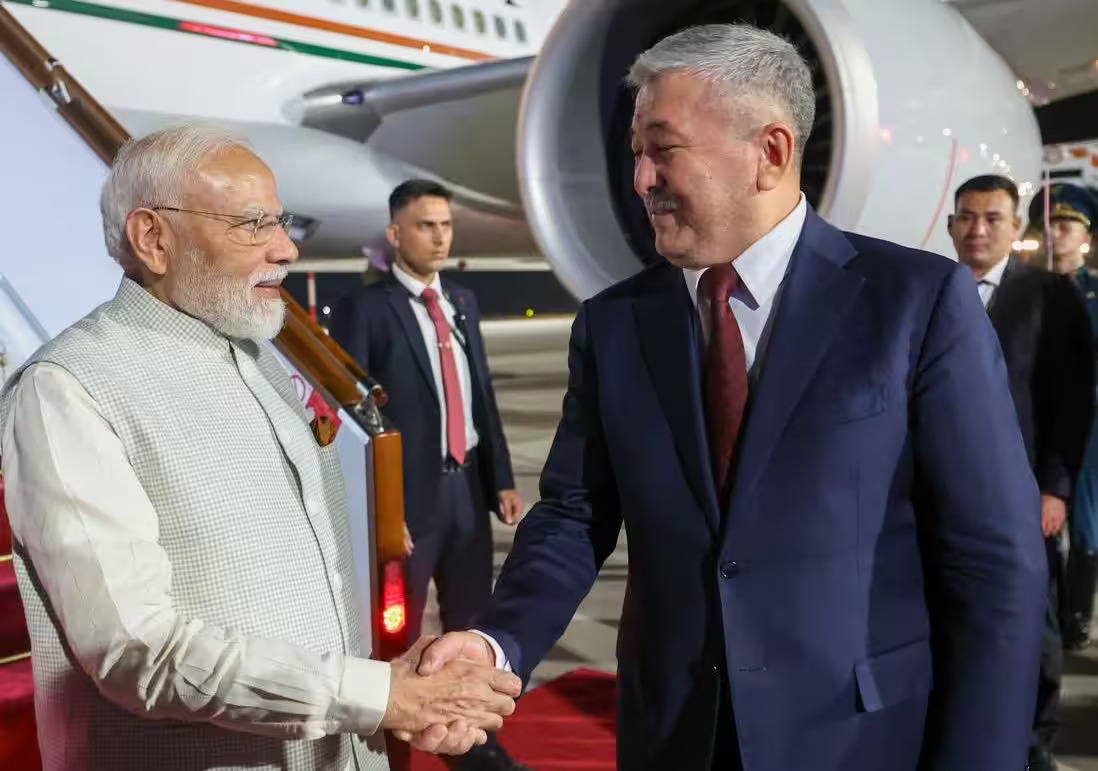
As 25 years of the Shanghai Cooperation Organization (SCO) culminate in Bishkek, India waits intently, assessing the SCO's development. With PM Modi representing India from August 31–September 1, 2026, having previously chaired the SCO Council of Heads of Government in 2020, the forthcoming summit should provide an opportunity for the Indian delegation to take stock of the current status of previous initiatives and their advancements.

amb sk Courtesy: Gateway House
30 April 2026

Unfolding Geopolitics Episode 32 | Iran after the war: survival and strategy 

history, the Palestine issue, the creation of Israel, and strained U.S.-Iran ties. India’s former ambassador to India, Saurabh Kumar, witnessed the hope of the Joint Comprehensive Plan of Action and its collapse. Unfulfilled hopes have led to reignited tensions. The U.S.-Israeli objectives of regime change are still unmet, and Iran’s survival marks a strategic outcome, despite its domestic economic and military strain. Ambassador Kumar discusses Iran and the ongoing crisis in West Asia. 

Website articles  (85) Courtesy: FB / @The Statesman
30 April 2026

Legacy and new issues with India-Sri Lanka

India’s Vice President C. Radhakrishnan visited Sri Lanka from April 19-20, reaffirming Colombo’s importance in India’s Neighbourhood First Policy and MAHASAGAR vision. While ties remain stable, legacy issues persist: Tamil demands for devolution, illegal fishing disputes, and the stalled Economic and Technology Cooperation Agreement. The hope is for these to be resolved within Sri Lanka; till then, the unresolved challenges will continue to test the depth and durability of the bilateral.

Website articles  (84) Courtesy: Reuters
23 April 2026

India’s Neighbourhood First policy needs a reboot

Outcomes of the Neighbourhood First policy (NFP) are often mixed, shaped by actions on both sides. Recent engagements with Bangladesh, Myanmar, Sri Lanka, and Nepal suggest an opportune moment to recalibrate NFP, enhance its effectiveness, and bridge perceptions of India as an “elder brother” rather than a “big brother.”

rk (3) Courtesy: Gateway House
9 April 2026

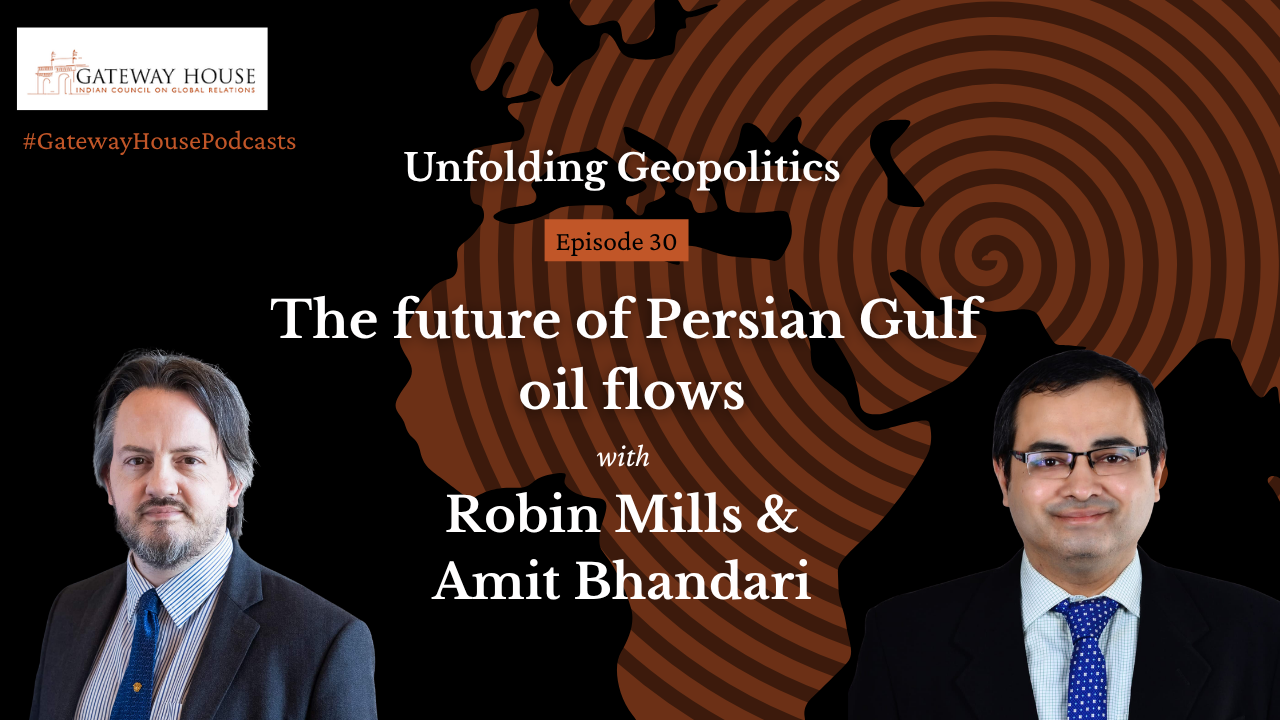
Unfolding Geopolitics Episode 30 | The future of Persian Gulf oil flows

Following the U.S.–Iran ceasefire and partial reopening of the Strait of Hormuz, energy flows may resume, but uncertainty persists. Robin Mills, CEO of Qamar Energy, and Amit Bhandari, Senior Fellow on Energy, Investments and Connectivity, Gateway House, note that Iran will retain leverage and will continue influencing prices and supply chains. Natural gas shortages will further disrupt fertiliser production and fuel inflation world-wide.

Website articles  (13) Courtesy: Gateway House
5 March 2026

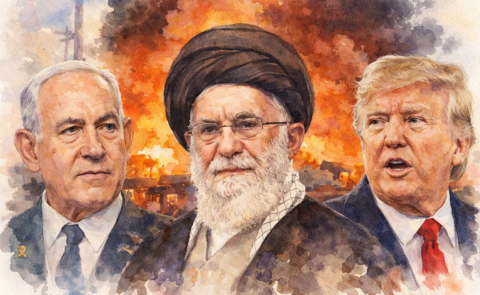
The geometry of attrition: Iran-Israel-U.S. theatre

Early indicators of the ongoing war in West Asia point to a conflict trajectory from the rapid decision to the controlled escalation to distributed strike capacity, advanced military integration and mounting regional exposure. Much like Johann Goethe’s Sorcerer’s Apprentice, conflicts initiated based on assumptions of control can acquire a momentum of their own.

Website articles  (51) Courtesy: Gateway House
4 March 2026

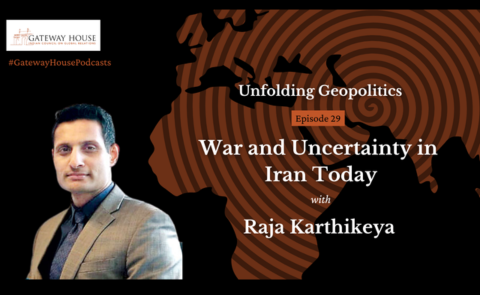
Unfolding Geopolitics Episode 29 |War and uncertainty in Iran today

The assumption that the Iranian public will rise up against its religious and political leadership, seizing the opportunity provided by Israel and U.S. strikes against Iran, may not prove true. Iran’s civilisational structure is resilient, and its educated population may not like being dictated to by the West. Raja Karthikeya, a former international civil servant based in Tehran, examines the escalating U.S.-Israel conflict with Iran, its regional and domestic implications and the tenacity of Iran’s political system amid external pressure.

News on Air (3) Courtesy: Gateway House
29 January 2026

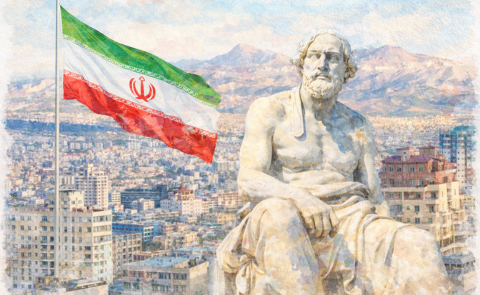
Iran: away from the Thucydides trap?

Iran has often stood at the crossroads of social and political metamorphosis and regional geopolitical recalibration, from the Islamic Revolution of 1979 to the attrition of the Iran-Iraq War. The current landscape reflects the convergence, once again, of internal pressures and sharper deterrence postures, that the social compact—from a Lockean and Rousseauian perspective—needs a new edition, and that timely diplomacy to prevent escalation is required.

News on Air Courtesy: News on Air
8 January 2026

2026: India’s foreign policy challenges

In the shifting sands of contemporary geopolitics, terms such as ‘fluid multipolarity’, ‘multiplexity’, ‘tripolarity’, and ‘bipolarity with multipolar characteristics’ are replacing the old dogmas and orders. But what is driving the world today? How does India plan to protect its vital interests in the current age of ongoing polycrisis? The road ahead is challenging, marked by risks and uncertainty.

Oman and Zanzibar virtual museum Courtesy: Oman and Zanzibar Virtual Museum
24 December 2025

Bombay-Oman-East Africa trade networks

In December, India and Oman signed a Free Trade Agreement – a formalisation of exchanges which are, in fact, two hundred years old. These were led by the Indian merchant diasporas, especially the Bhatia, Bohra, Khoja, Khimji and Jain communities, which used Omani-controlled maritime networks to link Bombay with East Africa. These networks still endure, and among the oldest, strongest, and culturally richest are the Bombay-Oman-East Africa connections.