News on Air Courtesy: News on Air
8 January 2026

2026: India’s foreign policy challenges

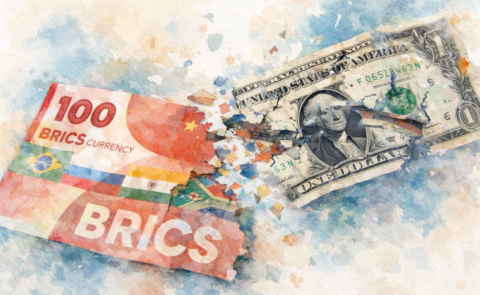
In the shifting sands of contemporary geopolitics, terms such as ‘fluid multipolarity’, ‘multiplexity’, ‘tripolarity’, and ‘bipolarity with multipolar characteristics’ are replacing the old dogmas and orders. But what is driving the world today? How does India plan to protect its vital interests in the current age of ongoing polycrisis? The road ahead is challenging, marked by risks and uncertainty.

VOA Courtesy: VOA
2 October 2025

Time to re-burnish Global South credentials

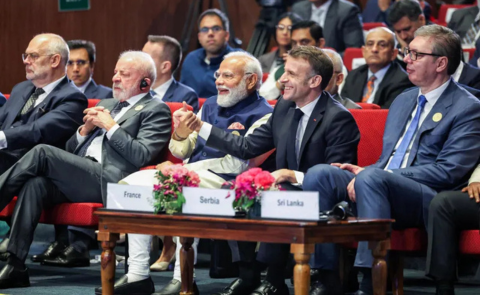
The year 2025 is often compared to the Bandung moment of 1955, and for good reason. With the U.S. reordering traditional relationships, the opportunity for greater emphasis on the Global South is now. It is therefore time for India, Africa and ASEAN among others to re-burnish their Global South credentials and use that identity as a platform to engage each other more deeply.

Gateway House (4) Courtesy: Gateway House
18 September 2025

A new momentum for middle powers

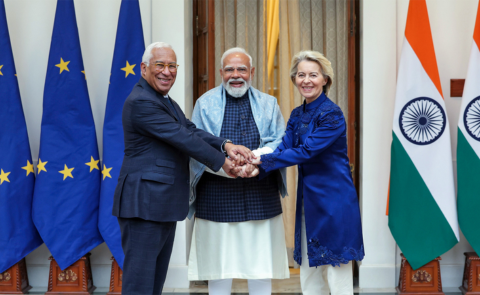
The world is undergoing a profound transformation - not driven by the U.S., China, or Russia, but by small and medium states carving out their rightful space in the emerging order. With UN reform stalled, middle-power cooperation must organise effectively to push for a responsive multilateral system that works for all, ensuring institutions are reformed and made fit for today’s world.

PM 5 nation visit (1) Courtesy: Gateway House
7 August 2025

India becomes strategic with Latin America

India’s engagement with Latin America is gaining momentum, marked by PM Modi’s recent visits to Brazil, Argentina, and Trinidad & Tobago. Amid rising Chinese influence, sustained political engagement and targeted investments are key to unlocking Latin America’s potential for India’s benefit. India needs a multifaceted strategy that blends economic engagement with public diplomacy and more official visits at higher political levels.

IBSA 1 Courtesy: PTI
20 October 2022

IBSA, G20 and the Global South

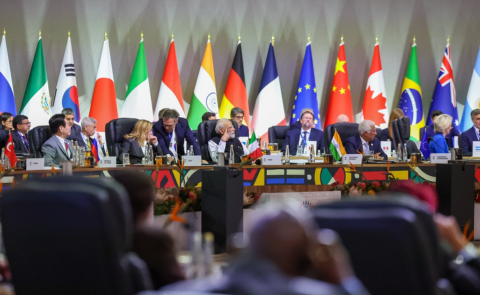
The consecutive Presidencies of the G20 for India, Brazil and South Africa provides a rare, unique opportunity to forge an agenda common to both the G20 and IBSA. The timing is coincident: with Russia and China consumed by conflict and zero-Covid respectively, BRICS has receded. IBSA can convert both crises into an opportunity and become relevant to the Global South’s current and future challenges.

Bolsi and Lula Right left Courtesy: Reuters
13 October 2022

Brazil elections, looking ahead

Brazil will head to the polls in a runoff this month to choose its next president. Will it be incumbent Jair Bolsonaro, or former president Lula da Silva? Both are popular with their voter bases, but both have hurdles to overcome, most notably the economy, and have differences on their global political alignment – particularly important as Brazil will be the G20 President in 2024.

49448317071_2e082bd5b5_c Courtesy: MEA/Flickr
20 February 2020

Bolsonaro builds India-Brazil bilateral

President Jair Bolsonaro’s visit to India in January helped correct the view that India-Brazil ties belong more in a multilateral forum. The accent this time was on the two countries’ congruence of interests amidst the current climate of geopolitical uncertainty and complex multipolarity and the scope for enhanced cooperation in four focus areas

42991855934_9843c72844_o Courtesy:
3 August 2018

The big five at 10

BRICS has grown in influence in its first decade but is still far from achieving its initial goals