Website articles  (55) Courtesy: Andreea Campeanu/Getty Images
12 March 2026

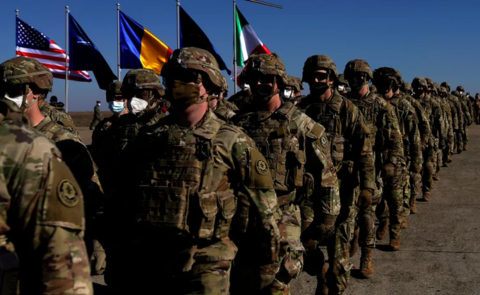
Europe’s strategic absence in West Asian conflict

The war in West Asia is crowded with armaments and players, but there is one presence that is LOB, or Left Out of the Battle: that of Europe. The Continent is peripheral in the current crisis. Structural constraints, strategic dependence on the U.S., internal political divisions, and a shift in Europe’s geopolitical priorities since the war in Ukraine, has reduced its strategic weight.
Website articles  (53) Courtesy: Gateway House
11 March 2026

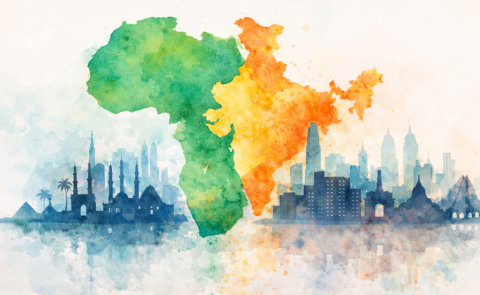
Africa’s Marginalisation: How India Must Respond

Once central to global strategic discourse, the Indo-Pacific and Africa have been sidelined amid the “Age of Polycrisis,” as attention shifts to crises in Europe and West Asia. While India has long expressed goodwill toward Africa, recent regional tensions have pushed the continent off its strategic radar. Renewed India–Africa cooperation is essential to advancing the agenda of the Global South and strengthening South–South partnerships.

Website articles  (13) Courtesy: Gateway House
5 March 2026

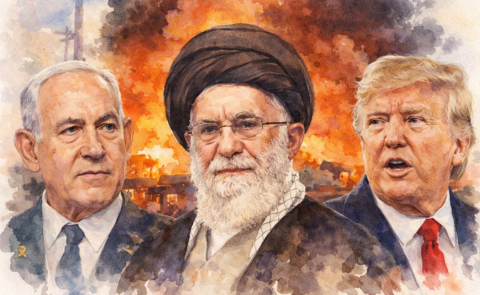
The geometry of attrition: Iran-Israel-U.S. theatre

Early indicators of the ongoing war in West Asia point to a conflict trajectory from the rapid decision to the controlled escalation to distributed strike capacity, advanced military integration and mounting regional exposure. Much like Johann Goethe’s Sorcerer’s Apprentice, conflicts initiated based on assumptions of control can acquire a momentum of their own.

Website articles  (9) Courtesy: Bloomberg
5 March 2026

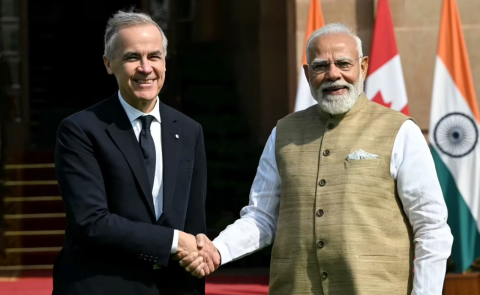
Canada-India reset gathers momentum

Canadian Prime Minister Mark Carney’s visit to India from February 27 to March 2, though sandwiched between the AI Impact Summit and the outbreak of the U.S.-Israel war against Iran, produced concrete outcomes with long-term impact. The visit announced a multidimensional roadmap aligning India’s ‘Viksit Bharat’ vision with Canada’s ‘Build Canada Strong’, to ensure the bilateral relationship does not drift apart again.

Website articles  (51) Courtesy: Gateway House
4 March 2026

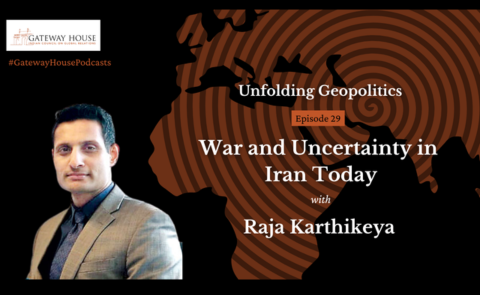
Unfolding Geopolitics Episode 29 |War and uncertainty in Iran today

The assumption that the Iranian public will rise up against its religious and political leadership, seizing the opportunity provided by Israel and U.S. strikes against Iran, may not prove true. Iran’s civilisational structure is resilient, and its educated population may not like being dictated to by the West. Raja Karthikeya, a former international civil servant based in Tehran, examines the escalating U.S.-Israel conflict with Iran, its regional and domestic implications and the tenacity of Iran’s political system amid external pressure.

Website articles  (43) Courtesy: Reuters
25 February 2026

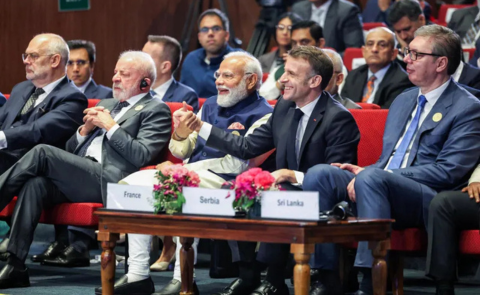
Macron, Modi, Lula: the emerging troika

A new troika is on the rise: India, France and Brazil, led by Modi, Macron and Lula. They were present at the AI Impact Summit in New Delhi on February 20, representing the three largest democracies in Latin America, Asia, and Europe. Can their mutual understanding and global influence bring prosperity and resilience to their economies and strengthen their cooperation in addressing global challenges?

Website articles  (48) Courtesy: Bayerischer Rundfunk
25 February 2026

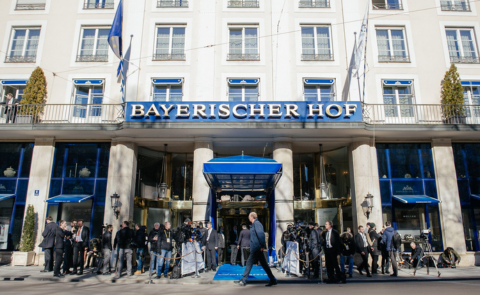
Munich diary: Europe at the crossroads

During the week of the Munich Security Conference, Munich transformed into a temporary capital of global diplomacy. Gateway House participated and hosted a Side Event, “Multipolarity without Multilateralism: India, Europe and the Future of Global Order” on February 14. This diary captures observations from the conference and the city, reflecting on Europe’s evolving priorities and how the continent assesses its role in an increasingly fragmented world.

Website articles  (42) Courtesy: Gateway House
19 February 2026

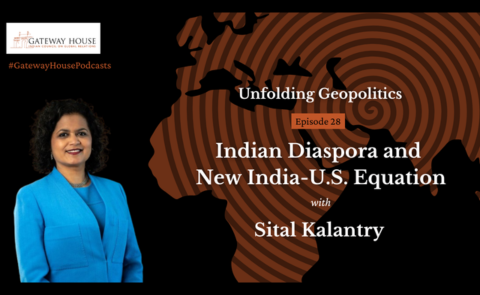
Unfolding Geopolitics Episode 27 |Indian diaspora and new India-U.S. equation

In February 2026, India and the U.S. announced an Interim Trade Agreement framework, advancing toward a full bilateral trade pact and deeper economic integration. Beyond government ties, the relationship is increasingly shaped by supply chains and diaspora influence. Now over five million strong, the Indian diaspora plays a pivotal role across technology, finance, and innovation, creating new pathways for cooperation in a rapidly transforming global order.

2 (12) Courtesy: Ingram Pinn
19 February 2026

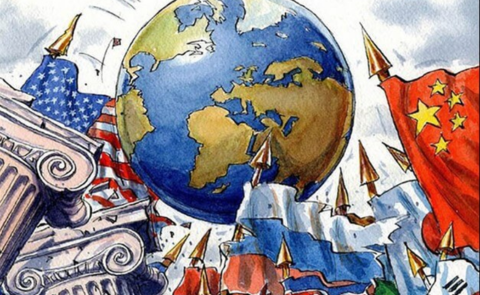
Managing multipolarity in a multilateral world

Multipolarity indicates who holds power, while multilateralism is about how states choose to cooperate. In today’s world, power is diffusing and interdependence is deepening simultaneously. A multipolar world creates fluid alignments and strategic competition, but multilateralism manages interdependence through rules and institutions. The world is becoming both, simultaneously, requiring states to manage competition, preserve cooperation, and stabilise an increasingly complex global landscape. That is easier said.

2 (3) Courtesy: Getty Images
5 February 2026

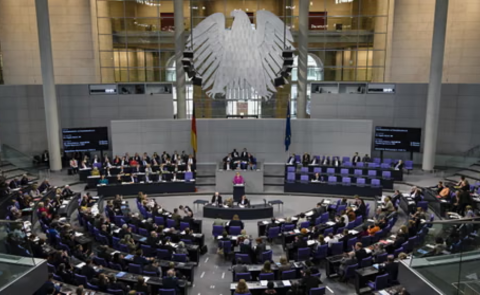
Germany’s reform under strain

Germany’s prospects in 2026 are defined by tension rather than momentum. The country is neither in crisis nor comfortably on a path to renewal. Instead, it is engaged in a difficult process of adjustment, seeking to reconcile fiscal restraint with strategic ambition, social protection with demographic reality, and climate leadership with industrial competitiveness.