16393293185_079f161578_c Courtesy: Flickr/MEA
28 November 2019

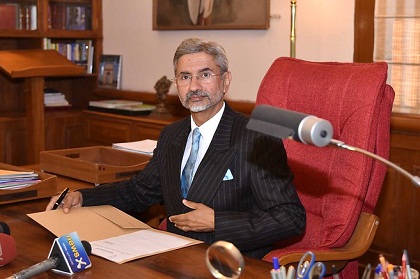
EAM’s statement on India-Canada Track 1.5 Dialogue

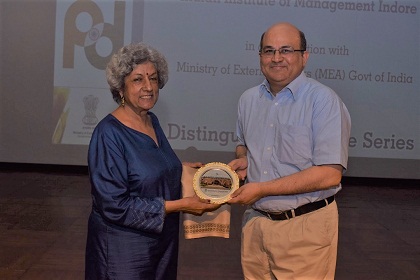
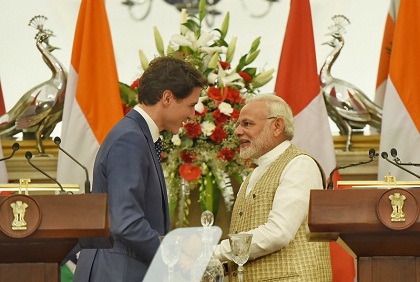
The India-Canada Track 1.5 Dialogue on Innovation, Growth and Prosperity, an initiative agreed upon in February 2018 by the two prime ministers, provides an opportunity for the bilateral relationship to grow through geopolitical convergence, greater economic collaboration and people-to-people interaction. A statement by External Affairs Minister S. Jaishankar for the second edition of the Dialogue, held in Mumbai on 22 November 2019

26560785898_804cca34a8_c Courtesy: MEA/Flickr
21 November 2019

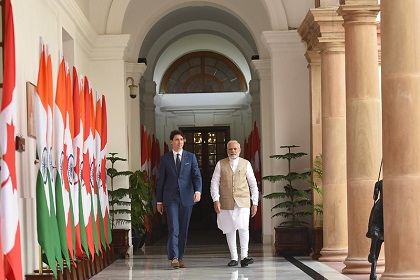
India-Canada: different geopolitics, common interests

Canada, a middle power, and India, an aspiring middle power, have much to offer each other. The India-Canada Track 1.5 Dialogue, the second edition of which will be held on November 22 in Mumbai, is designed to advance the relationship. Manjeet Kripalani, Executive Director, Gateway House, in conversation with Cleo Paskal, Associate Fellow, Chatham House, who is in the city for the Dialogue and to lead a second initiative, called the Indo-Pacific Engagement

ClimateEngineering_GH_CIGI_Cover Courtesy: Gateway House & CIGI
28 February 2019

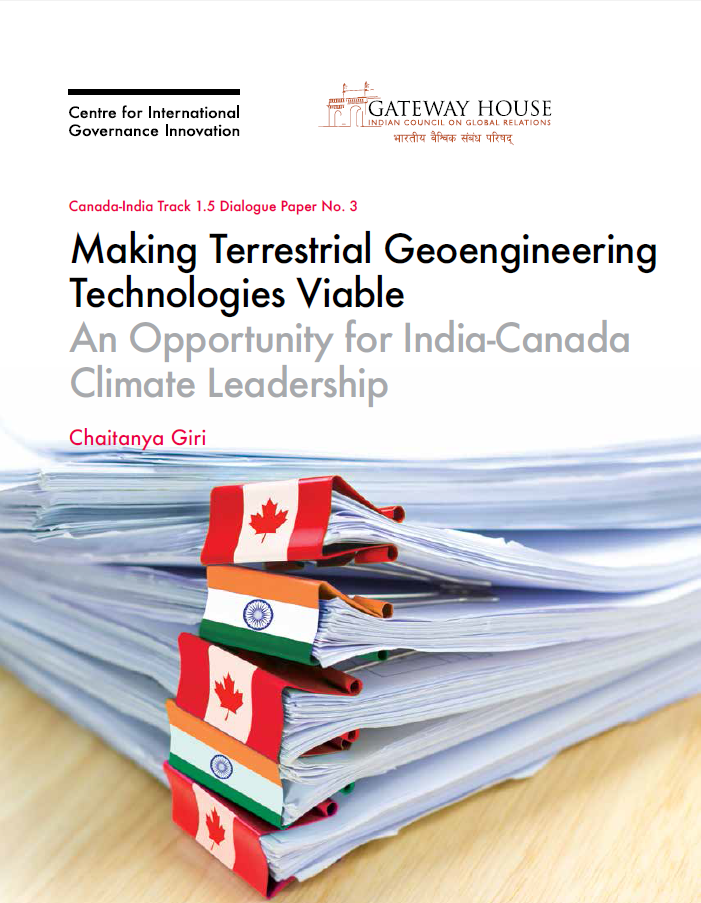
Making Terrestrial Geoengineering Technologies Viable: An Opportunity for India-Canada Climate Leadership

The use of terrestrial geoengineering techniques, such as carbon capture, is necessary to keep the rise in global temperatures below 1.5 degrees Celsius, as per the Paris Agreement’s targets. Terrestrial geoengineering is different from atmospheric climate engineering: the latter does not remove the very source of the increased greenhouse effect, which are anthropogenic greenhouse gases. India and Canada must collaborate on carbon capture and propose multilateral regulations for unethical atmospheric climate engineering

Canada1 Courtesy: Gateway House & CIGI
8 February 2019

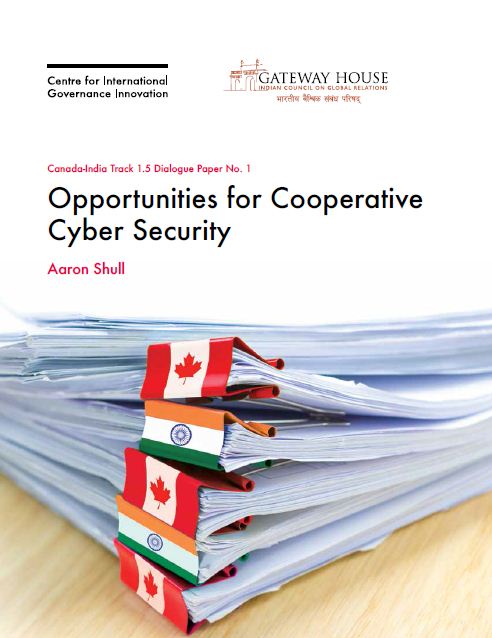
Opportunities for Cooperative Cyber Security

India and Canada share the same vulnerabilities when it comes to cyber security. They have been victims of suspected Chinese hackers and have mutual concerns about terrorism and election manipulation. This paper makes four recommendations on how the two countries can cooperate to build trust and further their strategic and economic interests

GST pic1 Courtesy: Reuters
11 August 2016

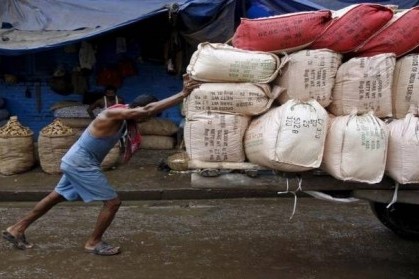
Key GST lessons from the world

The long march to implement the long-awaited Good and Services Tax in India has just begun. It is instructive to understand how other countries introduced this tax and cherry-pick lessons from their experiences

Global Stability Map Courtesy: Gateway House
1 August 2012

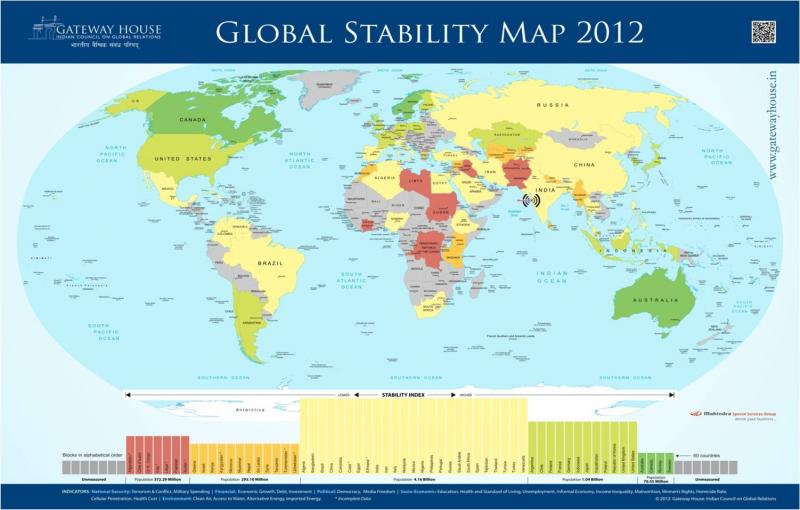
Global Stability Map 2012

Gateway House prepared a Global Stability Map, using 20 differing indicators, to analyze the stability of 60 countries around the world. Using criteria that are important to the emerging economies of the world, the map provides an Indian perspective of the world today.

anna hazare 2 Courtesy: nazeah/Wikimediacommons - Ramesh Lalwani/Flickr
30 December 2011

2011’s Top Foreign Policy Cheers and Jeers

The year 2011 saw various events - the Arab Spring, anti- corruption protests, Europe's sovereign debt crisis - transform countries and reshape the world order. Gateway House takes a look at what these events mean for India, and presents India's top foreign policy cheers and jeers for the year.