Website articles  (5) Courtesy: Körber-Stiftung
6 July 2026

Tested, Trusted, Torn? Emerging Middle Powers Report 2026

The third Emerging Middle Powers Report reveals interesting trends. In every recent year, the five countries surveyed – India, Germany, South Africa, Brazil, and Indonesia – have been tested by events to prove they can prevail over the contested terrain of global politics. A pattern has emerged linking them together: non-alignment is their preferred response to a fragmenting order.

Screenshot 2025-10-13 103335 Courtesy: Körber-Stiftung
13 October 2025

Bandung at 70: Multilateralism in a New Era of Multi-Alignment

The world is facing multiple crises which are shaking the foundations of multilateralism. The West’s structures are faltering, and the need for effective and equitable cooperation is greater than ever. Seventy years after the 1955 Bandung Conference, its principles of sovereignty, territorial integrity, cooperation and solidarity remain vital. This report revisits Bandung’s relevance for today’s reform efforts, urging renewed Global South–Europe collaboration for a sustainable global future.

Report Courtesy: Körber-Stiftung
17 April 2025

Momentum for Middle Powers: Emerging Middle Powers Report

The world is undergoing profound transformations that are not being driven only by the United States, China or Russia. Small and medium-sized States are carving out a legitimate place for themselves in the emerging new order. This second edition of our annual Emerging Middle Powers Report is a reminder that the signs of the times are showing a new momentum for middle powers.

global s Courtesy:
27 August 2024

Voicing again, the Global South Summit

India hosted the third Global South Summit virtually on August 17. Such summits are a necessary platform to network with other developing countries and bring neglected issues to attention. But now they must do more than be tick-box events. They must have achievable milestones, actively share experiences and solutions, and show how they matter.

Report Photo Courtesy: Körber-Stiftung
18 March 2024

Listening Beyond the Echo Chamber: Emerging Middle Powers Report

Divergent global reactions to major crises such as those sparked by the war in Ukraine and NATO’s Afghanistan withdrawal have widened the chasm between Western countries and emerging middle powers. This survey, conducted among nearly 1,000 experts from India, Brazil, South Africa and Germany, examines key foreign policy priorities in these countries, and reveals that despite differences, dialogue is possible.

01 Courtesy: Gateway House
7 September 2023

Unfolding Geopolitics | Episode 1, Decolonisation in progress

The expansion of BRICS and the military coups in West Africa have brought to the fore long-suppressed intensities and tensions in the world order. Developed and developing words are in a moment of transition, with middle powers like India playing key balancing roles. Amb. Neelam Deo speaks with us on Unfolding Geopolitics, a new podcast series which observes and explains current and emerging geopolitical and foreign policy trends across the world.

Niger website Courtesy: Arab News
10 August 2023

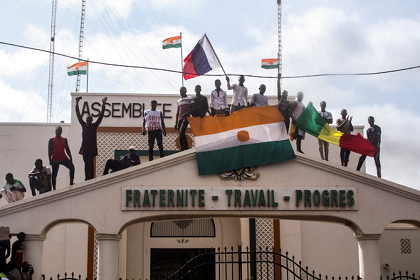
Niger shakes off neo-colonialism

The coup has revealed three truths: the long tail of colonialism is reaching its end; alternatives to western control and command have emerged; the younger generation in developing countries have neither awe nor loyalty to the old master and nothing to lose in overthrowing the past, even though they know not their future.

Africa website Courtesy: The Hindu
3 July 2023

Leveraging an Africa in transition

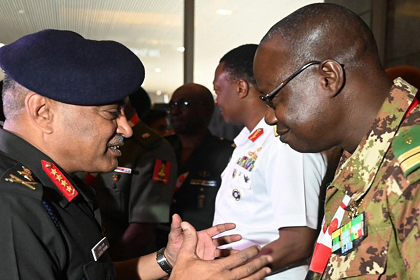
India’s rise as a global player is linked to the kind of relationship it enjoys with African countries, especially as the latter is undergoing demographic, political, and socioeconomic transitions. A new report on the India-Africa partnership recommends a resilient ‘Africa policy’ that will collectively enhance diplomatic, defense, cultural, and developmental collaboration between the two countries.

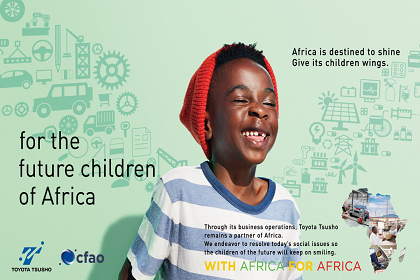
Toyota Japan Africa Courtesy: Toyota Tsusho Corporation
1 September 2022

Japan renews Africa commitment

The Japan-Africa partnership continues to be emphasised. The goal is to build human capital, sustainable and high-quality growth and the security and stability of the global order in which government, business, and civil society leaders participate on an equal basis. It is an opportunity for Indian companies to work together in Africa, to achieve bilateral goals.

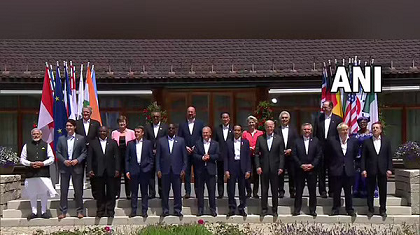
G7s1 Courtesy: The Print
4 July 2022

What did the G7 achieve?

The shadow of the Ukrainian war was visible at the G7 summit. Anti-Russian formations were expected, but the extensive reference to China drew attention. The leaders did their part by extensively discussing challenges relating to climate, energy, environment, health, and food security. It is now for the G7 governments to deliver, to be taken seriously.