Screenshot 2025-10-13 103335 Courtesy: Körber-Stiftung
13 October 2025

Bandung at 70: Multilateralism in a New Era of Multi-Alignment

The world is facing multiple crises which are shaking the foundations of multilateralism. The West’s structures are faltering, and the need for effective and equitable cooperation is greater than ever. Seventy years after the 1955 Bandung Conference, its principles of sovereignty, territorial integrity, cooperation and solidarity remain vital. This report revisits Bandung’s relevance for today’s reform efforts, urging renewed Global South–Europe collaboration for a sustainable global future.

Gateway House Courtesy: Gateway House
3 July 2025

China Plus One and global supply chains

A slowdown of the Chinese economy, and the shift, particularly by MNCs, from China to other more competitive locations has opened up business opportunities for latecomers to supply chains in the developing world. Evidence suggests that Southeast Asia and some South Asian countries like India, Sri Lanka, Bangladesh, could be beneficiaries of the supply chain shift, particularly in labour-intensive segments.

IMEC map with source Courtesy: Gateway House
11 June 2025

IMEC: more than just a corridor

The proposed IMEC corridor connecting India to Europe through the Gulf can be transformative, helping to reduce risks to the global movement of goods and data. It’s early days yet, and there are gaps to be filled in terms of missing infrastructure and overcoming a diplomatic rift.

Getty (1) Courtesy: Gateway House
15 May 2025

The New Geopolitics and South Asia’s Trade Architecture – What Next?

Geopolitics is increasingly intertwined with the economic destiny of South Asia. Even before the U.S. tariffs were rolled out, growing polycrises had hit the global economy, which has been struggling since the pandemic. South Asia seems a relatively bright spark of regional trade and growth. This paper analyses South Asia’s trade architecture in the backdrop of a sluggish world economy in the 2020s, and makes recommendations for closer regional economic integration.

Report Courtesy: Körber-Stiftung
17 April 2025

Momentum for Middle Powers: Emerging Middle Powers Report

The world is undergoing profound transformations that are not being driven only by the United States, China or Russia. Small and medium-sized States are carving out a legitimate place for themselves in the emerging new order. This second edition of our annual Emerging Middle Powers Report is a reminder that the signs of the times are showing a new momentum for middle powers.

Moutai PNG Courtesy: The Economic Times
27 October 2022

China’s new corporate top dogs

A quick look at the list of top Chinese companies shows that the vaunted private sector has receded and the state-owned giants now dominate. Under the new Xi Jinping regime, they are unlikely to relinquish their position. What does this mean for China – and for India?

Toyota Japan Africa Courtesy: Toyota Tsusho Corporation
1 September 2022

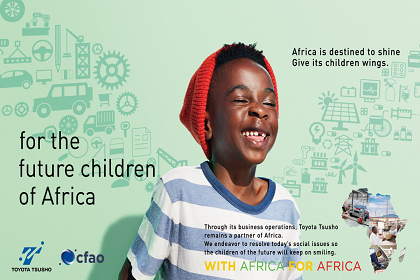
Japan renews Africa commitment

The Japan-Africa partnership continues to be emphasised. The goal is to build human capital, sustainable and high-quality growth and the security and stability of the global order in which government, business, and civil society leaders participate on an equal basis. It is an opportunity for Indian companies to work together in Africa, to achieve bilateral goals.

GIGA_map_of_Indo-Pacific_Kontur_resize Courtesy: Science Po
28 July 2022

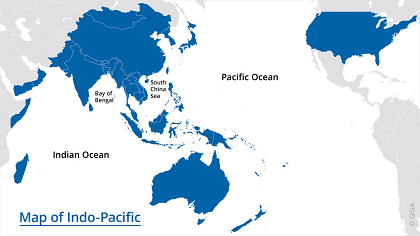
India’s blue economy and the Indo-Pacific’s future

The Indo-Pacific region envisages the Indian and Pacific Oceans as a continuum and stands on two central pillars – maritime security and economic development. The public discussions, however, are focused on maritime security, strategy and geopolitics, while economic development has received less attention. This imbalance can be corrected by creating an awareness on how to harness the potential of the region's Blue Economy and its vast resources and opportunities.

Critical-minerals-Australia-Government-strategy-640x400 Courtesy: Small Caps
28 July 2022

Partnering with Japan for critical minerals supply

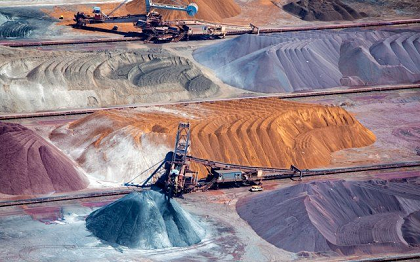
The supply of critical minerals, crucial for new and emerging technologies such as electric vehicles, electronics and renewable energy production, faces a significant disruption due to Covid and the Ukraine crisis. As the prices of these valuable resources surge, India can secure its supplies through the sagacious use of financial investments, efficient policies, and propriety technology. A collaboration with Japan can offer multifaceted benefits.

SL Courtesy: AP
14 July 2022

Awaiting Sri Lanka’s Narasimha Rao

Sri Lanka is experiencing an economic, political and strategic crisis it has never had before. The situation is fragile – but a creative solution and determined national interest can help return the island nation to stability and growth. Amb. Rajiv Bhatia, in conversation with economist Dr Ganeshan Wignaraja on how Sri Lanka came to the current condition, and the remedies to adopt.