Website articles  (5) Courtesy: Körber-Stiftung
6 July 2026

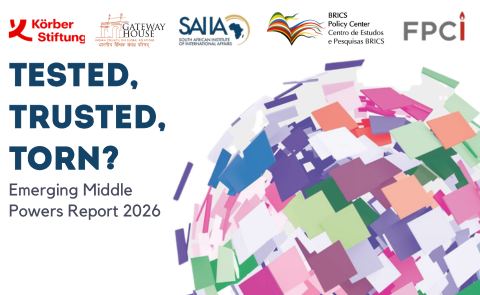
Tested, Trusted, Torn? Emerging Middle Powers Report 2026

The third Emerging Middle Powers Report reveals interesting trends. In every recent year, the five countries surveyed – India, Germany, South Africa, Brazil, and Indonesia – have been tested by events to prove they can prevail over the contested terrain of global politics. A pattern has emerged linking them together: non-alignment is their preferred response to a fragmenting order.
Website articles  (56) Courtesy: Gateway House
19 March 2026

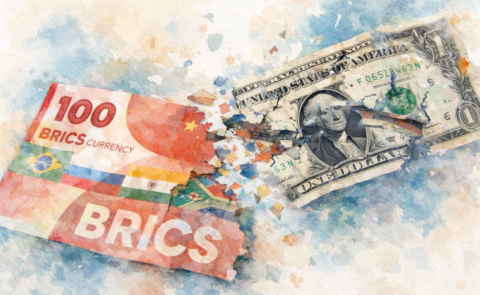
BRICS CBDCs can lead to financial multipolarity

India’s proposal to link the digital currencies of the BRICS nations could alter how emerging economies settle trade deals. It is necessary to examine the reasoning behind such a move, its effort to reducing dollar dependence, and the benefits that accrue to India.

Screenshot 2025-10-13 103335 Courtesy: Körber-Stiftung
13 October 2025

Bandung at 70: Multilateralism in a New Era of Multi-Alignment

The world is facing multiple crises which are shaking the foundations of multilateralism. The West’s structures are faltering, and the need for effective and equitable cooperation is greater than ever. Seventy years after the 1955 Bandung Conference, its principles of sovereignty, territorial integrity, cooperation and solidarity remain vital. This report revisits Bandung’s relevance for today’s reform efforts, urging renewed Global South–Europe collaboration for a sustainable global future.

Report Courtesy: Körber-Stiftung
17 April 2025

Momentum for Middle Powers: Emerging Middle Powers Report

The world is undergoing profound transformations that are not being driven only by the United States, China or Russia. Small and medium-sized States are carving out a legitimate place for themselves in the emerging new order. This second edition of our annual Emerging Middle Powers Report is a reminder that the signs of the times are showing a new momentum for middle powers.

Report Photo Courtesy: Körber-Stiftung
18 March 2024

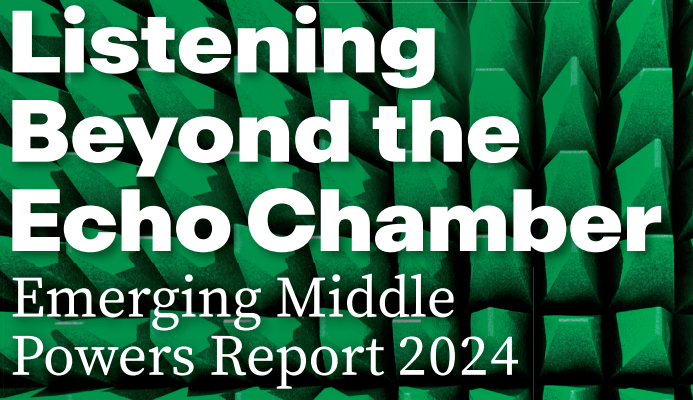
Listening Beyond the Echo Chamber: Emerging Middle Powers Report

Divergent global reactions to major crises such as those sparked by the war in Ukraine and NATO’s Afghanistan withdrawal have widened the chasm between Western countries and emerging middle powers. This survey, conducted among nearly 1,000 experts from India, Brazil, South Africa and Germany, examines key foreign policy priorities in these countries, and reveals that despite differences, dialogue is possible.

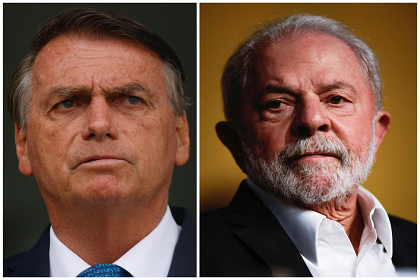
Bolsi and Lula Right left Courtesy: Reuters
13 October 2022

Brazil elections, looking ahead

Brazil will head to the polls in a runoff this month to choose its next president. Will it be incumbent Jair Bolsonaro, or former president Lula da Silva? Both are popular with their voter bases, but both have hurdles to overcome, most notably the economy, and have differences on their global political alignment – particularly important as Brazil will be the G20 President in 2024.

G20 Rome summit, marching ahead Courtesy: G20
4 November 2021

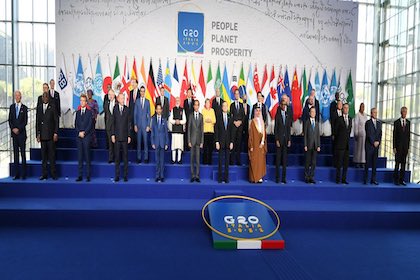
G20 Rome summit, marching ahead

The Oct 30-31 G20 Leaders’ Summit in Rome took several important steps to accelerate economic recovery and health security. In the absence of several Eurasian leaders, India played a significant role especially on climate and energy. The G20 will now acquire greater salience in India's foreign policy, as it readies to lead the grouping in 2023.

_89083411_89083410 Courtesy: BBC
26 May 2016

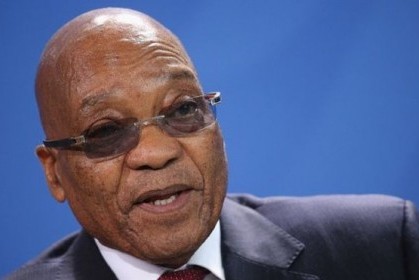
International credibility in a domestic crisis

At present, South Africa finds itself charting political and economic policy uncertainties. This is not to suggest that the domestic political crisis will see different trajectories unfolding with regard to its BRICS/IBSA engagements, or on a broader foreign policy path, but it will have repercussions at the international level, in terms of investor confidence, credit ratings, and currency volatility. Pretoria will face constant pressure to be seen as a credible actor, especially when it comes to its African identity.