Mecca Accord Courtesy: Gateway House
23 September 2026

Essay: Mecca Accord re-engineers regional security?

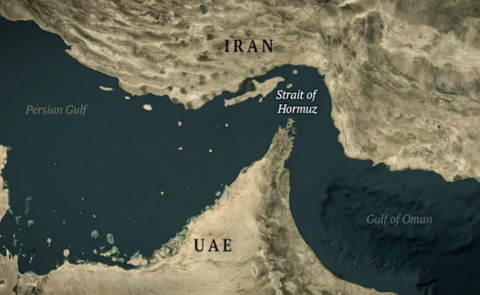
The sustainability of the Mecca Accord is determined by its response to three geopolitical challenges represented by India, Iran, and Israel. The India test centres on preventing the export of South Asian conflicts to the Gulf, the Iranian test rests on institutionalising sustainable deterrence beyond formulas of perpetual clash, and the Israeli axis tests the mechanisms for reshaping Saudi ties with American security and the future of regional normalisation.

Office of the Pakistani Prime Minister_AFP Courtesy: AFP
27 August 2026

Mecca Accord and India’s energy security

The Mecca Accord between Saudi Arabia, Turkiye and Pakistan has raised some red flags in the region, and in India. One element remains unchanged: India’s value to Riyadh as an energy importer. With demand security holding more weight than supply security in an uncertain future, a major and growing oil importer like India is more important than the cash-for-security arrangement the Kingdom has signed with Pakistan.

oil Courtesy: KNN
28 May 2026

India’s Opportunity in the New Oil Order

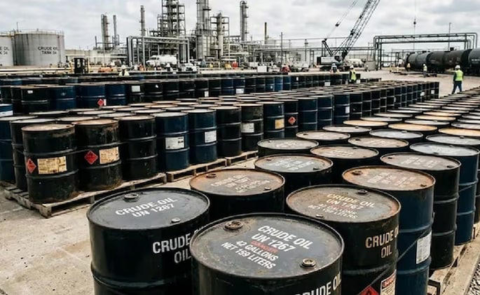
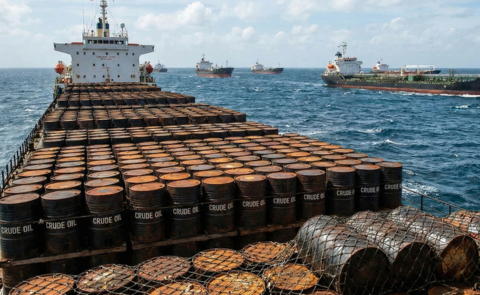
The UAE’s recent exit from OPEC, and the U.S. push to sell more oil to India are markers of a new order in the oil world with demand security at a premium. As a major oil importer, India must respond to it smartly. It must develop deeper partnerships with both the UAE and U.S., and a new financial ecosystem and benchmarks for the new order.

Website articles  (73) Courtesy: AFR
2 April 2026

India’s options after the Persian Gulf war

The Persian Gulf conflict has already impacted India’s oil imports and financial security. However, India has not created meaningful options to protect itself from oil shocks over the last decade – and such shocks will continue. Now is the time for India to make equity investments in oil and gas companies in stable economies like the U.S., Canada and Australia, to protect itself from future energy crises.

Website articles  (60) Courtesy: MSN
19 March 2026

Gulf War pinches South Asia

The war in the Persian Gulf has already caused significant disruption in India’s South Asian neighbours. A prolonged conflict is likely to push the region back into economic and political crises from which it had been hopeful of emerging this year.

Website articles  (56) Courtesy: Gateway House
19 March 2026

BRICS CBDCs can lead to financial multipolarity

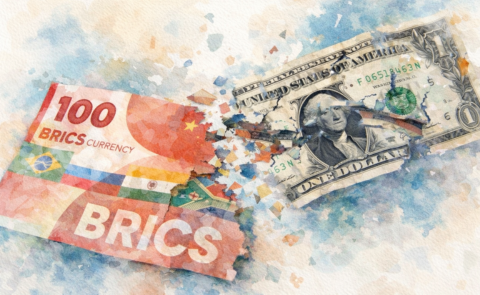
India’s proposal to link the digital currencies of the BRICS nations could alter how emerging economies settle trade deals. It is necessary to examine the reasoning behind such a move, its effort to reducing dollar dependence, and the benefits that accrue to India.

IMEC map with source Courtesy: Gateway House
11 June 2025

IMEC: more than just a corridor

The proposed IMEC corridor connecting India to Europe through the Gulf can be transformative, helping to reduce risks to the global movement of goods and data. It’s early days yet, and there are gaps to be filled in terms of missing infrastructure and overcoming a diplomatic rift.

FILE PHOTO: A worker walks past the logo of Reserve Bank of India (RBI) inside its office in New Delhi, India July 8, 2019. REUTERS/Anushree Fadnavis Courtesy: Reuters
14 July 2022

The rupee as regional currency

The Reserve Bank’s move to enable international trade in INR is a step towards regaining Indian primacy in the Indian Ocean region that the Indian Rupee once enjoyed. It is also an essential financial dimension that will add heft to India’s strategic SAGAR policy.

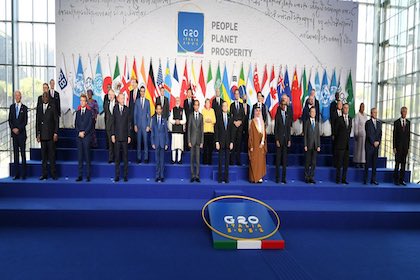
G20 Rome summit, marching ahead Courtesy: G20
4 November 2021

G20 Rome summit, marching ahead

The Oct 30-31 G20 Leaders’ Summit in Rome took several important steps to accelerate economic recovery and health security. In the absence of several Eurasian leaders, India played a significant role especially on climate and energy. The G20 will now acquire greater salience in India's foreign policy, as it readies to lead the grouping in 2023.