
Website articles  (5) Courtesy: Körber-Stiftung
6 July 2026

Tested, Trusted, Torn? Emerging Middle Powers Report 2026

The third Emerging Middle Powers Report reveals interesting trends. In every recent year, the five countries surveyed – India, Germany, South Africa, Brazil, and Indonesia – have been tested by events to prove they can prevail over the contested terrain of global politics. A pattern has emerged linking them together: non-alignment is their preferred response to a fragmenting order.
Website articles  (55) Courtesy: Andreea Campeanu/Getty Images
12 March 2026

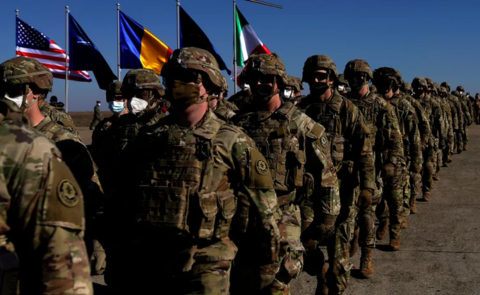
Europe’s strategic absence in West Asian conflict

The war in West Asia is crowded with armaments and players, but there is one presence that is LOB, or Left Out of the Battle: that of Europe. The Continent is peripheral in the current crisis. Structural constraints, strategic dependence on the U.S., internal political divisions, and a shift in Europe’s geopolitical priorities since the war in Ukraine, has reduced its strategic weight.

2 (3) Courtesy: Getty Images
5 February 2026

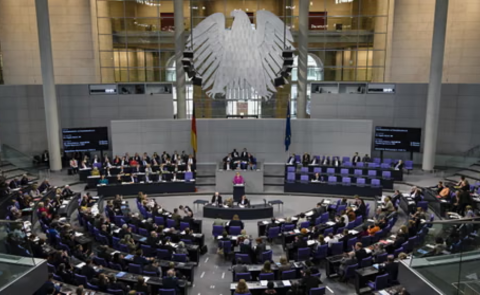
Germany’s reform under strain

Germany’s prospects in 2026 are defined by tension rather than momentum. The country is neither in crisis nor comfortably on a path to renewal. Instead, it is engaged in a difficult process of adjustment, seeking to reconcile fiscal restraint with strategic ambition, social protection with demographic reality, and climate leadership with industrial competitiveness.

revised design Courtesy: Gateway House
27 November 2025

Rise of the Davos Competitor

U.S. health secretary Robert Kennedy Jr. called the World Economic Forum a “billionaires’ boys club” imposing totalitarian controls. Indeed, since 1971, the elite platform shaped geopolitics. But its Western-centricism kept out the concerns of the rest. This gave rise to alternative forums, which look beyond financial agendas to the perspectives shaping the Global South. Here are 45 of biggest, half of which began just two decades ago.

Screenshot 2025-10-13 103335 Courtesy: Körber-Stiftung
13 October 2025

Bandung at 70: Multilateralism in a New Era of Multi-Alignment

The world is facing multiple crises which are shaking the foundations of multilateralism. The West’s structures are faltering, and the need for effective and equitable cooperation is greater than ever. Seventy years after the 1955 Bandung Conference, its principles of sovereignty, territorial integrity, cooperation and solidarity remain vital. This report revisits Bandung’s relevance for today’s reform efforts, urging renewed Global South–Europe collaboration for a sustainable global future.

DD news Courtesy: DD News
18 August 2025

Alaska, the Summit of Summits

There was much at stake for the U.S.-Russia summit at Alaska – more than just the future of Ukraine. It will put the world back on economic track, and ease East-West relations, under stress for an on-going tariff war. For now, diplomacy has played a successful hand.

East Asia Forum Courtesy: East Asia Forum
26 June 2025

Canada, India and the G7 Summit

Most multilateral and plurilateral institutions have lost their significance and ability to shape the trajectory of international relations today. The G7 is no exception. It is impacted by the shift of power from the Atlantic to the Pacific, and an intra-Atlantic rift. The G7 discussions reflected this. More positive were the sideline discussions on repairing the India-Canada bilateral.

Ludovic MARIN  AFP Courtesy: Ludovic MARIN / AFP
12 June 2025

Macron’s strategic Indo-Pacific sail

Macron’s 2025 tour of Southeast Asia was intended to reinforce France’s strategic commitment to the Indo-Pacific. By engaging with three key ASEAN members - Vietnam, Indonesia, and Singapore - France wants to forge partnerships beyond its traditional transatlantic ties. Its Indo-Pacific vision is based on its territorial presence, economic interests, and diplomacy values, which it hopes will be an alternative to the binary logic of U.S.-China rivalry.

Website articles  (21) Courtesy: News Arena India
12 June 2025

G7 Summit: Plethora of opportunities

Canadian Prime Minister Carney can use the upcoming G7 summit he is hosting to advance the North-South dialogue and cooperation and also to discuss the strained bilateral with India. India can articulate the viewpoint of the Global South, stressing its conviction that the G7 is better served by constructively working with developing and emerging economies.