Getty (2) Courtesy: All India Radio News
9 December 2025

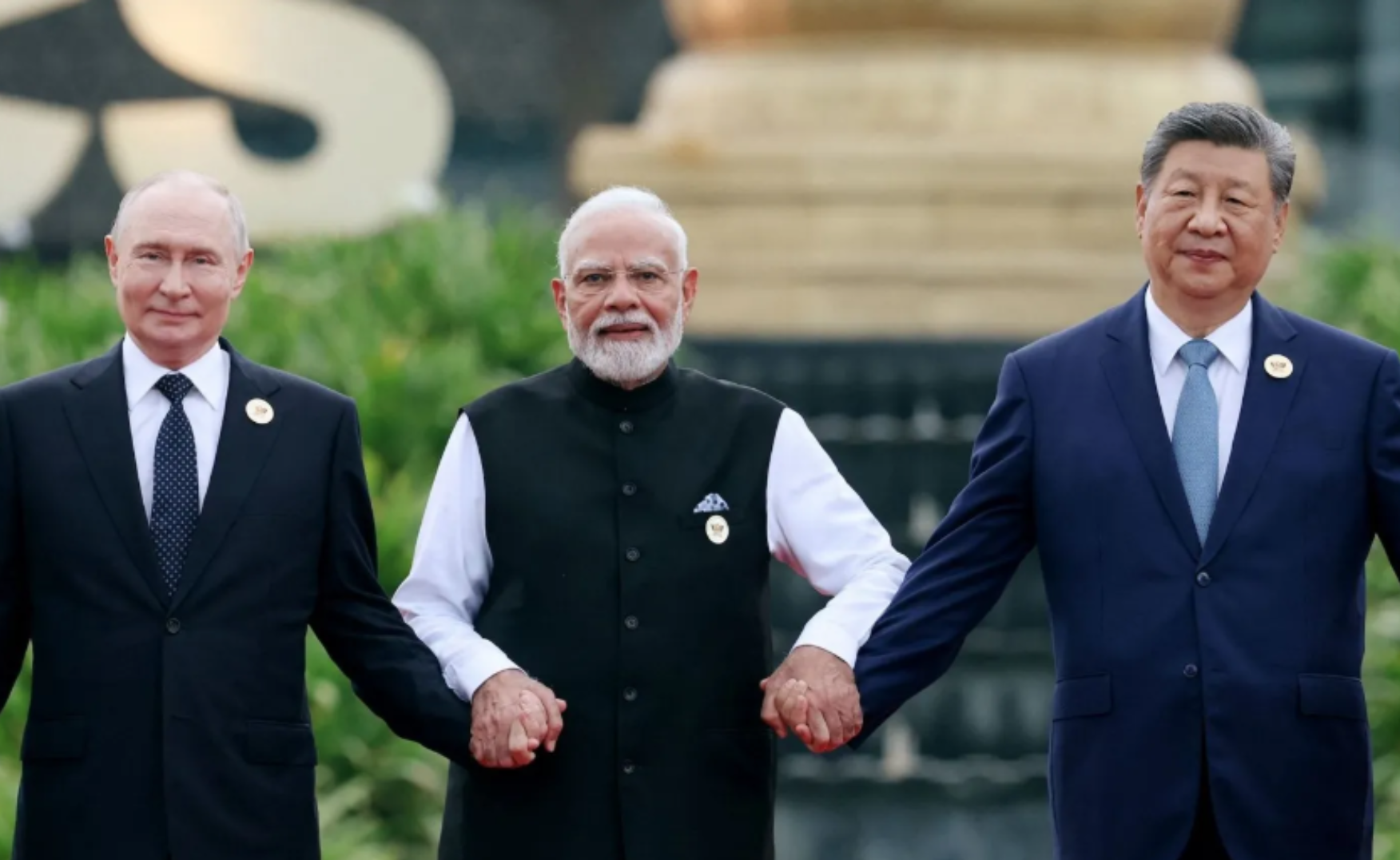
Putin’s visit sends a signal

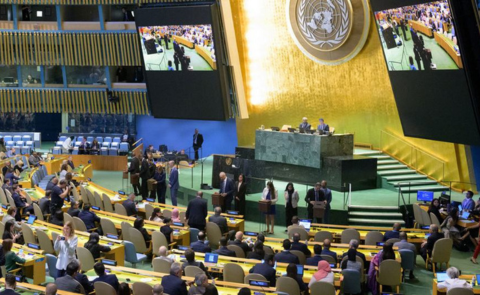
India and Russia have a time-tested relationship, which was evident during President Putin's state visit to New Delhi last week. Its success lay in the warmth the leaders of the two countries share and in its timing: geopolitically, just after discussions of the U.S. and China as the G2, and commercially and strategically, at a time when India’s needs match Russia's capabilities.

61XgnQBhwiL._SY425_ Courtesy: Amazon India
27 November 2025

Indo-Pacific Strategic Churn: Challenges and State Responses

Rajiv Bhatia explains how this book brings together perspectives on the geostrategy, geopolitics, and geoeconomics of the Indian and Pacific Oceans. Edited by Chintamani Mohapatra, it features 16 essays by experienced yet young academics. It highlights how the world changed after 2020, the ‘Age of Polycrisis’, COVID-19, conflicts in West Asia and Europe, and other global flashpoints. The book offers analysis that seeks to reposition the Indo-Pacific as vital to India’s strategic interests.

Themba HadebeAP Courtesy: Themba Hadebe/AP
27 November 2025

Johannesburg G20 summit: advancing amidst anxiety

The G20 Summit in Johannesburg ended on a widely-shared sense of satisfaction and achievement, with the Global South’s perspective well-articulated, but divergent from some in the Global North. Now the G20's challenge is to restore its unity and credibility by working toward reconciliation with its next president, the U.S. Can India enhance its credibility and influence as a North-South bridge-builder?

Reuters Courtesy: Reuters
27 November 2025

Japan and China row over Taiwan

China’s attempt to discipline Japan over Japanese Prime Minister Takaichi’s statement on a Chinese attack on Taiwan threatening Japan’s security, may instead strengthen the very alliances Beijing hoped to fracture. By using symbolic economic instruments, invoking the UNSC, and amplifying nationalist messaging while avoiding mass public mobilisation, China signals displeasure without risking internal instability. Yet these same measures push Japan ever deeper into U.S.-aligned networks.

revised design Courtesy: Gateway House
27 November 2025

Rise of the Davos Competitor

U.S. health secretary Robert Kennedy Jr. called the World Economic Forum a “billionaires’ boys club” imposing totalitarian controls. Indeed, since 1971, the elite platform shaped geopolitics. But its Western-centricism kept out the concerns of the rest. This gave rise to alternative forums, which look beyond financial agendas to the perspectives shaping the Global South. Here are 45 of biggest, half of which began just two decades ago.

Website articles  (11) Courtesy: UNDP
20 November 2025

A G20 summit with African characteristics

The G20 Summit in Johannesburg in November will close four years of developing countries holding the grouping’s Presidency. It has left a positive imprimateur on the G20. The next President, the U.S., will inherit a more diverse body, with equal attention being given to issues of the Global North and the Global South.

Kyodo News (1) Courtesy: Kyodo News
20 November 2025

Sanae Takaichi’s strong start

The rise of Sanae Takaichi, Japan’s first female prime minister with firm conservative credentials, carries both symbolic weight and political controversy. Her early decisions suggest clarity of intention but also highlight the structural weaknesses and diplomatic sensitivities that will shape her tenure. To keep her ratings high, she has to stabilise her minority government at home, and manage the China, U.S. and ASEAN relationships with tact.

Website articles  (2) Courtesy: Atlantic Council
6 November 2025

Trump’s Asia tour redefines China approach

U.S. President Donald Trump embarked on a five-day trip to Asia, arriving in Kuala Lumpur on October 26. Covering Malaysia, Japan, and South Korea, the visit marked a shift in focus from the Ukraine and Gaza conflicts to Southeast and East Asia, as his administration is set to finalise its China policy and Indo-Pacific strategy. The trip yielded important results, though their impact will take time to assess.

Screenshot 2025-10-13 103335 Courtesy: Körber-Stiftung
13 October 2025

Bandung at 70: Multilateralism in a New Era of Multi-Alignment

The world is facing multiple crises which are shaking the foundations of multilateralism. The West’s structures are faltering, and the need for effective and equitable cooperation is greater than ever. Seventy years after the 1955 Bandung Conference, its principles of sovereignty, territorial integrity, cooperation and solidarity remain vital. This report revisits Bandung’s relevance for today’s reform efforts, urging renewed Global South–Europe collaboration for a sustainable global future.

G20.Org Courtesy: G20.org
28 August 2025

Appraising Brazil’s G20 Presidency

The G20’s current cycle is unique, with four Global South nations presiding consecutively: Indonesia, India, Brazil, and now South Africa. Brazil’s 2023-24 presidency exhibited both achievements and struggles, prioritising social inclusion, hunger, energy transition, and governance reform. The handover to South Africa marks a significant milestone in G20 history. Will the momentum be followed by the U.S., the next G20 president but also a G20 sceptic?