Themba HadebeAP Courtesy: Themba Hadebe/AP
27 November 2025

Johannesburg G20 summit: advancing amidst anxiety

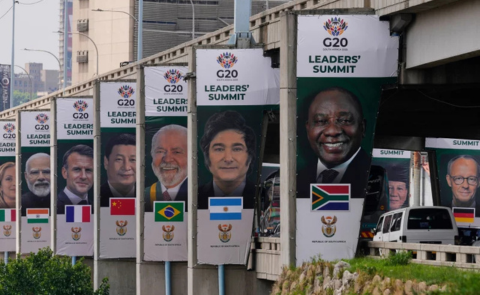
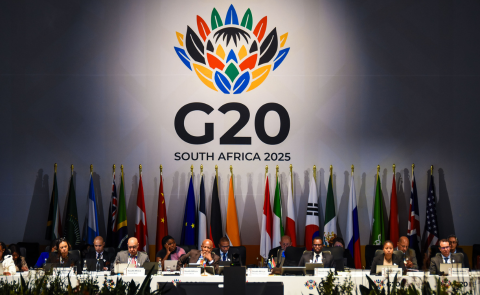
The G20 Summit in Johannesburg ended on a widely-shared sense of satisfaction and achievement, with the Global South’s perspective well-articulated, but divergent from some in the Global North. Now the G20's challenge is to restore its unity and credibility by working toward reconciliation with its next president, the U.S. Can India enhance its credibility and influence as a North-South bridge-builder?

revised design Courtesy: Gateway House
27 November 2025

Rise of the Davos Competitor

U.S. health secretary Robert Kennedy Jr. called the World Economic Forum a “billionaires’ boys club” imposing totalitarian controls. Indeed, since 1971, the elite platform shaped geopolitics. But its Western-centricism kept out the concerns of the rest. This gave rise to alternative forums, which look beyond financial agendas to the perspectives shaping the Global South. Here are 45 of biggest, half of which began just two decades ago.

Website articles  (11) Courtesy: UNDP
20 November 2025

A G20 summit with African characteristics

The G20 Summit in Johannesburg in November will close four years of developing countries holding the grouping’s Presidency. It has left a positive imprimateur on the G20. The next President, the U.S., will inherit a more diverse body, with equal attention being given to issues of the Global North and the Global South.

Screenshot 2025-10-13 103335 Courtesy: Körber-Stiftung
13 October 2025

Bandung at 70: Multilateralism in a New Era of Multi-Alignment

The world is facing multiple crises which are shaking the foundations of multilateralism. The West’s structures are faltering, and the need for effective and equitable cooperation is greater than ever. Seventy years after the 1955 Bandung Conference, its principles of sovereignty, territorial integrity, cooperation and solidarity remain vital. This report revisits Bandung’s relevance for today’s reform efforts, urging renewed Global South–Europe collaboration for a sustainable global future.

G20.Org Courtesy: G20.org
28 August 2025

Appraising Brazil’s G20 Presidency

The G20’s current cycle is unique, with four Global South nations presiding consecutively: Indonesia, India, Brazil, and now South Africa. Brazil’s 2023-24 presidency exhibited both achievements and struggles, prioritising social inclusion, hunger, energy transition, and governance reform. The handover to South Africa marks a significant milestone in G20 history. Will the momentum be followed by the U.S., the next G20 president but also a G20 sceptic?

Report Courtesy: Körber-Stiftung
17 April 2025

Momentum for Middle Powers: Emerging Middle Powers Report

The world is undergoing profound transformations that are not being driven only by the United States, China or Russia. Small and medium-sized States are carving out a legitimate place for themselves in the emerging new order. This second edition of our annual Emerging Middle Powers Report is a reminder that the signs of the times are showing a new momentum for middle powers.

lula Courtesy: Real Institute of Elcano
21 March 2024

The perfect recipe?

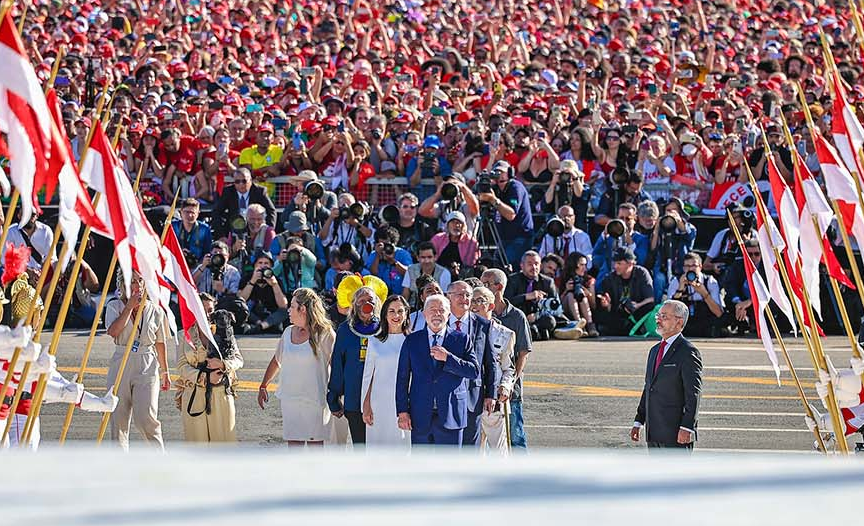
Brazil has the right strategy to survive in a world full of crises: Unite with many to deliver for all. With the ongoing presidency of the G20 and leadership of the BRICS and COP30 on the way next year, Brazil is in a unique position to play a constructive role both regionally and on the world stage.

Report Photo Courtesy: Körber-Stiftung
18 March 2024

Listening Beyond the Echo Chamber: Emerging Middle Powers Report

Divergent global reactions to major crises such as those sparked by the war in Ukraine and NATO’s Afghanistan withdrawal have widened the chasm between Western countries and emerging middle powers. This survey, conducted among nearly 1,000 experts from India, Brazil, South Africa and Germany, examines key foreign policy priorities in these countries, and reveals that despite differences, dialogue is possible.

BRICS 2 website Courtesy: Fox News
31 August 2023

BRICS-XI, the new configuration

The decision to invite six countries — Argentina, Egypt, Ethiopia, Iran, Saudi Arabia, and the UAE — to join BRICS as full members has opened the grouping to a new geopolitical era. India can now play a seminal but challenging role in this evolved dynamic, given its growing cooperation with the West on the one hand and its active pursuit of the interests of the Global South on the other.