indo pacific  (7) Courtesy: Daily News Egypt
31 July 2025

Egypt positions its foreign policy

Egypt sits at the intersection of three continents and two seas, and its foreign policy is a geographic, historic and strategic consequence. From Tripoli to Kortum, Addis Ababa to Brussels, New Delhi to Moscow, Beijing to Washington, Cairo employs diplomacy as a key national security tool, positioning itself as a cornerstone of geopolitical stability within an increasingly multipolar world.

ADEM ALTANAFP via Getty Images Courtesy: Adem Altan/AFP via Getty Images
3 July 2025

Iran’s second chance to transition

Iranian foreign policy must move toward strategic autonomy and internal concord. As witnessed after the 1988 ceasefire with Iraq, such moments can mark an inflexion point - one that prioritises national reconstruction, resilience, and welfare; strategic recalibration, strengthening of confidence, and finding a geopolitical identity. Iran has been there before, and can apply those experiences again.

Website articles  (18) Courtesy: Reuters photo
28 May 2025

Strategy meets statecraft: Trump in Riyadh

Presidential visits abroad are high-level instruments of statecraft and, more often than not, signals of geopolitical priorities. The recent visit of U.S. President Donald Trump to the United Arab Emirates, Saudi Arabia, and Qatar, exemplified this, indicating the administration's policy orientation.

IMG_2549 Courtesy: The Times of Israel
2 May 2024

Diplomacy in Middle East grey zones

Grey zones have blurred the frontiers of conflict and peace worldwide, creating ambiguous wars of complex scenarios and labyrinths that have transformed strategic foresight and the international and national security landscape. In these arenas, multiple options are available, where regional powers' ascertainments converge with the poker game of political, diplomatic, economic, and military interests, as well as the operations of state and non-state actors.

Azaz,_Syria Courtesy: Wikipedia
9 March 2016

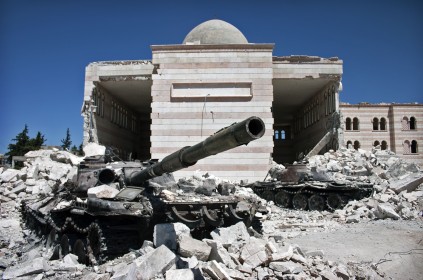
India and the Syrian quagmire

With a cessation of hostilities been brokered by Russia and the United States, the conflict in Syria has entered a tense pause. India has had a bystander attitude to the conflict in Syria. However, with the truce expected to be short, does India have the incentive or the option to depart from its current position, and deepen its engagement in Syria?

EndISISFlickrDawn Endico Courtesy: Dawn Endico
3 December 2015

Can ISIS be defeated?

Today ISIS is the gravest international security threat. To defeat ISIS, the world should pay heed to India’s experience of the need to isolate state sponsors of terrorism. Ultimately, only when Saudi Arabia acknowledges the danger to its own survival from past policies of alleged support to extremist groups, can it be a reliable partner in the fight against ISIS.

Israel-Saudi Courtesy: Wikipedia
13 July 2015

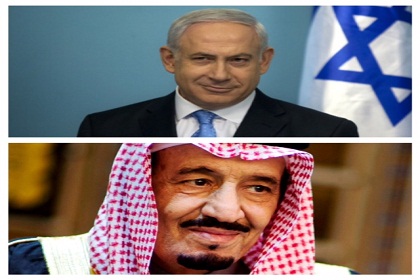
Reassessing our Israel, Arab engagement

The announcement in June of a Saudi-Israeli alliance against Iran has to be seen in the context of the strategic dimensions of India’s relations with Saudi Arabia, Israel, Iran, and the U.S. And it has far-reaching implications for India’s policy towards West Asia

IS Courtesy: U.S. Staff Sergeant Aaron Allmon
16 September 2014

Modi, Obama and the Islamic State

Obama’s strategy to target the IS in Syria within the framework of a U.S.-led international coalition has met with a tepid response. There are reports that the U.S may offer India a non-NATO ally status during Modi’s upcoming visit in a bid to seek greater support – a gesture that India will do well to disregard.

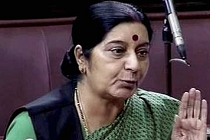
Sushma on Gaza Courtesy: Rajya Sabha TV
30 July 2014

A confusing stand on Gaza

Historically, India has supported the Palestinian cause but today, shares strong diplomatic relations with both West Bank and Tel Aviv. India's vote at the UNHRC has provoked much debate within the country as it marks a distinct shift in the government's stand from a few weeks ago when it was reluctant to even discuss the Gaza crisis in Parliament

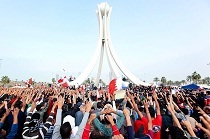
Bahrain Activist/WikimediaCommons Courtesy:
8 February 2013

India navigates the Arab Uprisings

The Arab uprisings show no sign of closure, and have become amorphous. While New Delhi has so far been immunised from the political and religious dimensions of the uprisings, the rise of political Islam, Islamic governance, and continuing instability will impact India.