shutterstock_1062335495 Courtesy: Shutterstock
5 March 2020

Shadow of debt over Mombasa port

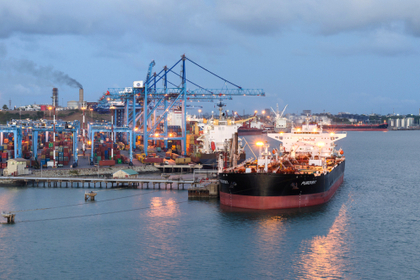
Kenya’s Mombasa port, the gateway to East and Central Africa, has enabled the Chinese to gain better access to resources in the region and export destinations within Africa through the Belt and Road Initiative. A recent visit offered insights into some of the shortcomings of increasing Chinese investments in the region – and the scope for other countries to step in
Chinese Investments In India Cover final-2020 - Copy Courtesy: Gateway House
27 February 2020

India in the virtual Belt and Road

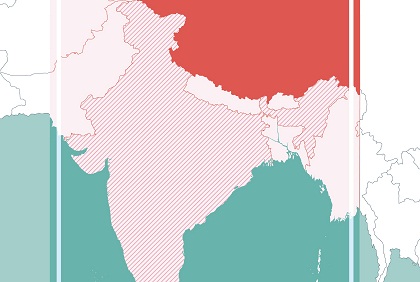
Over the last five years, China has quietly created a significant place for itself in India – in the technology domain. While India has refused to sign on to China's Belt and Road Initiative (BRI), this map shows India's positioning in the virtual BRI to be strategically invaluable for China. Nearly $4 billion in venture investments in start-ups, the online ecosystem and apps have been made by Chinese entities. This is just the beginning; there is much more to come.

34752548343_6bd510e0ac_c Courtesy: MEA/Flickr
20 February 2020

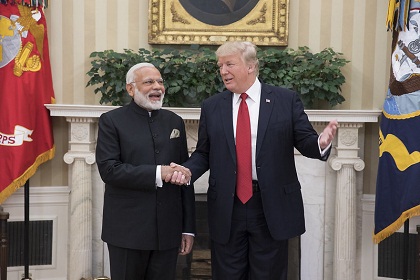
Trump’s visit: trade differences exaggerated

In the run-up to President Trump’s visit to India on 24-25 February 2020, Ambassador Neelam Deo, Director and Co-founder of Gateway House, discusses in this interview how he has made balanced trade a global issue, but given substance to the India-U.S. defence bilateral, sharpening the concept of the Indo-Pacific and the Quad’s profile

shutterstock_1441151312 Courtesy: Shutterstock
2 January 2020

Regulating services trade in India

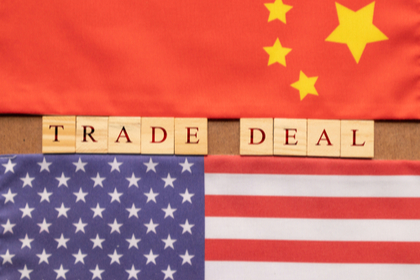
The services sector is the most dynamic in the global economy, constituting nearly 25% of global trade, but its intangibility – unlike the materiality of trade in goods – makes it difficult to monitor. Service providers in this sector need a national regulatory governing framework

kcmodi0312_0 Courtesy: Flickr/MEA
28 November 2019

Assessing the 35th ASEAN Summit

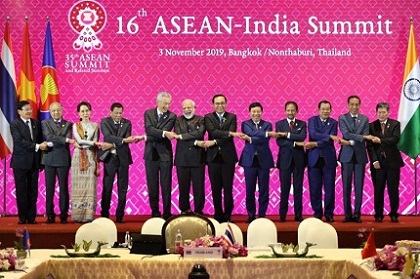
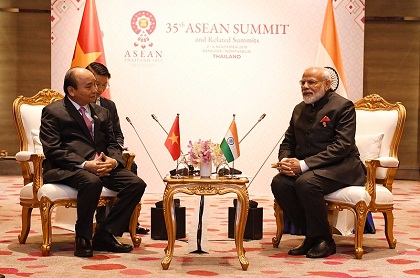
The 35th summit of the Association of South East Asian Nations, held in Bangkok early in November, showed that a shifting geostrategic landscape notwithstanding, “ASEAN centrality” in the region is a top priority with members. It also served as a backdrop for three summits that ASEAN held on November 4 with China, U.S. and India

shutterstock_1408705082 Courtesy: Shutterstock
14 November 2019

U.S. law tackles Chinese investments

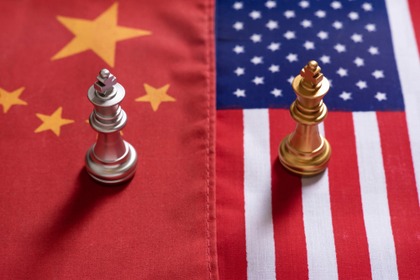
The Committee on Foreign Investment in the United States (CFIUS) is an inter-agency body which reviews in-bound foreign investments for their impact on national security. The Treasury Department recently proposed draft regulations, strengthening it. An analysis of the effect these amendments have had – and their applicability in an Indian context

shutterstock_302486273 Courtesy: Shutterstock
14 November 2019

China’s strategic tech depth in India

In India, China’s tech giant companies and venture capital funds have become the primary vehicle for investments in the country – largely in tech start-ups. This is different from other emerging markets where Chinese investments are mostly in physical infrastructure. Chinese FDI into India is small at $6.2 billion, but its impact is already outsized, given the increasing penetration of tech in India

49012249412_d8b02bb141_c Courtesy: MEA/Flickr
7 November 2019

Goodbye, RCEP

There have been mixed reactions to India’s not signing on to the Regional Comprehensive Economic Partnership. India is often criticised for abstaining from trade agreements and being a protectionist nation, but in fact, the reverse is true. The country’s trade to GDP ratio of 43% is higher than China’s 38% and the U.S.’ 27%. This shows how important trade is for India, particularly if it wants to reach the 2024 goal of being a $5- trillion economy.