2 (3) Courtesy: Getty Images
5 February 2026

Germany’s reform under strain

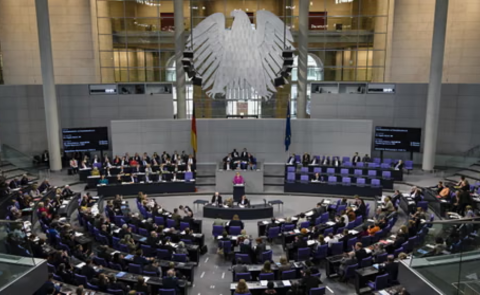
Germany’s prospects in 2026 are defined by tension rather than momentum. The country is neither in crisis nor comfortably on a path to renewal. Instead, it is engaged in a difficult process of adjustment, seeking to reconcile fiscal restraint with strategic ambition, social protection with demographic reality, and climate leadership with industrial competitiveness.
News on Air (3) Courtesy: Gateway House
29 January 2026

Iran: away from the Thucydides trap?

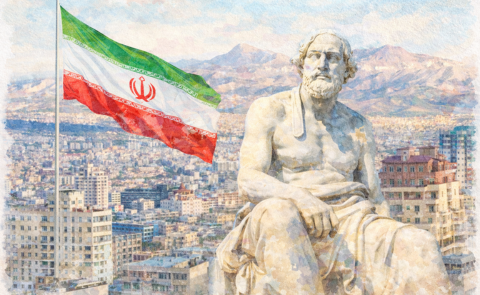
Iran has often stood at the crossroads of social and political metamorphosis and regional geopolitical recalibration, from the Islamic Revolution of 1979 to the attrition of the Iran-Iraq War. The current landscape reflects the convergence, once again, of internal pressures and sharper deterrence postures, that the social compact—from a Lockean and Rousseauian perspective—needs a new edition, and that timely diplomacy to prevent escalation is required.

Website articles  (29) Courtesy: Somaliland Presidential Office
15 January 2026

Somaliland recognition strengthens alternative diplomacy ecosystem

Israel’s recognition of Somaliland as an independent state in December 2025 is not merely a diplomatic gesture toward a long-marginalised polity; it is a strategic act with implications for Somalia’s territorial integrity, regional security dynamics, great-power competition, and the evolving politics of recognition in a fractured international order.

Website articles  (3) Courtesy: AFP
13 November 2025

Pax Fragilis in Gaza: rupture and repair

The arc of revolutions has two acts: rupture - upending the status quo - and the craft of repair. Often, the second is as hard as the first. Today's Pax Fragilis in Gaza is narrow, given the continuing humanitarian crisis, regional reactiveness, limited scope of de-escalation channels, multiple actors' motivations for a permanent ceasefire, and the capabilities of Israel and Palestine to build a pathway with certainty.

Agence France-PresseGetty Images Courtesy: Getty Images
21 August 2025

Posturing over a Palestinian State

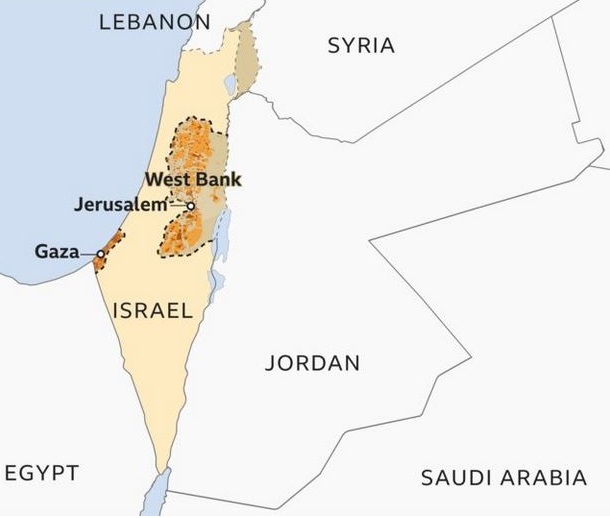
America’s allies say they will recognise a Palestinian state by September unless Israel agrees to a ceasefire and a two-state solution. Apart from rewarding Hamas, creating a new state has multiple legal, cartographic, social and military implications that have not been considered. Better to provide much-needed food and medical aid for now, than posture for a solution.

IMEC map with source Courtesy: Gateway House
11 June 2025

IMEC: more than just a corridor

The proposed IMEC corridor connecting India to Europe through the Gulf can be transformative, helping to reduce risks to the global movement of goods and data. It’s early days yet, and there are gaps to be filled in terms of missing infrastructure and overcoming a diplomatic rift.

Leibniz Association Courtesy: Leibniz Association
27 February 2025

Israel in its own image

A recent workshop on “Israel in Its Own Image: From 1948 to the Present” explored Israel’s history, society, and foreign policy through discussions led by Israeli and Indian experts. The week-long session held in India helped to sift the fundamentals from the narratives. It provided, a nuanced understanding of Israel’s challenges, political shifts, and diplomatic strategies in a rapidly evolving global landscape.

F241028YS201 Courtesy:
31 October 2024

Netanyahu the political survivor 

Israeli Prime Minister Benjamin Netanyahu has secured his political survival since October 7 by managing his key constituencies – domestic and in the U.S. – and doubling down on his war strategy. Now he is making another calculated risk – to ensure a non-nuclear Iran, and thereby his continued political positioning.

Biden-Middle-East-peace-deal-Israel-Palestine-GettyImages-1731160260 Courtesy:
27 June 2024

The hanging Hamas Deal

The May 31 ceasefire deal proposed by U.S. President Joe Biden is the best on offer for Hamas and Israel. Hamas has delayed its response to the deal, demanding Israeli withdrawal from Gaza first. This absolutist and maximalist position allows Israeli Prime Minister Benjamin Netanyahu to conveniently evade his responsibility towards the U.S., a ceasefire deal, and his own people.

israel-hamas Courtesy: CivisDaily
17 January 2024

Israel-Palestine: two states … or one?

The Oslo Accords’ two-state solution for Palestine-Israel, visualised Gaza and the West Bank as self-governing entities under the Palestinian Authority. That political hope existed in an expanding global economy led by the U.S. and secured by American armies, with the promise of capital flows and investments to develop Palestine on its way to statehood. All this changed in the 2000s, as both Israelis and Palestinians became significant regional actors.