Website articles  (73) Courtesy: AFR
2 April 2026

India’s options after the Persian Gulf war

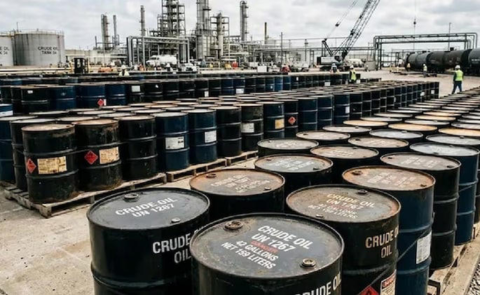
The Persian Gulf conflict has already impacted India’s oil imports and financial security. However, India has not created meaningful options to protect itself from oil shocks over the last decade – and such shocks will continue. Now is the time for India to make equity investments in oil and gas companies in stable economies like the U.S., Canada and Australia, to protect itself from future energy crises.
Website articles  (60) Courtesy: MSN
19 March 2026

Gulf War pinches South Asia

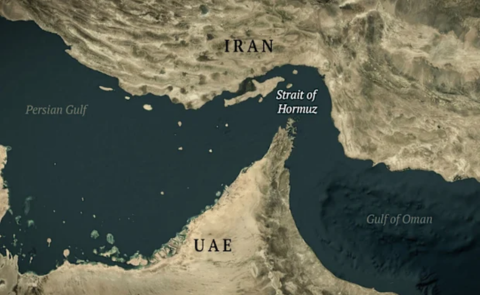
The war in the Persian Gulf has already caused significant disruption in India’s South Asian neighbours. A prolonged conflict is likely to push the region back into economic and political crises from which it had been hopeful of emerging this year.

Website articles  (50) Courtesy: Gateway House
4 March 2026

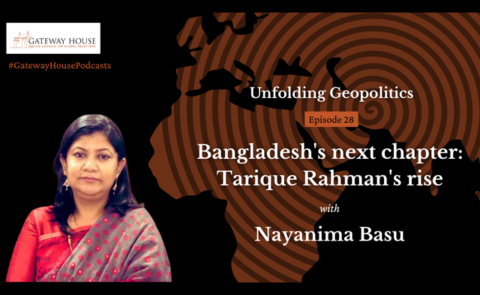
Unfolding Geopolitics Episode 28 |Bangladesh’s next chapter: Tarique Rahman’s rise

Tarique Rehman has been elected as the new Prime Minister of Bangladesh following the recent elections. Nayanima Basu, Adjunct Fellow at Gateway House, visited Bangladesh and shares her on-ground impressions of the country and its people, the continued influence of student movements, concerns over minority rights, and the resurgence of Jamaat-e-Islami. The future of India-Bangladesh ties must be closely watched as a new chapter begins, underscoring the need for a recalibrated, trust-based bilateral approach.

2 (2) Courtesy: Niamul Rifat
5 February 2026

Will Bangladesh polls achieve stability?

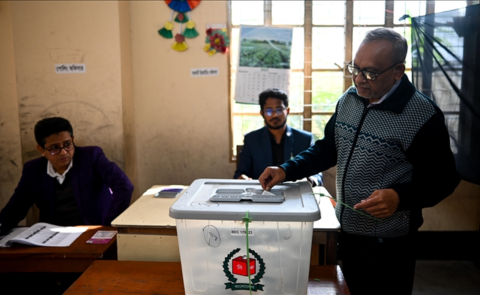
In less than a week, on 12 February, Bangladesh will witness one of its most consequential parliamentary elections. The same day, the people of Bangladesh will also vote on a referendum that seeks to overhaul the country’s governance structure. The outcome of both, whichever way they turn out, is likely to pull Bangladesh into a vortex of political turmoil.

Website articles  (37) Courtesy: GK newspaper
22 January 2026

Delhi and Dhaka can walk together

On 12 February, Bangladesh will go to the polls to choose a new leader. India should work to maintain a robust and cordial working relationship with the new regime as it did during Sheikh Hasina’s tenure. The new government in Bangladesh should prioritise eliminating anti-India sentiments before they become entrenched, to prevent security challenges for itself and the region.

The Muslim News Courtesy: The Muslim News
24 December 2025

How the West cheered Dhaka’s collapse

On December 18, Sharif Osman Hadi, a prominent leader of the 2024 student-led uprising, was assassinated. What began as protests against civil service quotas became a leaderless uprising. As Western powers celebrated a “democratic dawn”, Bangladesh slid into structured anarchy. Dhaka now faces two futures with terrifying clarity: one with elections skewed by military advantage and Islamist mobilisation, and the other by acknowledging that democracy cannot be airlifted.

Gateway House (2) Courtesy: Gateway House
24 December 2025

Bangladesh economy spirals downwards

Bangladesh’s economy, already weak at the time of the August 2024 coup, has been on a downward spiral since. Banks are insolvent and cannot lend, business confidence is low, and investors are staying out. These issues will worsen the ongoing radicalisation, extremism and violence in the country. 

61XgnQBhwiL._SY425_ Courtesy: Amazon India
27 November 2025

Indo-Pacific Strategic Churn: Challenges and State Responses

Rajiv Bhatia explains how this book brings together perspectives on the geostrategy, geopolitics, and geoeconomics of the Indian and Pacific Oceans. Edited by Chintamani Mohapatra, it features 16 essays by experienced yet young academics. It highlights how the world changed after 2020, the ‘Age of Polycrisis’, COVID-19, conflicts in West Asia and Europe, and other global flashpoints. The book offers analysis that seeks to reposition the Indo-Pacific as vital to India’s strategic interests.

Gateway House Courtesy: Gateway House
3 July 2025

China Plus One and global supply chains

A slowdown of the Chinese economy, and the shift, particularly by MNCs, from China to other more competitive locations has opened up business opportunities for latecomers to supply chains in the developing world. Evidence suggests that Southeast Asia and some South Asian countries like India, Sri Lanka, Bangladesh, could be beneficiaries of the supply chain shift, particularly in labour-intensive segments.

New Spotlight Magazine Courtesy: New Spotlight Magazine
19 June 2025

A case for South Asia energy connectivity

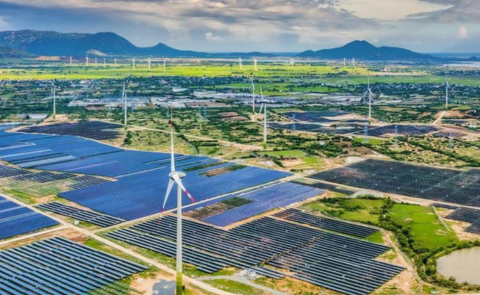
Building a robust engagement with India on energy can help offset some of the economic and political crises that most of India’s neighbours are facing. Smaller South Asian neighbours will benefit from cheaper electricity and oil, paving the way for greater regional economic cooperation.