Website articles  (75) Courtesy: PTI
10 April 2026

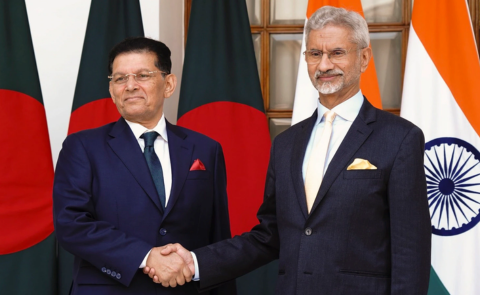
Delhi-Dhaka make progress

The visit of Bangladesh's foreign minister Khalilur Rahman to Delhi was an intermediate stage in the journey towards a full India-Bangladesh reset. The two countries have much to gain through deeper cooperation and more to lose if they drift. It’s time to focus on a common future by initiating bold trade and economic policies and linkages to counter vested interests that work to keep them apart.
Website articles  (74) Courtesy: Presidential Communications Office
9 April 2026

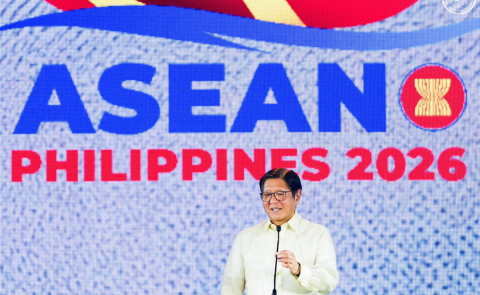
ASEAN challenged by the Iran crisis

The West Asia conflict has disrupted global stability, impacting ASEAN economies and diplomacy. As chair, the Philippines balances its alliance with the U.S. and regional neutrality, while Indonesia and Malaysia reflect domestic support for Arab states. With energy shocks, remittance risks, and inflation rising, ASEAN’s limited influence is evident. Has ASEAN once again been drawn into a vortex of crises beyond its control?

Website articles  (51) Courtesy: Gateway House
4 March 2026

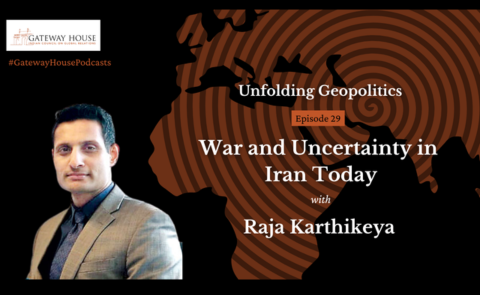
Unfolding Geopolitics Episode 29 |War and uncertainty in Iran today

The assumption that the Iranian public will rise up against its religious and political leadership, seizing the opportunity provided by Israel and U.S. strikes against Iran, may not prove true. Iran’s civilisational structure is resilient, and its educated population may not like being dictated to by the West. Raja Karthikeya, a former international civil servant based in Tehran, examines the escalating U.S.-Israel conflict with Iran, its regional and domestic implications and the tenacity of Iran’s political system amid external pressure.

Website articles  (50) Courtesy: Gateway House
4 March 2026

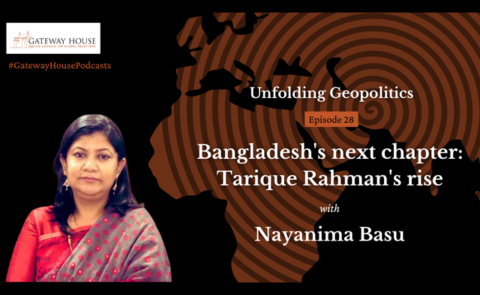
Unfolding Geopolitics Episode 28 |Bangladesh’s next chapter: Tarique Rahman’s rise

Tarique Rehman has been elected as the new Prime Minister of Bangladesh following the recent elections. Nayanima Basu, Adjunct Fellow at Gateway House, visited Bangladesh and shares her on-ground impressions of the country and its people, the continued influence of student movements, concerns over minority rights, and the resurgence of Jamaat-e-Islami. The future of India-Bangladesh ties must be closely watched as a new chapter begins, underscoring the need for a recalibrated, trust-based bilateral approach.

Untitled design (10) Courtesy: Foreign Affairs
15 January 2026

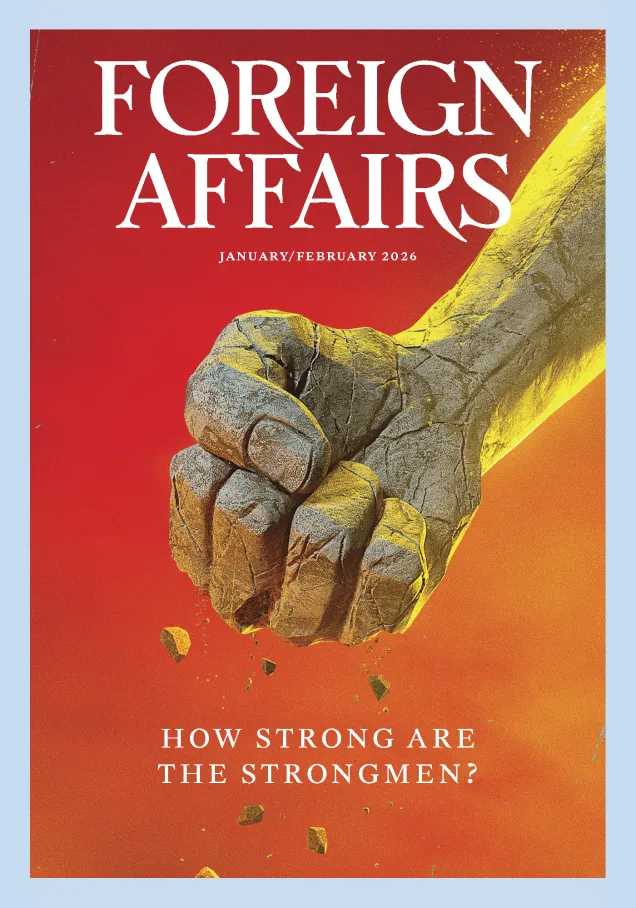
How Strong are The Strongmen?

Not long ago in the sweep of history, countries that had once been buried behind the Iron Curtain, and even some Soviet republics, were transformed into members of the solidly democratic club. Some of those that weren’t, such as Ukraine, Georgia, and Kyrgyzstan, experienced mass revolts against rigged elections and corrupt misrule amid widespread public yearning to join the West. Free trade was again celebrated as an instrument of peace; Kant’s “democratic peace theory” enjoyed a revival.

Website articles  (29) Courtesy: Somaliland Presidential Office
15 January 2026

Somaliland recognition strengthens alternative diplomacy ecosystem

Israel’s recognition of Somaliland as an independent state in December 2025 is not merely a diplomatic gesture toward a long-marginalised polity; it is a strategic act with implications for Somalia’s territorial integrity, regional security dynamics, great-power competition, and the evolving politics of recognition in a fractured international order.

Gateway House (2) Courtesy: Gateway House
24 December 2025

Bangladesh economy spirals downwards

Bangladesh’s economy, already weak at the time of the August 2024 coup, has been on a downward spiral since. Banks are insolvent and cannot lend, business confidence is low, and investors are staying out. These issues will worsen the ongoing radicalisation, extremism and violence in the country. 

Getty (2) Courtesy: All India Radio News
9 December 2025

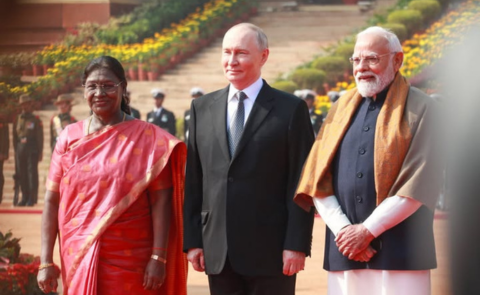
Putin’s visit sends a signal

India and Russia have a time-tested relationship, which was evident during President Putin's state visit to New Delhi last week. Its success lay in the warmth the leaders of the two countries share and in its timing: geopolitically, just after discussions of the U.S. and China as the G2, and commercially and strategically, at a time when India’s needs match Russia's capabilities.

61XgnQBhwiL._SY425_ Courtesy: Amazon India
27 November 2025

Indo-Pacific Strategic Churn: Challenges and State Responses

Rajiv Bhatia explains how this book brings together perspectives on the geostrategy, geopolitics, and geoeconomics of the Indian and Pacific Oceans. Edited by Chintamani Mohapatra, it features 16 essays by experienced yet young academics. It highlights how the world changed after 2020, the ‘Age of Polycrisis’, COVID-19, conflicts in West Asia and Europe, and other global flashpoints. The book offers analysis that seeks to reposition the Indo-Pacific as vital to India’s strategic interests.

Themba HadebeAP Courtesy: Themba Hadebe/AP
27 November 2025

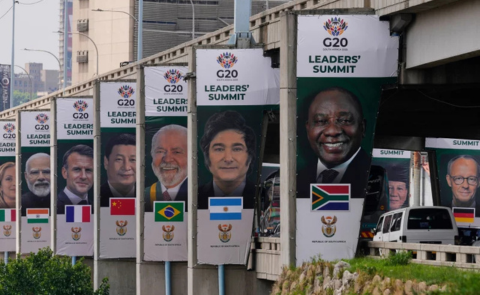
Johannesburg G20 summit: advancing amidst anxiety

The G20 Summit in Johannesburg ended on a widely-shared sense of satisfaction and achievement, with the Global South’s perspective well-articulated, but divergent from some in the Global North. Now the G20's challenge is to restore its unity and credibility by working toward reconciliation with its next president, the U.S. Can India enhance its credibility and influence as a North-South bridge-builder?