China in IOR: ‘peaceful rise’ no more
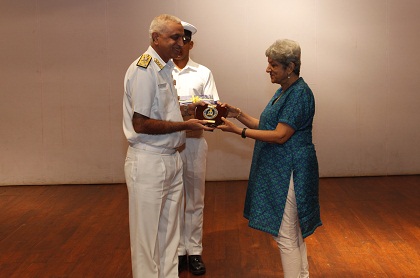
China has expanded its presence in the Indian Ocean Region. President Xi Jinping has abandoned Deng Xiaoping’s conciliatory posture for an aggressive, money-fuelled search for super power status

 Courtesy: Western Naval Command
China has expanded its presence in the Indian Ocean Region. President Xi Jinping has abandoned Deng Xiaoping’s conciliatory posture for an aggressive, money-fuelled search for super power status
 Courtesy:
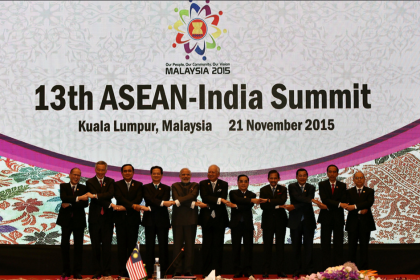
In two years, the Modi government’s Act East Policy has gone well beyond the focus on economic ties of its predecessor, the Look East Policy. It has made progress on many wider fronts, including connectivity and defence collaboration. India must now build on this success and further consolidate relations and trade links with ASEAN and beyond
 Courtesy: Gateway House
The recent election in Indonesia gives India a chance to evaluate the many points of comparison between the two diverse and vibrant democracies. Both will face similar challenges, and so Indonesia may be a better parallel as well as partner than China – the usual model cited for development
 Courtesy: Rama/Wikimedia Commons
The year 2014 will witness elections in some of the biggest countries including India, Brazil and Indonesia. Like in India, the participation of youth voters is likely to be an important determinant in the outcome of the elections. Gateway House examines the presence of issues common to India and the major countries going to the polls in early 2014
 Courtesy: Rigues/Flickr
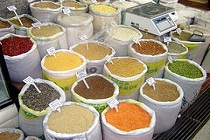
A recent UN report praises governments for promoting the right to food. At the same time, India’s Food Security Act will encounter resistance at the WTO meeting in Bali in December. Can India play an exemplary role in the global power struggle over food security?
 Courtesy:
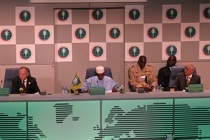
India’s relations with Islamic nations, many of which are members of the Organisation of Islamic Cooperation (OIC), have become even more prolific over the last decade. While India does not visualise becoming a member of a religious international body, many reasons militate against our formally joining the OIC.
 Courtesy: Wikimedia Commons/Gunkarta
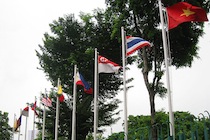
As India and the world welcome the recent democratization of Myanmar, this presents India an opportunity to increase its access to South East Asian countries as well, especially with members of ASEAN which still have catching up to do – particularly Cambodia, Laos, Myanmar and Vietnam.

Amidst myriad country groupings that already exist – BRICS, IBSA, APEC, SCO and many others – a new initiative in the Pacific is looking to integrate more powerful countries to form a multilateral free trade agreement – the Trans Pacific Partnership. How important is this towards the reshaping of trade and power?