IMEC map with source Courtesy: Gateway House
11 June 2025

IMEC: more than just a corridor

The proposed IMEC corridor connecting India to Europe through the Gulf can be transformative, helping to reduce risks to the global movement of goods and data. It’s early days yet, and there are gaps to be filled in terms of missing infrastructure and overcoming a diplomatic rift.

Website articles  (19) Courtesy: Reuters
22 May 2025

India-UK FTA: Four benefits for India

The India-UK Free Trade Agreement comes amidst increasing economic uncertainty caused by the Trump administration’s reciprocal tariff policies. The FTA has revitalised previously lethargic discussions for India to conclude FTAs between like-minded countries. An India-EU FTA, along with the India-UK FTA, may reform global rule-making on international trade and perhaps even revive the WTO.

Getty (1) Courtesy: Gateway House
15 May 2025

The New Geopolitics and South Asia’s Trade Architecture – What Next?

Geopolitics is increasingly intertwined with the economic destiny of South Asia. Even before the U.S. tariffs were rolled out, growing polycrises had hit the global economy, which has been struggling since the pandemic. South Asia seems a relatively bright spark of regional trade and growth. This paper analyses South Asia’s trade architecture in the backdrop of a sluggish world economy in the 2020s, and makes recommendations for closer regional economic integration.

Website articles  (12) Courtesy: Gateway House
15 May 2025

U.S., global emperor of sanctions

Over two centuries, the U.S. has amassed vast economic powers across the globe during and after the two World Wars , and sanctions slowly became an effective tool it used to achieve its foreign policy goals, becoming the global emperor of sanctions.

World Leaders Courtesy: East Asia Forum
17 April 2025

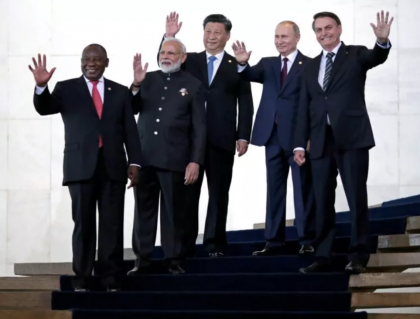
Multipolarity is gaining ground

The traditional power structures of ‘unipolarity’ or ‘bipolarity’ prevalent over the past 80 years are no longer appropriate to describe the current global order, with more countries increasingly supporting the evolving multipolar world. With the old ‘rules-based’ order becoming less relevant, emerging powers like India have an opportunity to draft more equitable rules to match their multipolar intentions.

Report Courtesy: Körber-Stiftung
17 April 2025

Momentum for Middle Powers: Emerging Middle Powers Report

The world is undergoing profound transformations that are not being driven only by the United States, China or Russia. Small and medium-sized States are carving out a legitimate place for themselves in the emerging new order. This second edition of our annual Emerging Middle Powers Report is a reminder that the signs of the times are showing a new momentum for middle powers.

10_Bild10L_Evraz_KGOK2L-ironore-7ad449a79aa2d734 Courtesy: Evraz
10 April 2025

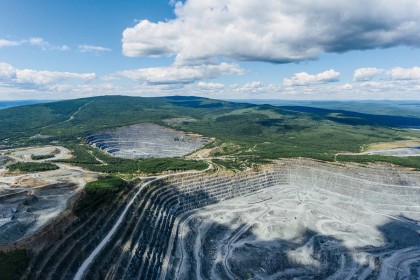
A changed India-Russia equation

Three years into the war with Ukraine, Russia has adapted to the changed economic scenario. It’s an ideal time for India and Russia to step up their economic engagement, especially as India seeks resources in energy and critical minerals for growth. However, Indian companies are wary of using these opportunities and are missing out on access to the world’s larges and most mineral-rich region.

Screenshot 2025-03-25 111538 Courtesy:
27 March 2025

Is U.S. reset with Russia due to the China factor?

U.S. President Trump is prioritising strategic competition with China and seeking stability with Russia. This approach involves sanctions relief, sidelining Ukraine, and fostering economic ties with Moscow to weaken its reliance on China and reshape global power dynamics. Europe is divided on the outreach to Russia, but the U.S. wants to leverage energy markets and investment opportunities to expand its influence over Moscow.

APTOPIX Russia Ukraine War Courtesy: AP
13 March 2025

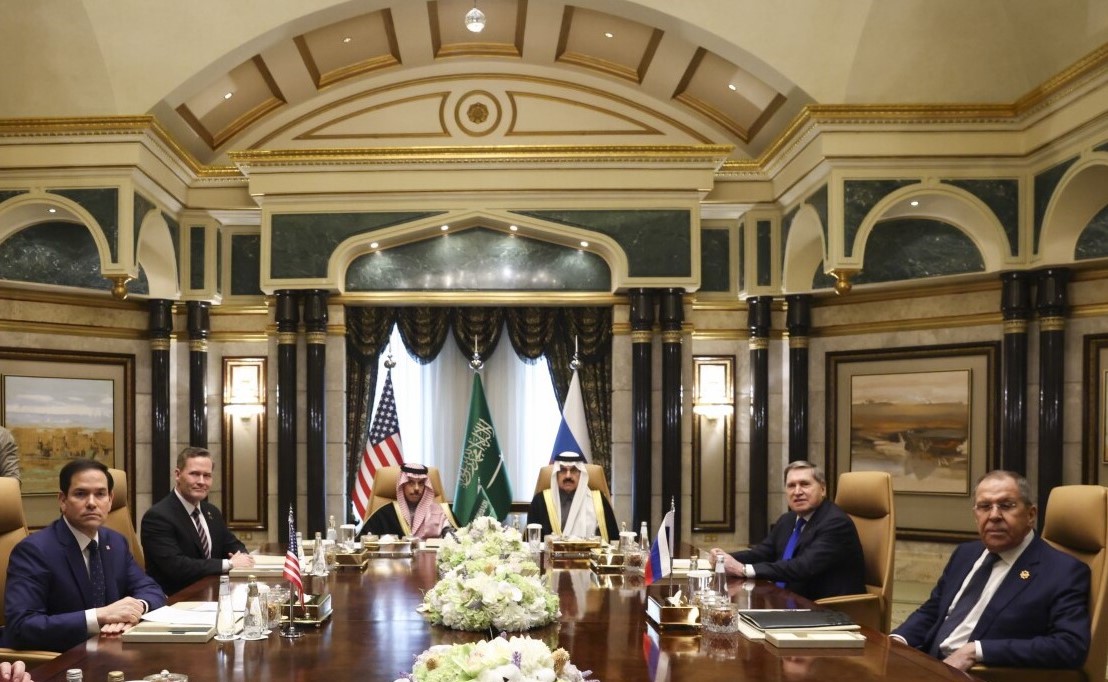
Riyadh and the new halls of mediation

Saudi Arabia has been the new centre for mediation between warring states and their sponsors. It reflects the shifting dynamics in an increasingly multipolar world and the redefinition of power structures. This role has extended to other Gulf states, which have strategically positioned themselves as neutral players, leveraging their strong relations with the great powers, and adopted culturally sensitive to consensus-building.