BRI: reviving Turkish business?
Experts at a recent conference on China’s Belt and Road Initiative, hosted in Istanbul, spoke of its many advantages to the region, but also on the challenges involved in attracting financing

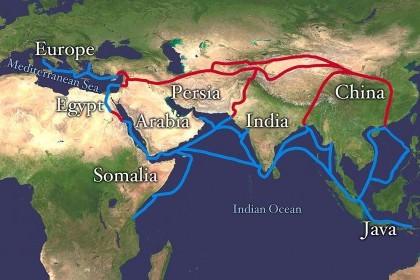 Courtesy: Wikipedia
Experts at a recent conference on China’s Belt and Road Initiative, hosted in Istanbul, spoke of its many advantages to the region, but also on the challenges involved in attracting financing
 Courtesy: MEA/ Flickr
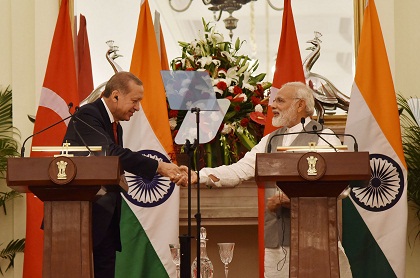
The newly powerful Turkish president’s visit led to both sides committing to a stronger economic relationship and boosting people-to-people contact, but it had its unacceptable moments, and India had prepared for its unpredictability of outcome
 Courtesy: Wikipedia
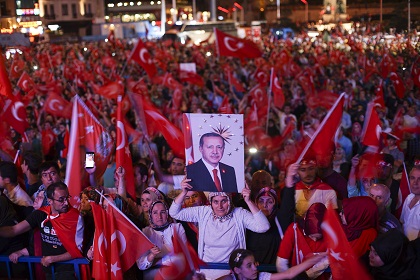
Referendums are a way of mobilising society and bringing in exceptional change. Turkey’s third constitutional referendum in the last 10 years, being held on Sunday, April 16, is the greatest of them in many respects as it puts the country on uncharted waters, having it move from one unbalanced system to another
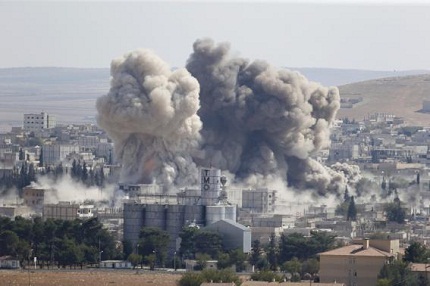
Aleppo is back under the control of the Syrian government, the Russian ambassador to Ankara is assassinated for his country’s role in Syria, and U.S. President-elect Donald Trump wants to cooperate with Russia to fight ISIS in Syria. These momentous events in modern history compel an assessment of the geopolitics surrounding Syria.
 Courtesy: Wikipedia
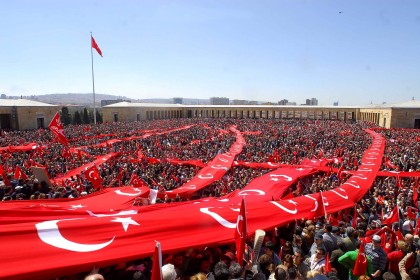
It was the iron will of the citizens of Turkey and their uncompromising belief in the deeply rooted democratic traditions and institutions of the country which proved to be critical in defeating the July coup attempt. Turkey will continue the reforms which have made it a shining light in the region
 Courtesy: Yahoo
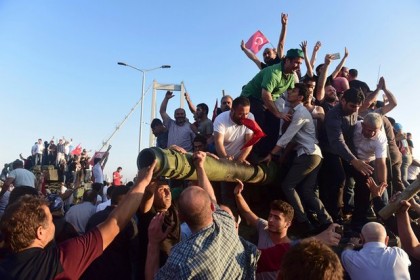
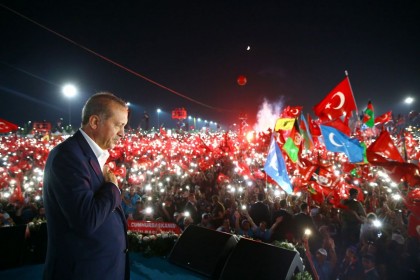
The July coup in Turkey did not achieve its objective of eliminating President Erdogan, who has, ironically, emerged a ‘national hero.’ Does this signal a new beginning? An analysis of the factors impending upon the colossal repair-and-rebuild task before the country.
 Courtesy: Wikipedia
The attempted coup on July 15 in Turkey as well as its aftermath have irreparably dented President Erdogan’s international image and impacted Turkey's standing as a democratic state, a military power, a NATO member, an EU aspirant, and an emerging economy. This downtrend is unlikely to be reversed in the near future and the country is in for an extended period of instability
 Courtesy: Wikipedia
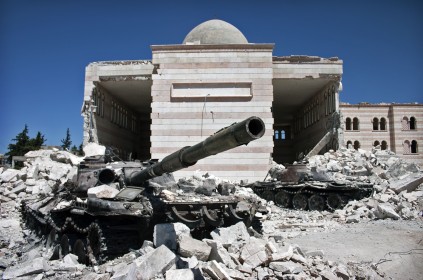
With a cessation of hostilities been brokered by Russia and the United States, the conflict in Syria has entered a tense pause. India has had a bystander attitude to the conflict in Syria. However, with the truce expected to be short, does India have the incentive or the option to depart from its current position, and deepen its engagement in Syria?
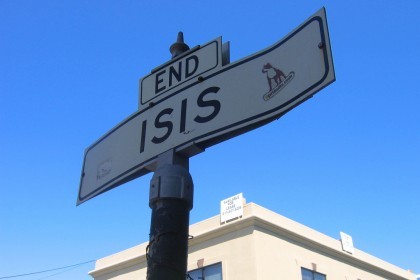
The unfolding coup in Turkey demonstrates the instability that the nation has fallen into. Terror attacks like the one in Istanbul airport was the most high profile targeting of Turkey by ISIS and other extremists. This is the outcome of Turkey’s crackdown on internal popular protest, on allowing itself to become the highway for extremists, refugees and weapons to disparate terrorist groups and being a willing proxy for the major powers contending in Syria. The increasing frequency of the attacks in Turkey reveals a similar pathology to Pakistan, which is now in a low-grade civil war. Is Turkey going down the path of Pakistan?
 Courtesy: Dawn Endico
Today ISIS is the gravest international security threat. To defeat ISIS, the world should pay heed to India’s experience of the need to isolate state sponsors of terrorism. Ultimately, only when Saudi Arabia acknowledges the danger to its own survival from past policies of alleged support to extremist groups, can it be a reliable partner in the fight against ISIS.