Website articles  (68) Courtesy: AFP
2 April 2026

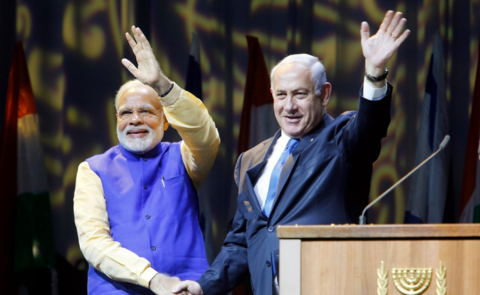
Modi’s Israel visit brings defence and tech

It is important to take an objective review of PM Modi’s visit to Jerusalem and its implications for India’s security. New Delhi will have to demonstrate its strategic autonomy by managing heterogeneous and often contrapuntal relationships and strike a balance in its ties with the U.S. and Israel on the one hand and Iran and the Arab world on the other hand.
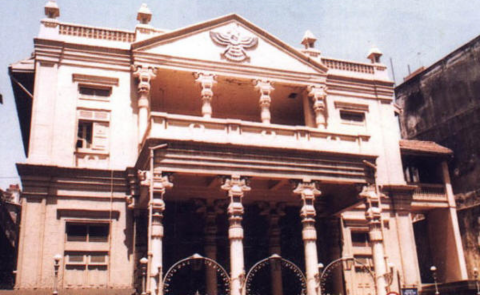

Anjuman Atash Bahram, Mumbai, with the winged Farohar symbol at the top. Courtesy: Heritage Institute
2 April 2026

The Persian-Parsi identity

Persia and India’s impact on each other go back to antiquity, but the extent of the Persian influence on the Parsi identity is more difficult to quantify. Despite their deep cultural connection, Parsis do not identify with Iran as the mother country. Reza Shah Pahlavi, impressed with their achievements in India, wanted them to return to Iran, but they could not be enticed to leave India.

Website articles  (61) Courtesy: Ruby Myers / Alchetron
19 March 2026

European Jews in Bombay’s film industry

The high point of Jewish glamour in Hindi films were led by Indian Baghdadi Jewish women – but also by German-speaking European Jewish male refugees in Bombay. Music composer-conductor-musician Walter Kaufmann, and his friend, scriptwriter Willy Haas, both German-speaking  Czech Jews, introduced a new sensibility and modern techniques into the early talkie era of Hindi cinema

Website articles  (52) Courtesy: AFP
9 March 2026

Iran regime change unlikely

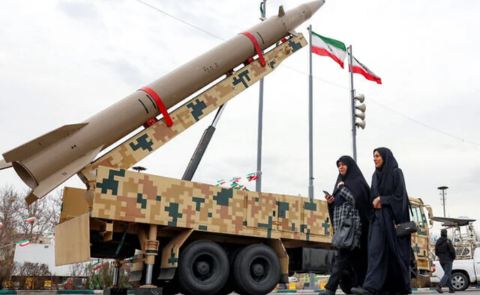
The U.S.–Israel war against Iran will alter the geopolitical landscape of West Asia and adversely impact the global economy, including India. Vali Nasr, Majid Khadduri Professor of International Affairs and Middle East Studies at Johns Hopkins University School of Advanced International Studies, analyses the conflict and its implications in an exclusive conversation with Nayanima Basu.

Website articles  (11) Courtesy: Shutterstock
5 March 2026

West Asia conflict: who benefits?

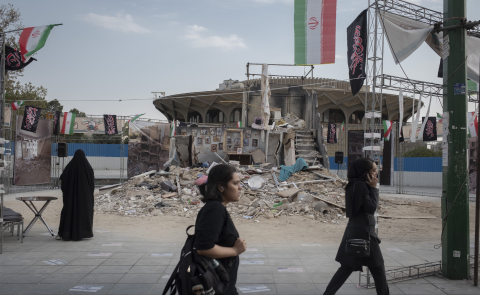
The U.S. and Israel launched precise airstrikes on Iran, targeting nuclear facilities and senior leadership. Their aim is to weaken Iran’s nuclear programme and potentially induce regime change, while Tehran’s priority remains regime survival. The conflict’s duration will depend on whether it remains limited to missile exchanges or escalates into asymmetric warfare.

Website articles  (48) Courtesy: Bayerischer Rundfunk
25 February 2026

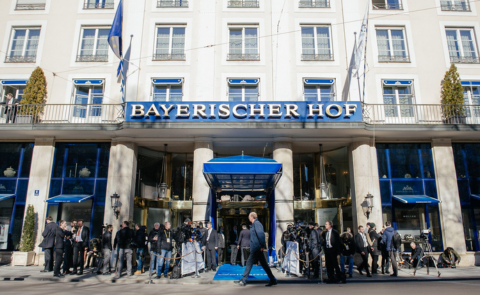
Munich diary: Europe at the crossroads

During the week of the Munich Security Conference, Munich transformed into a temporary capital of global diplomacy. Gateway House participated and hosted a Side Event, “Multipolarity without Multilateralism: India, Europe and the Future of Global Order” on February 14. This diary captures observations from the conference and the city, reflecting on Europe’s evolving priorities and how the continent assesses its role in an increasingly fragmented world.

News on Air Courtesy: News on Air
8 January 2026

2026: India’s foreign policy challenges

In the shifting sands of contemporary geopolitics, terms such as ‘fluid multipolarity’, ‘multiplexity’, ‘tripolarity’, and ‘bipolarity with multipolar characteristics’ are replacing the old dogmas and orders. But what is driving the world today? How does India plan to protect its vital interests in the current age of ongoing polycrisis? The road ahead is challenging, marked by risks and uncertainty.

President of Russia Courtesy: President of Russia
2 October 2025

Valdai frames Russia’s global doctrine

Each autumn, Russia convenes its flagship Annual Summit — a gathering of global leaders, business elites and intellectuals. Often compared in scale to Davos or Shangri-La, what sets Valdai apart is President Vladimir Putin’s extended, unscripted dialogue with the audience. Over the years, India has moved to the centre of this dialogue, reflecting its strategic weight and offering rare insight into Moscow’s evolving worldview.

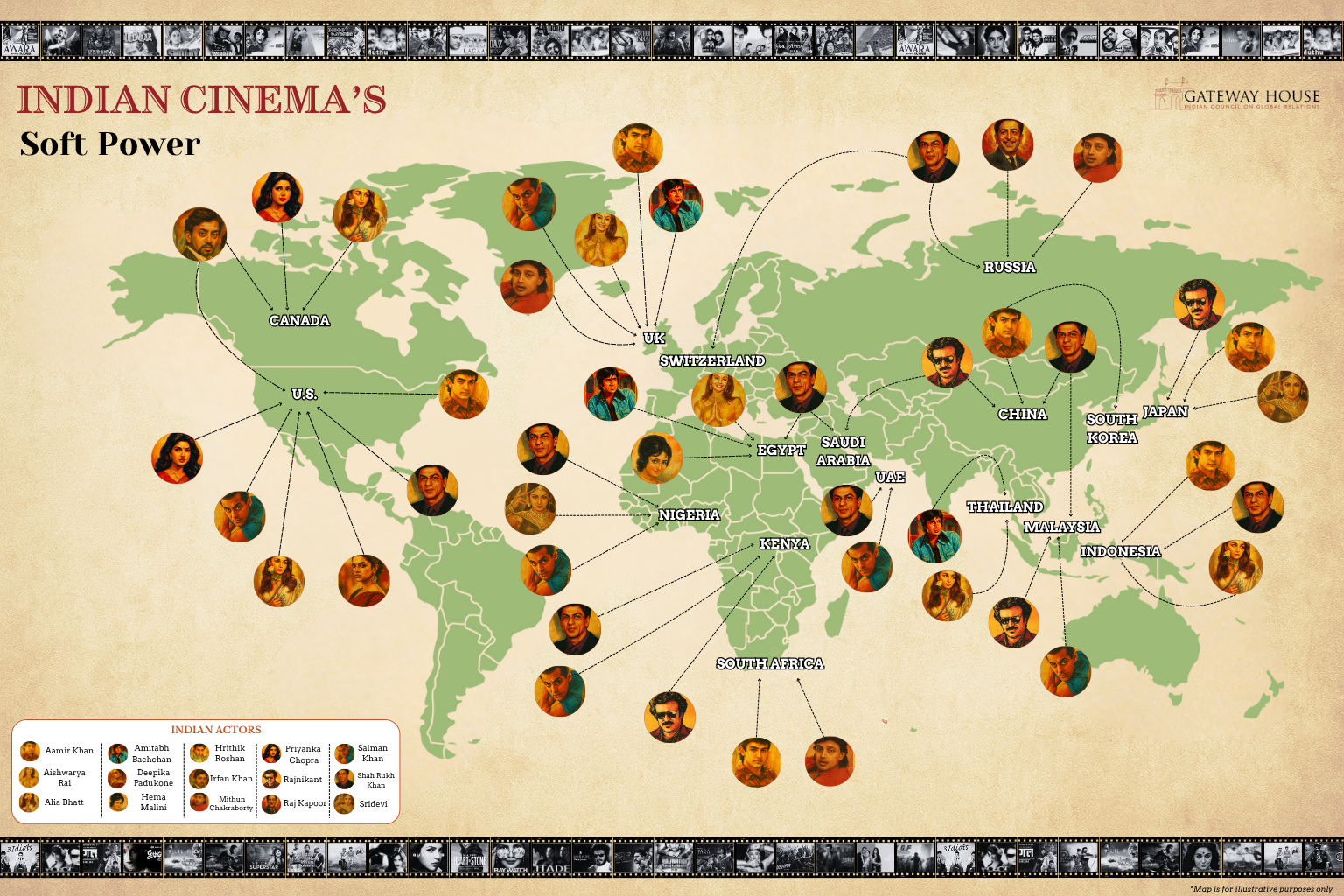
Most popular Indian actors worldwide Courtesy: Gateway House
1 October 2025

Indian Cinema as Economic Catalyst

As India seeks leadership in a multipolar world, cultural credibility is as vital as economic clout. Cinema gives India an edge with vivid storytelling, music, and empowering narratives, fostering understanding in a polarised world. Its popularity correlates with trade, as seen in the U.S., Russia, and Middle East. The more popular the cinema, the bigger the boost to trade.

U.S. Tariffs on Brics+ countries Courtesy: Gateway House
25 September 2025

U.S. Reciprocal Tariffs on BRICS+ countries

Under U.S. President Donald Trump’s reciprocal trade policy, the original five BRICS member countries account for the highest U.S. tariffs globally. India and Brazil are facing the highest tariffs of 50%, while China follows with a tariff of 34%, down from 145% earlier in the year. This infographic details the U.S. reciprocal tariff rates for each BRICS+ member and the sectors that are impacted.