Website articles  (52) Courtesy: AFP
9 March 2026

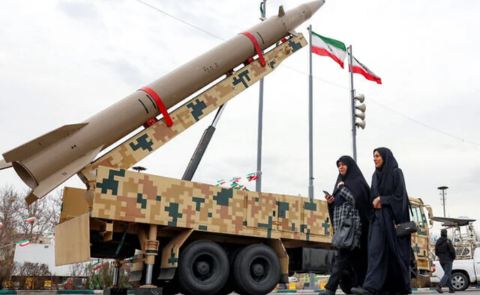
Iran regime change unlikely

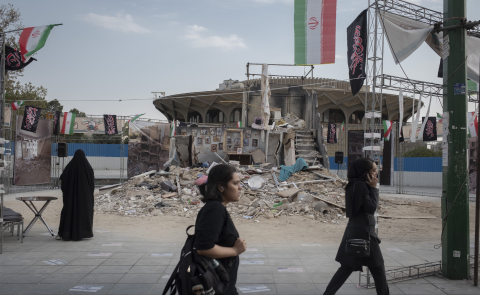
The U.S.–Israel war against Iran will alter the geopolitical landscape of West Asia and adversely impact the global economy, including India. Vali Nasr, Majid Khadduri Professor of International Affairs and Middle East Studies at Johns Hopkins University School of Advanced International Studies, analyses the conflict and its implications in an exclusive conversation with Nayanima Basu.
Website articles  (11) Courtesy: Shutterstock
5 March 2026

West Asia conflict: who benefits?

The U.S. and Israel launched precise airstrikes on Iran, targeting nuclear facilities and senior leadership. Their aim is to weaken Iran’s nuclear programme and potentially induce regime change, while Tehran’s priority remains regime survival. The conflict’s duration will depend on whether it remains limited to missile exchanges or escalates into asymmetric warfare.

Map-2-International-Trade Courtesy: Oxford University Press
23 January 2025

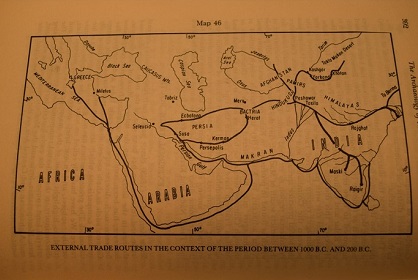
The ancient precursor to IMEC

The India Middle-East Europe Economic Corridor (IMEC) announced during India’s G20 leaders’ summit in September 2023 aims at security and ease of connectivity by multi-modal physical, digital and energy corridors connecting India, UAE, Saudi Arabia, Israel, and Europe. Like many of the connectivity projects created around the world today, IMEC’s origins are 2,300 years old, ancient routes that connected the Indian Ocean to the Mediterranean Sea

TDB_car_151021 Courtesy: TDB
24 February 2022

Enhancing Regional Financial Intermediation in the Indo-Pacific

Financial intermediaries are critical lubricants for business, growth and development. The Indo-Pacific countries are industrializing, but smaller nations lag behind economically. The Quad countries can aid the advancement of the financial architecture in the Indo-Pacific by helping to develop an ecosystem, modelled on the examples of Japan and India.

shutterstock_1091235845 Courtesy: Shutterstock
15 October 2020

UN: Necessary but reformed

The UN turned 75 this year but instead of grand celebrations, the world witnessed an empty UNGA with world leaders addressing it via video screening because of the pandemic. The UN is under unprecedented stress and being shown up for its inability to tackle the challenges of today like the pandemics, climate change, terrorism or global peace and security. The institution's key governing structures, especially the UN Security Council, are inadequate and demand reform. India must now use gritty resolve to ensure its place in these governing structures.

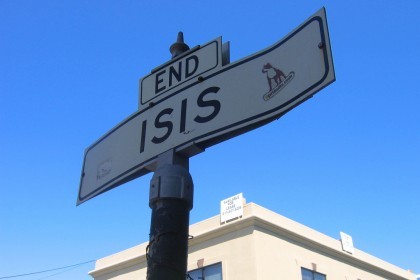
EndISISFlickrDawn Endico Courtesy: Dawn Endico
3 December 2015

Can ISIS be defeated?

Today ISIS is the gravest international security threat. To defeat ISIS, the world should pay heed to India’s experience of the need to isolate state sponsors of terrorism. Ultimately, only when Saudi Arabia acknowledges the danger to its own survival from past policies of alleged support to extremist groups, can it be a reliable partner in the fight against ISIS.

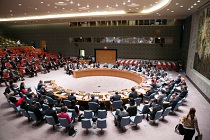
UNSC Syria UNSC Courtesy: United Nations
4 October 2013

Decoding the UNSC Resolution on Syria

The recent UNSC Resolution, which mandates the complete destruction of Syria’s chemical weapons, demonstrates that after more than a year, a degree of international agreement on the Syrian issue has been possible. In the evolving situation, Russia will now emerge as a major player

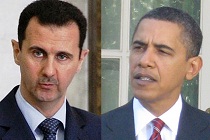
assadobama Courtesy: Freedom House/Flickr
6 September 2013

Syria: An unwarranted intervention

Despite rising international opposition, U.S. President Barack Obama is ready to penalise the Syrian regime for an alleged chemical attack in Ghouta, Syria, last month. The justifications given by the U.S. for an armed attack are questionable, and such retaliatory action will destabilise the entire region