interns research (6) Courtesy: Gateway House
25 June 2026

Dual Citizenships: fine or fraught?

President Trump’s January 2025 executive order ending birthright citizenship has reignited the global debate over citizenship and migration. Dual citizenship has become increasingly popular since the Second World War, but it is now viewed with growing anxiety over migration and national identity, prompting some countries to tighten restrictions. This infographic maps which countries permit, restrict, or prohibit dual citizenship.

G7 Courtesy: Prime Minister's Office of Japan
25 June 2026

G7 Evian summit matters

The 52nd G7 Summit, held in Evian-les-Bains from June 15-17, reflected both the challenges and continued relevance of the grouping. While the G7’s share of global GDP has declined, it remains influential. India’s participation as an invited guest drew attention as a major representative of the Global South. As BRICS chair this year, India has an opportunity to explain the motivations of both the G7 and BRICS to each other's members.

Website articles  (1) Courtesy: Gateway House
18 June 2026

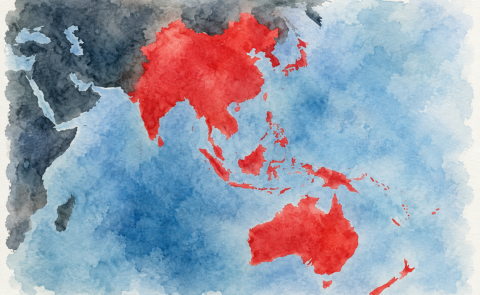
The relevance of the Indo-Pacific

After eight years of its nomenclature, on 16th June the U.S. Pacific Command dropped the 'Indo' from its military command title. It reflects clearly that the U.S. does not consider the Indo-Pacific region to be the most consequential theatre of geopolitics today. Yet its significance as the platform on which great-power contestation in political, military, technological, and economic domains will play out cannot be overstated.

Kenny Holston  AP (2) Courtesy: x/@MEAIndia
11 June 2026

Myanmar president’s visit: realities and gaps

The recent visit of Myanmar President Min Aung Hlaing to India has re-engaged the two neighbours politically after a six-year gap. Critics and pragmatists had much to say, but the outcome spoke for itself: constructive border management, defence agreements and economic cooperation. And a reminder that India has not forgotten about Daw Aung San Suu Kyi, the democracy icon.

DD India Courtesy: DD India
4 June 2026

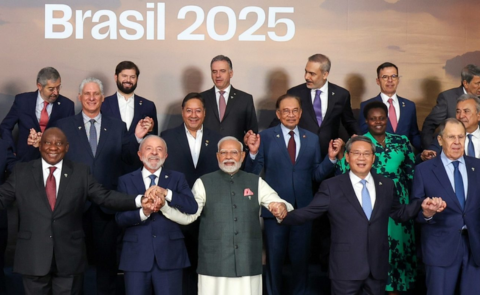
BRICS at a Pivotal Moment

BRICS is too significant to ignore but too fragmented to drive meaningful change for the developing world. The West Asia conflict, U.S. tariff threats over de-dollarisation, UNSC reform divisions, and the presence of regional rivals has exposed its internal strains. Will India’s ongoing 2026 chairship rise above the contradictions, and manage to turn BRICS from a reactive forum into a more assertive and credible global force?

Website articles  - 2026-05-28T124708.235 Courtesy: Global Times
28 May 2026

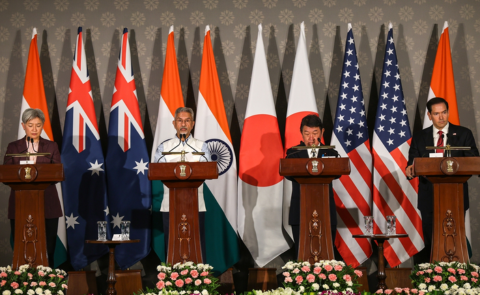
The Quad, reset

The Quad Foreign Ministers’ Meeting, held in New Delhi on May 26, highlighted both the progress and uncertainties surrounding the grouping. Significantly, it reaffirmed U.S. engagement. While the Quad has expanded its agenda and provided some concrete outcomes, the all-important Leaders’ Summit is still not visible – a worry for India’s prolonged chairship since 2024.

Rajiv Bhatia with Aung San Suu Kyi Naypyidaw in 2013 Courtesy: Rajiv Bhatia
14 May 2026

Leaves from my Myanmar diary

Myanmar’s latest political transition offers the illusion of closure, but little clarity. After years of conflict triggered by the 2021 coup, a new administration under Min Aung Hlaing takes charge amid continuing resistance and fragmentation. Is this consolidation or another phase of instability? Reflecting on this question, Ambassador Rajiv Bhatia draws upon his three-decade-long association with Myanmar, including serving as India’s Ambassador from 2002 to 2005.

Website articles  (85) Courtesy: FB / @The Statesman
30 April 2026

Legacy and new issues with India-Sri Lanka

India’s Vice President C. Radhakrishnan visited Sri Lanka from April 19-20, reaffirming Colombo’s importance in India’s Neighbourhood First Policy and MAHASAGAR vision. While ties remain stable, legacy issues persist: Tamil demands for devolution, illegal fishing disputes, and the stalled Economic and Technology Cooperation Agreement. The hope is for these to be resolved within Sri Lanka; till then, the unresolved challenges will continue to test the depth and durability of the bilateral.

Website articles  (84) Courtesy: Reuters
23 April 2026

India’s Neighbourhood First policy needs a reboot

Outcomes of the Neighbourhood First policy (NFP) are often mixed, shaped by actions on both sides. Recent engagements with Bangladesh, Myanmar, Sri Lanka, and Nepal suggest an opportune moment to recalibrate NFP, enhance its effectiveness, and bridge perceptions of India as an “elder brother” rather than a “big brother.”

Website articles  (79) Courtesy: @DrJaishankar/X
23 April 2026

Korea re-engages India

South Korea and India have much in common – both are Indo-Pacific players, oil importers and business-oriented economies. Yet, despite the ubiquitious and successful presence of Korean companies in India’s markets, the political relationship has been weak, and underperformed. The recent state visit by South Korean President Lee Jae-myung to India along with a slew of economic and strategic agreements signed, is an effort to recalibrate the relationship.