


On January 20, 2025, President Trump signed an executive order to remove birthright citizenship, with individuals born within the borders of the U.S. no longer automatically becoming citizens[1]. The door for dual citizenship, at least with the U.S. has closed. But several other countries do still permit dual citizenship.
Citizenship is a legal bond between an individual and a state granting rights and privileges in return for adherence to its laws, regulations, and civic obligations.[2] Dual citizenship has increased over time, especially after the Second World War due to growing economic opportunities, technological progress, ease of travel, trade and cultural connections across the globe, creating the option of dual citizenship. This attractive option allowed individuals to acquire a new citizenship suited to their priorities without giving up their original one. This infographic maps which countries allow it, which do not, and which do so conditionally.
Figure 1: Global overview of dual citizenship

Source: Global Citizenship Observatory
A striking feature of the map is the prevalence of dual citizenship across the Americas, in contrast to its rarity in Asia. This is largely because nationhood in the Americas is not tied to a dominant ethnic identity, and large-scale migration has encouraged countries in the Americas to embrace dual citizenship.
In Asia, however, stronger linkages between ethnicity and nationality have made dual citizenship less common. East Asian countries like Japan, which are largely monoethnic, and China, where the dominant Han Chinese comprise more than 91% of the population,[3] strictly do not allow dual citizenship.
Similarly, strong linkages between ethnicity, linguistic identity and culture have prevented India from recognising dual citizenship, with the Overseas Citizenship of India card (OCI) being introduced in 2007 to provide foreign nationals the benefits of dual nationality without giving them access to political rights.
Figure 2: Dual citizens – with conditions
All information on dual citizenship and nationality, its conditions and restrictions, has been sourced from each respective country’s Ministry of Foreign Affairs.
The table above details the conditions under which select countries permit dual citizenship These conditions serve to protect the national identity and security, as dual citizens may carry divided loyalties or sentiments that conflict with a country’s political, economic and cultural interests. For instance, European countries with mandatory military conscription, such as Austria and Switzerland, restrict dual citizenship with non-EU countries, out of concern that divided allegiances could pose a risk to national security.
The Baltic states of Estonia and Latvia restrict dual citizenship with non-EU countries, primarily to prevent their ethnic Russian populations acquiring dual Estonian-Russian or Latvian-Russian citizenship. Countries of the former Union of Soviet Socialist Republics (USSR), such as Tajikistan, allow for dual citizenship under highly specific conditions. Tajikistan only allows for dual citizenship with Russia, due to shared historical and people-to-people ties, most significantly, the large number of Tajik migrant workers in Russia. As of late 2024, the number of Tajik migrants working in Russia was 618,097,[4] making up 98% of Tajikistan’s migrant labour force.
As the popularity and global acceptance of dual citizenship have increased, several personalities across various professions have acquired a second citizenship alongside their primary one. In the political sphere, individuals such as Arnold Schwarzenegger, former Governor of California, holds dual Austrian and American citizenship. David Lammy, deputy Prime Minister of the UK, holds dual British and Guyanese citizenship. Boris Johnson, the former Prime Minister of the UK was a dual British-American citizen, as he was born in the U.S. However, he renounced his American citizenship after being elected Prime Minister. Mark Carney, the current Prime Minister of Canada, was a triple citizen of Canada, Ireland and the UK. He began the process of renouncing his Irish and British citizenship only after being elected Prime Minister.
In South Asia, several Pakistani politicians hold dual citizenship. Shahbaz Gill, former Special Assistant to Prime Minister Imran Khan, is a dual Pakistani American citizen. Shaukat Aziz, former Prime Minister of Pakistan, is a dual Pakistani-British citizen. Tulip Siddiq, niece of former Prime Minister Sheikh Hassina, is a dual British-Bangladeshi national and served in the House of Commons. Several journalists, businesspersons and other personalities are dual citizens.
Figure 3: Famous global personalities with dual citizenship-pictorial representation 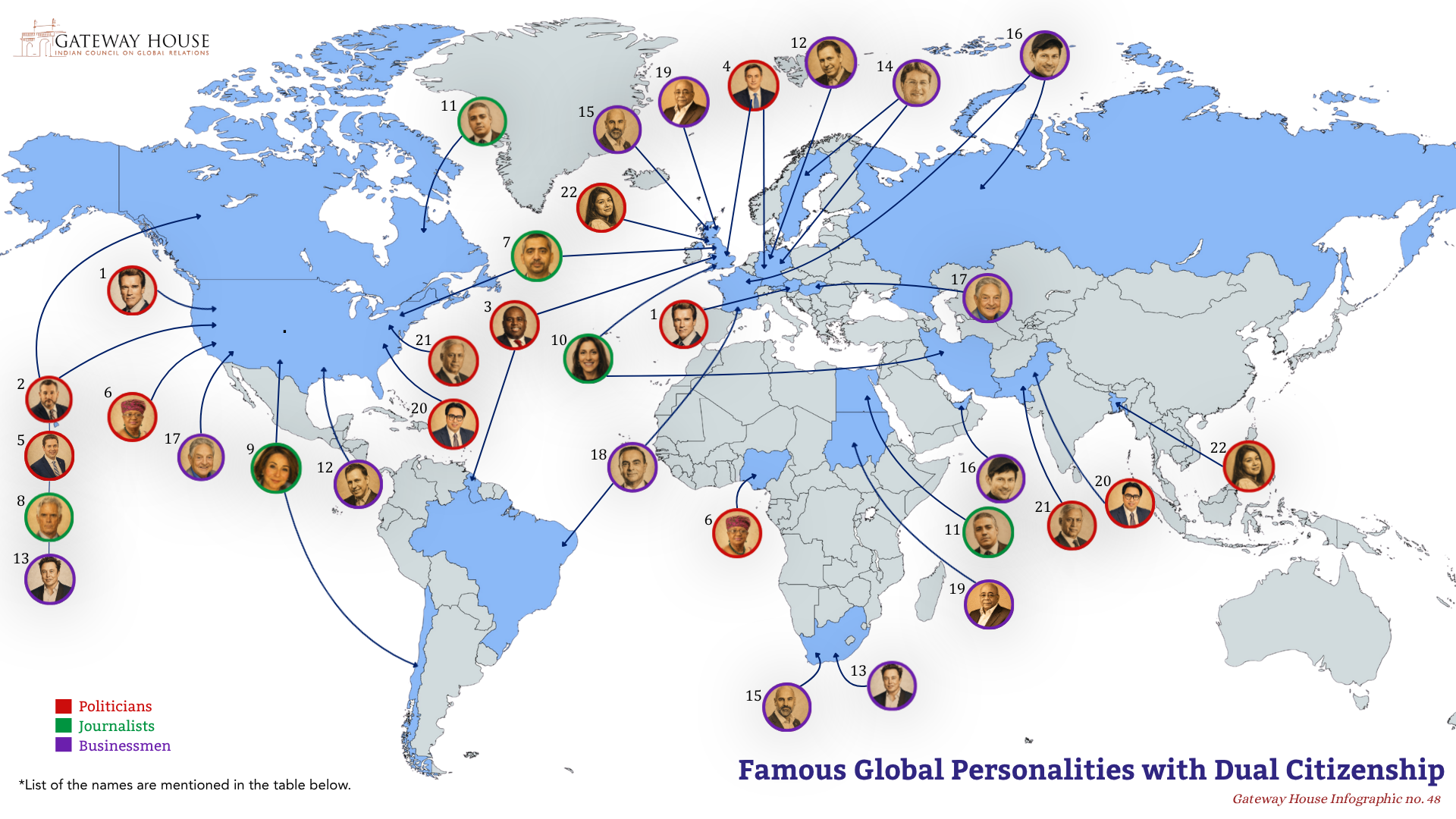
Figure 4: Personalities with dual citizenship
Source: Gateway House Research
Do dual citizens have voting rights? Only in very few cases. In the U.S., dual citizens possess the same fundamental political rights as U.S.-only citizens. They can vote in all U.S. federal, state and local elections, and can vote in foreign elections without jeopardising their U.S. status. They must, however, be natural-born U.S. citizens to run for Presidential office.
In Australia, dual citizens can vote in federal, state and local elections though they are not obligated to vote. To be eligible for elections in Australia, a dual citizen must renounce their foreign citizenship. There are also time-restrictive non-resident voting rights, as in the UK and Canada, for 15 years (with exceptions) and 5 years, respectively, after leaving.
Political rights, taxation and perceptions of allegiance raise anxieties about dual nationals, hampering global acceptance of dual citizenship. As these anxieties continue to rise, a larger number of countries may introduce conditionalities or restrictions to dual nationality, while some may do away with the programme entirely.
Jia Gopani, Roshini Ramesh and Karthik Narayan Venkataraman are Interns, Gateway House.
This infographic was exclusively designed for Gateway House: Indian Council on Global Relations. You can read more exclusive content here.
For permission to republish, please contact outreach@gatewayhouse.in
©Copyright 2025 Gateway House: Indian Council on Global Relations. All rights reserved. Any unauthorised copying or reproduction is strictly prohibited.
References:
[1] The White House. “EXECUTIVE ORDER 14160 – PROTECTING THE MEANING AND VALUE OF AMERICAN CITIZENSHIP.” Federal Register, January 20, 2025. https://public-inspection.federalregister.
[2] Britannica Editors. “citizenship.” Encyclopedia Britannica, May 18, 202dual citizenship in blue, countries that allow conditional dual citizenship in a checkered blue-and-white6. https://www.britannica.com/led countries in the Americas to embrace dual citizenship, as there are no dominant ethnic groups and nationhood is not tied to a single topic/citizenship
[3] “Main Data of the Seventh National Population Census,” n.d. https://www.stats.gov.cn/english/ PressRelease/202105/t20210510_1817185.html
[4] “Restrictions, Discrimination Do Not Significantly Stem Tajik Migration Flow to Russia,” Eurasianet, May 13, 2025, https://eurasianet.org/restrictions-discrimination-do-not-significantly-stem-tajik-migration-flow-to-russia.