G20.Org Courtesy: G20.org
28 August 2025

Appraising Brazil’s G20 Presidency

The G20’s current cycle is unique, with four Global South nations presiding consecutively: Indonesia, India, Brazil, and now South Africa. Brazil’s 2023-24 presidency exhibited both achievements and struggles, prioritising social inclusion, hunger, energy transition, and governance reform. The handover to South Africa marks a significant milestone in G20 history. Will the momentum be followed by the U.S., the next G20 president but also a G20 sceptic?

IMEC map with source Courtesy: The China-Global South Podcast
19 June 2025

U.S.-China rivalry: Middle Powers’ playbook

In the current era of geopolitical uncertainty, the Middle Power states are deepening engagement with countries of the Global South while reducing their exposure to the U.S. and China. Manjeet Kripalani and Carlos Coelho spoke to Eric and Cobus from The China-Global South Podcast, on how countries like India and Brazil are navigating this increasingly contested world.

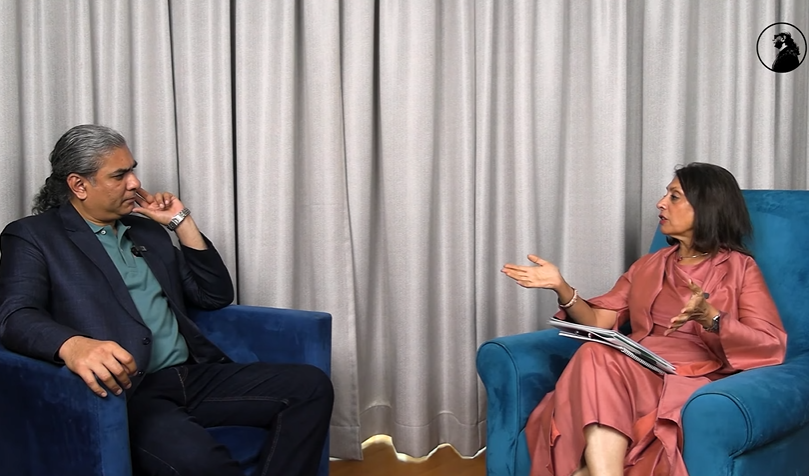
podcast MK Courtesy: Abhijit Chavda Podcast
27 May 2025

Emerging Middle Powers beyond U.S. and China

The rules-based world, perceived to be functional till last year, seems broken, giving way to an increasingly multipolar order. Manjeet Kripalani, Executive Director, Gateway House discusses in the Abhijit Chavda podcast, how emerging middle powers like India, Brazil, and Indonesia to name a few, have the heft to rewrite the rules of global trade and reform, away from U.S. and China.

Report Courtesy: Körber-Stiftung
17 April 2025

Momentum for Middle Powers: Emerging Middle Powers Report

The world is undergoing profound transformations that are not being driven only by the United States, China or Russia. Small and medium-sized States are carving out a legitimate place for themselves in the emerging new order. This second edition of our annual Emerging Middle Powers Report is a reminder that the signs of the times are showing a new momentum for middle powers.

South Africa's President Cyril Ramaphosa walks past G20 member flags as he is welcomed by Japan's Prime Minister Shinzo Abe to the G20 Summit in Osaka on June 28, 2019. (Photo by Ludovic MARIN / POOL / AFP)        (Photo credit should read LUDOVIC MARIN/AFP via Getty Images) Courtesy: Institute for Global Dialogue
13 March 2025

G20 ship in choppy waters: will it make it?

The G20 and South Africa - its presiding nation - will both face a difficult year. The U.S., one of the G20’s most vital members has not yet participated, notable by its absence from two important ministerial meetings. The U.S.’ changed foreign policy stance will be a tough challenge for G20; the Global South members will have to step up and become proactive.

Chavda Pod Courtesy: Abhijit Chavda Podcast
11 April 2024

West must listen to emerging middle powers

Emerging middle powers like India, Brazil and South Africa are articulating their interests on the global stage with growing assertiveness. Manjeet Kripalani, Executive Director, Gateway House, joins Abhijit Chavda on his eponymous podcast to discuss changing dynamics between the West and the Global South, and how western and emerging middle powers can collaborate on shared priorities like multilateral reform, technology transfer and international trade.

EmmaLouiseDiscussion Courtesy: Getty Images
21 March 2024

‘BRICS wants to challenge the G7′

With South African presidential elections slated for late May, South African opposition politician and Shadow Minister for International Relations and Cooperation, Emma Louise Powell shares her views on the future trajectory of BRICS, the credibility of the African Union (AU) on the continent, South Africa’s relations with China, and her country’s stance on key global issues.

Report Photo Courtesy: Körber-Stiftung
18 March 2024

Listening Beyond the Echo Chamber: Emerging Middle Powers Report

Divergent global reactions to major crises such as those sparked by the war in Ukraine and NATO’s Afghanistan withdrawal have widened the chasm between Western countries and emerging middle powers. This survey, conducted among nearly 1,000 experts from India, Brazil, South Africa and Germany, examines key foreign policy priorities in these countries, and reveals that despite differences, dialogue is possible.